Tradescantia cerinthoides
Tradescantia cerinthoides (Flowering Inch Plant) Care Guide
 Featured phototradescantia-cerinthoides.jpg
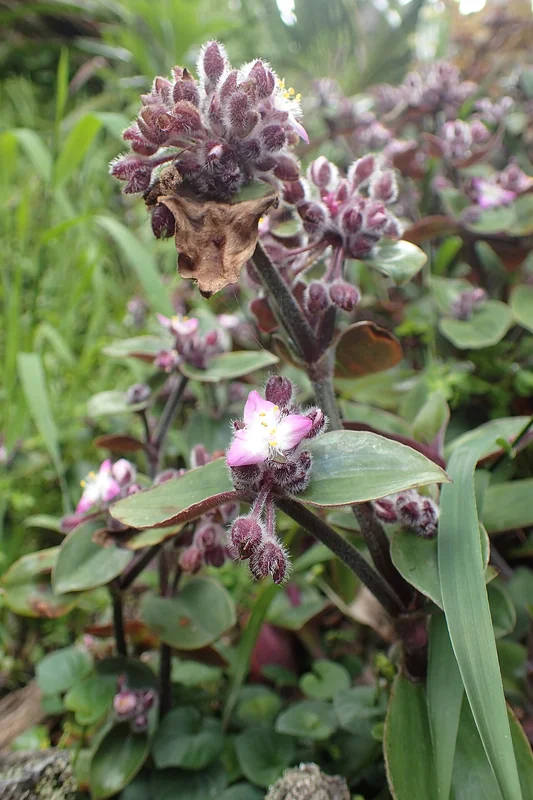
Tradescantia cerinthoides is a Brazilian tradescantia with broad, fleshy, slightly fuzzy leaves and pink-purple flower clusters that open in summer. Many cultivars exist — Variegata, Nanouk, Bubblegum — varying in leaf colour from green to pink-cream variegation. It is more upright and substantial than the typical trailing inch plant and tolerates ordinary indoor conditions.
Care facts at a glance
- Light
- Bright indirect
- Water
- Water when the top 2 cm of mix has dried.
- Humidity
- 40–60 %
- Temperature
- 16–27 °C
- Soil
- Standard well-draining houseplant mix with perlite.
- Origin
- Forests of southeastern Brazil and northern Argentina.
- Mature size
- Stems to 30 to 45 cm long.
Overview
Tradescantia cerinthoides was previously named T. blossfeldiana and is the parent of the popular Nanouk cultivar — a stable variegated sport with pink-cream-green striped leaves. Care is the same across the cultivars.
Care Priorities
- Bright filtered light keeps variegation vivid; deep shade reverts plants to plain green.
- Pinch back to maintain bushy form.
- Take cuttings every 12 months as insurance.
- Tolerates a touch of dryness.
Common Problems
Reversion to green tissue is light deprivation; prune back to a variegated node. Yellow leaves are overwatering. Long bare stems are leggy growth.
Sources & further reading (2)
- encyclopedia — accessed 2026-04-28
- botanical-garden — accessed 2026-04-28
Frequently asked questions
Cerinthoides or Nanouk?
Nanouk is a popular cultivar of T. cerinthoides. Care is identical.
Will Nanouk keep its pink colour?
In bright filtered light, yes. Deep shade fades the pink toward green.
Best for hanging pots?
Yes — the trailing-but-substantial habit suits hanging displays well.