Spathiphyllum clevelandii
Spathiphyllum clevelandii (Cleveland Peace Lily) Care Guide
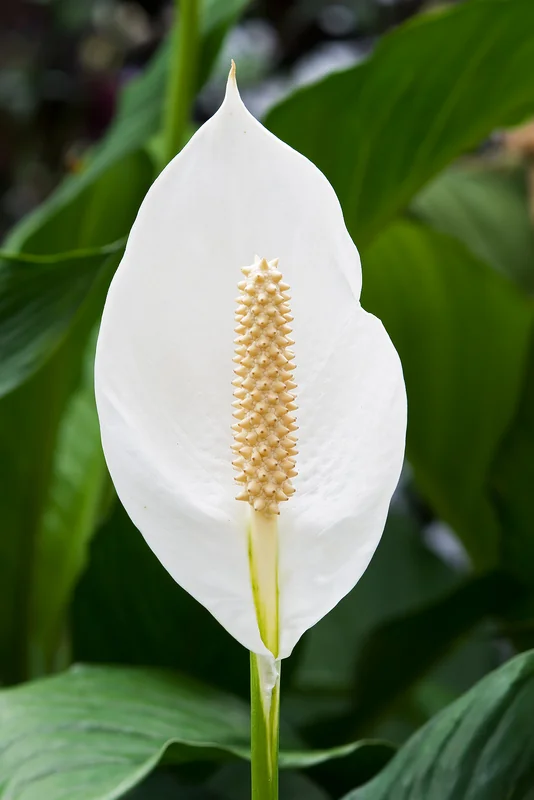 Featured photospathiphyllum-clevelandii.jpg
Spathiphyllum clevelandii, sold as Cleveland Peace Lily, is a member of Araceae, the aroid family of about 3,800 species across the tropics. A Central American Spathiphyllum with broad lance-shaped dark-green glossy leaves and small white spathes on slender stalks. One of the parent species behind several modern peace lily cultivars. Like most cultivated aroids it tolerates lower light than flowering plants, prefers consistent moisture, and propagates by division of the rhizome or by stem cuttings.
Care facts at a glance
- Light
- Bright indirect
- Water
- Water when the top 3 cm of mix has dried.
- Humidity
- 50–70 %
- Temperature
- 18–27 °C
- Soil
- Standard houseplant mix with added perlite for drainage.
- Origin
- Tropical Americas and south-east Asia depending on genus.
- Mature size
- 30 to 90 cm tall depending on species.
Overview
Spathiphyllum clevelandii sits in Araceae, the aroid family that produces a spathe-and-spadix inflorescence — a single bract subtending a column of small flowers. A Central American Spathiphyllum with broad lance-shaped dark-green glossy leaves and small white spathes on slender stalks. One of the parent species behind several modern peace lily cultivars. The family contains both giant tropical climbers and tiny ground-cover species, sharing the spathe morphology even when leaf form varies dramatically.
Care Priorities
- Bright filtered light, never direct midday sun.
- Standard houseplant mix with extra perlite.
- Water when the top 3 cm of mix is dry.
- Wipe leaves occasionally to keep stomata clear.
Common Problems
Yellow lower leaves usually indicate overwatering. Brown leaf tips signal cold drafts, dry air, or fluoride-heavy tap water. Sticky residue on leaves is a sign of mealybugs or scale on the stem.
Sources & further reading (2)
- encyclopedia — accessed 2026-04-29
- botanical-garden — accessed 2026-04-29
Frequently asked questions
How is S. clevelandii different from S. wallisii?
Both are peace lilies, but S. clevelandii is a larger species with broader leaves and slightly larger spathes than the more compact S. wallisii. Most retail peace lilies are hybrids with both species in the parentage; pure species plants are rarer.
How often should I repot?
Most cultivated aroids prefer to stay slightly root-bound. Repot every 2 to 3 years in spring, sizing up only one pot diameter at a time. Frequent repotting checks growth and stresses the rootball.
Why are the leaves yellowing?
Yellow lower leaves on Araceae are usually overwatering. Reduce watering frequency and let the mix dry more thoroughly between waterings. Yellow upper leaves suggest nutrient deficiency or root issues.