Pilea depressa
Pilea depressa (Baby Tears) Care Guide
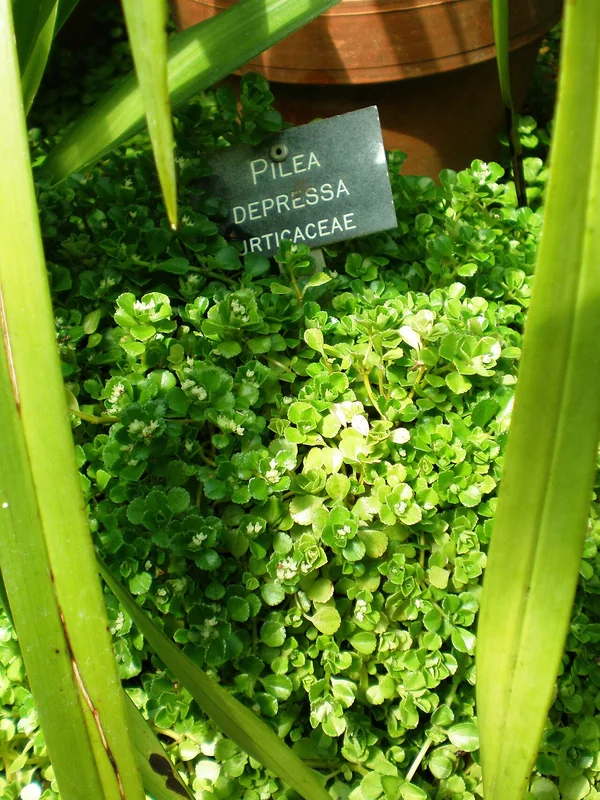 Featured photopilea-depressa.jpg
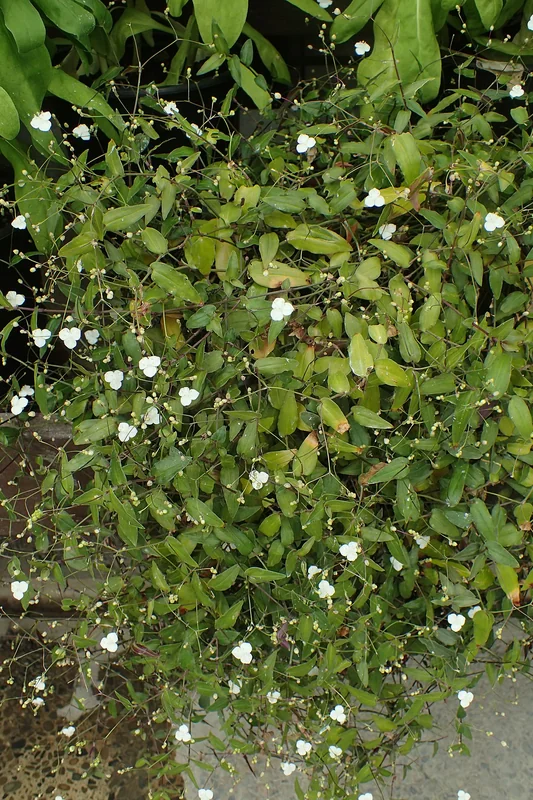
Pilea depressa is a Caribbean creeping pilea with tiny round leaves on extremely thin trailing stems. It is one of the smallest pileas in cultivation and a popular terrarium and small hanging-pot plant because of its dense fine texture. It is sometimes confused with Soleirolia soleirolii (true baby tears) but has slightly larger, rounder leaves.
Care facts at a glance
- Light
- Bright indirect
- Water
- Water when the top of the mix has dried.
- Humidity
- 50–70 %
- Temperature
- 16–27 °C
- Soil
- Well-draining houseplant mix with perlite.
- Origin
- Caribbean and Central America.
- Mature size
- Trailing stems to 30 cm long.
Overview
Pilea depressa is sometimes called baby tears pilea but is distinct from the true baby tears (Soleirolia soleirolii), which is unrelated and has even smaller leaves on a similar trailing form.
Care Priorities
- Bright filtered light.
- Keep mix consistently lightly moist; small root system dries fast.
- Higher humidity than typical pileas — terraria suit it well.
- Pinch back to keep growth dense.
Common Problems
Sudden crisping is a dry-out. Yellow strands are overwatering. Bald patches in mature plants are normal as old stems die back.
Sources & further reading (2)
- encyclopedia — accessed 2026-04-28
- botanical-garden — accessed 2026-04-28
Frequently asked questions
Pilea depressa or Soleirolia soleirolii?
Different plants. Both are called baby tears. Pilea depressa has slightly larger rounder leaves and is in the Urticaceae family; Soleirolia is a true baby tears with even smaller leaves.
Best for terraria?
Yes — fine texture and trailing habit suit closed glass spaces. The small root system likes the steady humidity.
Why does it dry out so fast?
Small leaves transpire quickly relative to a tiny root system. Higher humidity and consistent moisture are the fix.