Hoya curtisii
Hoya curtisii (Tiny Leaf) Care Guide
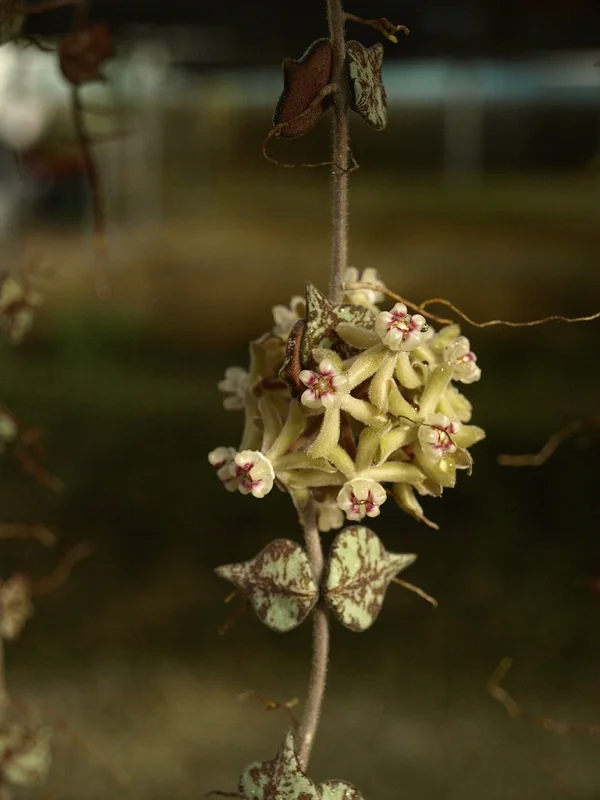 Featured photohoya-curtisii.jpg
Hoya curtisii is a small Southeast Asian hoya with tiny, silver-mottled, spade-shaped leaves on creeping or trailing stems. It is much smaller than typical hoyas and is at home in shallow pots, hanging baskets, or terraria. Mature plants produce tiny pink-red star clusters that are detail-rich rather than showy.
Care facts at a glance
- Light
- Bright indirect
- Water
- Water when the top of the mix has dried.
- Humidity
- 50–70 %
- Temperature
- 16–27 °C
- Soil
- Free-draining mix of bark, perlite, and a small fraction of coir.
- Origin
- Forests of Thailand, Malaysia, and the Philippines.
- Mature size
- Trailing or creeping stems to 30 cm long, leaves under 2 cm.
Overview
Hoya curtisii was described in the 1880s and is one of the smallest-leaved hoyas in cultivation. The silver mottling is species-typical and intensifies in good light.
Care Priorities
- Shallow pots or hanging baskets suit the creeping habit.
- Bright filtered light keeps the silver mottling vivid.
- Allow the top of the mix to dry between waterings.
- Pinch back to keep the plant dense at the crown.
Common Problems
Strands shrivelling is dehydration. Yellow leaves are overwatering. Loss of silver pattern is too little light.
Sources & further reading (2)
- encyclopedia — accessed 2026-04-28
- botanical-garden — accessed 2026-04-28
Frequently asked questions
Why are the leaves so small?
Curtisii is a naturally small-leaved species. Indoor leaves rarely exceed 2 cm even on mature plants.
Best for terraria?
Yes — the small leaves and trailing habit suit closed glass spaces. It tolerates ordinary humidity but thrives at 60 to 70 percent.
Will it flower indoors?
Yes, with patience — mature plants produce small pink-red star clusters several times a year on long-lived peduncles.