Ficus deltoidea
Ficus deltoidea (Mistletoe Fig) Care Guide
 Featured photoficus-deltoidea.jpg
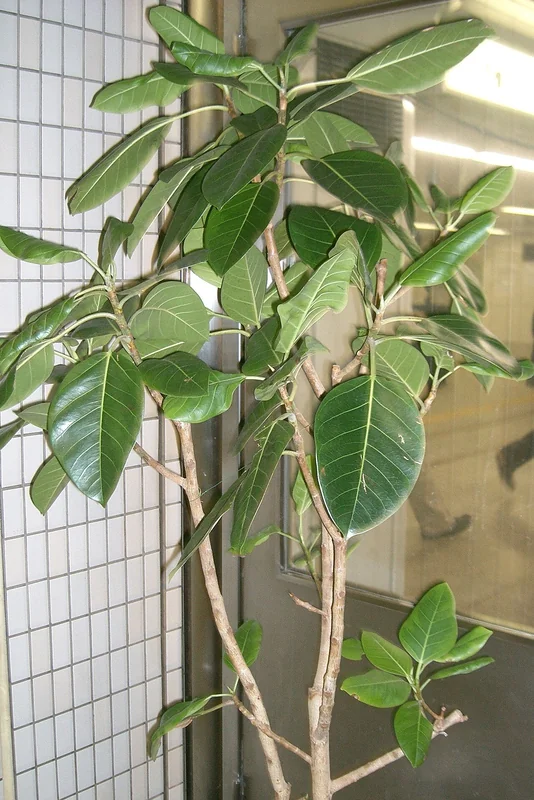
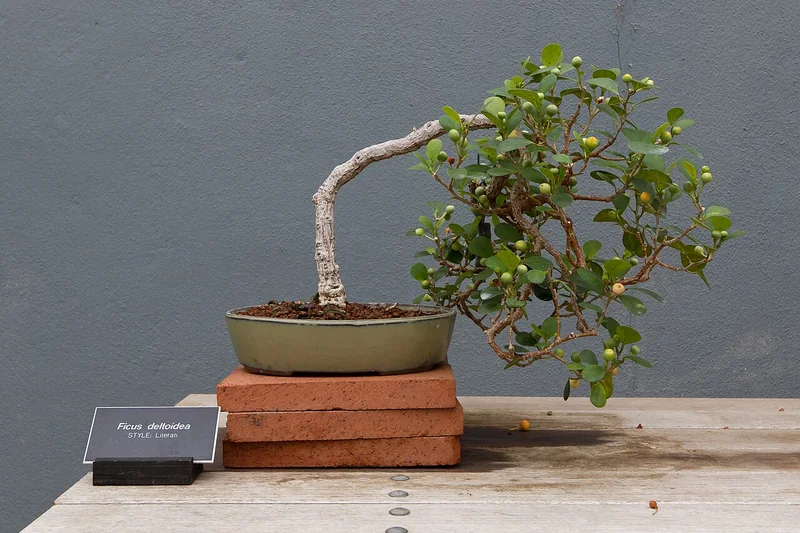
Ficus deltoidea, sold as Mistletoe Fig, is a member of *Ficus*, a tropical and subtropical genus of about 850 species in Moraceae. A south-east Asian small-leaved Ficus with rounded leathery green leaves on a compact branching trunk, producing tiny pea-sized green-orange figs along the stems. One of the few Ficus that fruits readily indoors. Most cultivated Ficus tolerate bright filtered light and even moisture, and respond to sudden changes in light or watering with sometimes-dramatic leaf drop — settle the plant in one stable spot for best results.
Care facts at a glance
- Light
- Bright indirect
- Water
- Water when the top 3 cm of mix has dried.
- Humidity
- 40–60 %
- Temperature
- 16–27 °C
- Soil
- Free-draining loamy mix with extra perlite for aeration.
- Origin
- Tropical and subtropical regions worldwide; specific origins vary by species.
- Mature size
- 1 to 3 m tall in cultivation depending on species; much larger in habitat.
Overview
Ficus deltoidea sits in Ficus, one of the largest plant genera and the source of fig fruits, banyan-style stranglers, and most popular indoor trees. A south-east Asian small-leaved Ficus with rounded leathery green leaves on a compact branching trunk, producing tiny pea-sized green-orange figs along the stems. One of the few Ficus that fruits readily indoors. All Ficus produce a milky white latex when stems or leaves are cut — the latex is genus-typical and stains both clothing and skin if rubbed in.
Care Priorities
- Bright filtered light keeps growth vigorous.
- Even moisture; let the top 3 cm dry between waterings.
- Avoid sudden moves or temperature swings — Ficus drops leaves dramatically after stress.
- Wipe leaves monthly to keep stomata clear and check for spider mites.
Common Problems
Sudden leaf drop after a move or temperature change is the species' classic stress response — new leaves emerge once conditions stabilise. Brown leaf edges signal dry air. Sticky residue on lower leaves indicates scale or mealybug infestation on the stems above.
Sources & further reading (2)
- encyclopedia — accessed 2026-04-29
- botanical-garden — accessed 2026-04-29
Frequently asked questions
Why does it fruit indoors?
F. deltoidea is unusual among cultivated Ficus in producing tiny ornamental fig fruits indoors — most species need their specific pollinator wasp to produce ripe fruit. The figs on F. deltoidea are decorative and produced asexually, so cultivation succeeds without the pollinator.
Why does my Ficus drop leaves after I move it?
Ficus is famously sensitive to changes in light, watering, or temperature, and drops a flush of leaves as a stress response. Settle the plant in one bright stable spot, water consistently, and new leaves typically emerge within a month. Resist the urge to move the plant again during recovery.
How do I propagate a Ficus?
Ficus root readily from stem cuttings or by air-layering. Take a cutting with at least three nodes, dip the cut end in rooting hormone, and pot in moist propagation mix. Air-layering produces larger rooted specimens but takes longer (2 to 3 months) before the new root system is ready to sever from the parent.