Curcuma alismatifolia
Curcuma alismatifolia (Siam Tulip) Care Guide
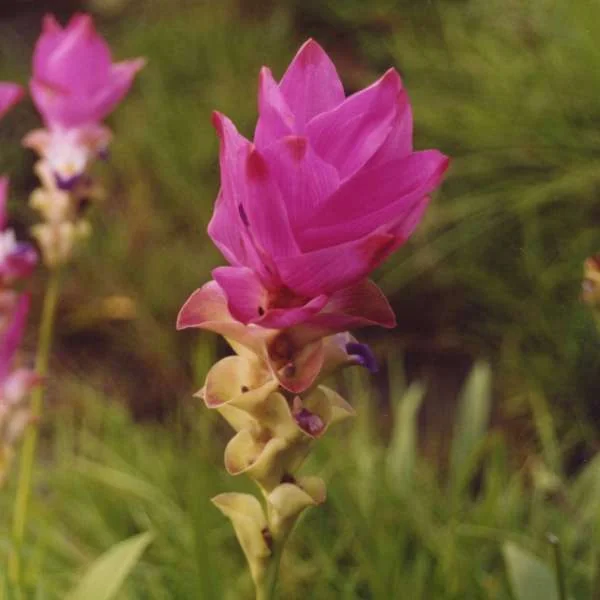 Featured photocurcuma-alismatifolia.jpg
Curcuma alismatifolia, sold as the Siam tulip, is a south-east Asian Zingiberaceae with elongated lance-shaped green leaves on slender stems and showy pink tulip-shaped bracts emerging in summer from underground rhizomes. The bracts persist for weeks, giving long ornamental display from a single inflorescence.
Care facts at a glance
- Light
- Bright indirect
- Water
- Water when the top 2 cm of mix has dried during active growth.
- Humidity
- 50–70 %
- Temperature
- 18–27 °C
- Soil
- Rich loamy mix with extra perlite for aeration.
- Origin
- Tropical south-east Asia, especially Cambodia, Laos, and Thailand.
- Mature size
- 60 to 80 cm tall during active growth.
Overview
Curcuma alismatifolia belongs to Zingiberaceae, the ginger family, and grows from underground rhizomes that rest dormant for several months between active growing seasons. The 'tulip' look comes from the persistent pink bracts that surround the actual smaller flowers — the bracts last weeks while individual flowers are short-lived.
Care Priorities
- Bright filtered light supports bract development.
- Steady warm temperatures during active growth.
- Even moisture in spring and summer; stop watering through winter dormancy.
- Repot the dormant rhizome in fresh mix in early spring before re-sprouting.
Common Problems
Leaf yellowing in autumn is normal dormancy onset, not disease. Soft mushy rhizome during dormancy is rot — keep the dormant rhizome dry and cool. Pale weak shoots in spring usually mean the rhizome is depleted or planted too deep.
Sources & further reading (2)
- encyclopedia — accessed 2026-04-29
- botanical-garden — accessed 2026-04-29
Frequently asked questions
Why are the 'flowers' actually bracts?
C. alismatifolia produces small actual flowers that are short-lived, but they are surrounded by large persistent pink bracts (modified leaves) that last for weeks. The bracts are what gives the long ornamental display, and what most growers think of as the 'flower'.
Why did my Siam tulip suddenly stop growing?
Curcuma alismatifolia is seasonally dormant — the leaves yellow and die back at the end of summer, and the underground rhizome rests through winter. Stop watering, store the dry rhizome cool, and resume watering in spring as new shoots emerge.
Can I divide the rhizome?
Yes — divide the dormant rhizome in early spring before re-sprouting. Each division should carry at least one growth bud (eye) on the rhizome. Replant immediately in fresh mix and resume watering as the shoots emerge.