Caladium lindenii
Caladium lindenii (White Vein Caladium) Care Guide
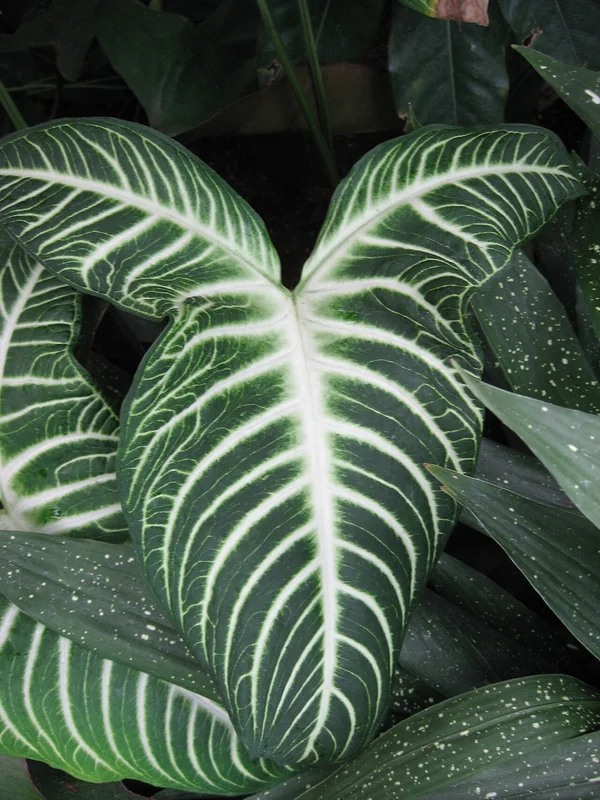 Featured photocaladium-lindenii.jpg
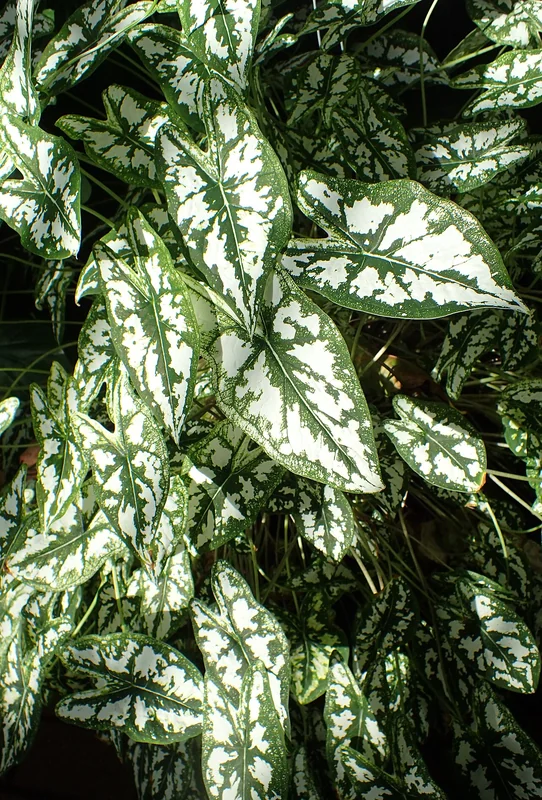
Caladium lindenii, sold as White Vein Caladium, is a member of *Caladium*, a Brazilian aroid genus famous for dramatically patterned heart-shaped leaves on slender petioles. A Colombian Caladium with deep green heart-shaped leaves marked in striking pure white parallel veins along the midrib and lateral veins. Sometimes treated as Xanthosoma lindenii in older taxonomies. Like all Caladium the species grows from a tuber that rests dormant for several months between active growing seasons.
Care facts at a glance
- Light
- Bright indirect
- Water
- Water when the top 2 cm of mix has dried during active growth.
- Humidity
- 60–80 %
- Temperature
- 18–27 °C
- Soil
- Light, free-draining peat-rich mix with perlite for aeration.
- Origin
- Tropical rainforests of South America, especially Brazil and the Guianas.
- Mature size
- 30 to 60 cm tall during active growth.
Overview
Caladium lindenii sits in Caladium, a Brazilian aroid genus of about 12 species, all growing from underground tubers and producing dramatically patterned heart-shaped leaves on slender petioles. A Colombian Caladium with deep green heart-shaped leaves marked in striking pure white parallel veins along the midrib and lateral veins. Sometimes treated as Xanthosoma lindenii in older taxonomies. Caladium are seasonally dormant — leaves die back in autumn and the tuber rests through winter before re-sprouting in spring.
Care Priorities
- Bright filtered light intensifies the patterning.
- Steady warm temperatures above 18 °C during active growth.
- Reduce watering once leaves yellow at season end — the tuber rests dormant.
- Re-pot the dormant tuber in fresh mix in early spring before sprouting.
Common Problems
Leaf yellowing in autumn is normal dormancy onset, not disease. Soft mushy tuber during dormancy is rot from too-wet storage — keep the dormant tuber dry and cool. Pale weak shoots in spring usually mean the tuber is depleted; refresh the mix and feed lightly.
Sources & further reading (2)
- encyclopedia — accessed 2026-04-29
- botanical-garden — accessed 2026-04-29
Frequently asked questions
Is this the same as Xanthosoma lindenii?
C. lindenii has been reclassified between Caladium and Xanthosoma multiple times in taxonomic history, and both names persist at retail. Modern Kew taxonomy places it in *Caladium*, but older books and some growers still use *Xanthosoma lindenii*.
Why did my Caladium leaves disappear?
Caladium are seasonally dormant. The leaves yellow and die back in autumn, leaving only the underground tuber. Stop watering, store the dry tuber cool, and re-pot in fresh mix in early spring to trigger the next growing cycle.
Will the tuber re-sprout next year?
Yes — Caladium tubers persist for many years and re-sprout annually with proper dormancy management. Tubers may also be divided every two to three years in spring to multiply the plant.