Canis lupus familiaris
Wire Fox Terrier
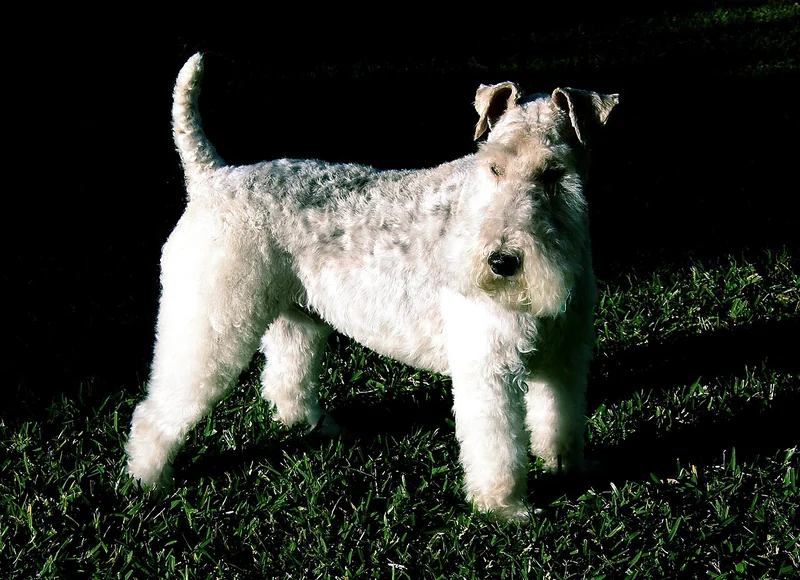 Featured photowire-fox-terrier.jpg
The Wire Fox Terrier is a British terrier breed developed in England by the 1870s for bolting foxes from their earth during hunts. Nearly identical in conformation to the Smooth Fox Terrier, it is distinguished by its dense, wiry, twisted coat that provides protection in rough terrain. The breed holds the record for the most Best in Show wins at the Westminster Kennel Club Dog Show — 15 victories between 1907 and 2019. The AKC recognised the Wire Fox Terrier in 1885. Males stand 38–39 cm and weigh approximately 8 kg.
Quick facts
- AKC group
- Terrier
- Origin country
- England
- Origin period
- Mid-19th century
- Coat type
- Wirehaired
- Coat colors
- White with Black Markings, White with Tan Markings, White with Black and Tan Markings
- Average lifespan
- 13-14 years
- Recognition
- AKC 1885 · FCI 1954 · UKC 1912 · Group 3 — Terriers (Section 1: Large and medium-sized Terriers)
Origin
The Wire Fox Terrier was bred in England during the 1860s–1870s for a specific working role in fox hunting: bolting a fox that had gone to earth (retreated into its burrow) so the hunt could continue. The dog needed to be small enough to follow a fox underground, courageous enough to face it, and fast enough to keep pace with horses in the field. Foundation crosses included Old English Rough-coated Black and Tan Terrier strains for wiriness and tenacity, with Bull Terrier for courage and Beagle for scenting ability. White body colour was selected to avoid confusion with the fox during the hunt.
Recognition
The Fox Terrier Club — the world's oldest specialist terrier club — was founded in Britain in 1876. Both wire and smooth varieties were registered as one breed in the AKC studbook from 1885. The AKC formally separated the Wire Fox Terrier from the Smooth Fox Terrier as two distinct breeds in 1984; the FCI had maintained separate standards earlier. The Wire Fox Terrier has won 15 Best in Show titles at the Westminster Kennel Club Dog Show, more than any other breed — a record that stood unbroken as of 2020.
Standard
The AKC and FCI standards describe a dog with a short back, level topline, and great bone and substance. The coat is the defining difference from the Smooth: it is dense and wiry, very much like coconut matting, and should be hand-stripped (not clipped) to maintain correct texture. The predominantly white body with black, tan, or black-and-tan markings is specified; the head markings are tan. Males stand about 39 cm at the withers; females are slightly smaller. The overall picture should convey alertness, keenness, and readiness.
Sources & further reading (3)
- kennel-club-registry — accessed 2026-05-07
- encyclopedia — accessed 2026-05-07
- fci-standard — accessed 2026-05-07
Frequently asked questions
What AKC group does the Wire Fox Terrier belong to?
The AKC places the Wire Fox Terrier in the Terrier Group. All terrier breeds were originally developed to dig into the ground and flush or kill vermin — the word 'terrier' derives from the Latin 'terra' (earth). The Wire Fox Terrier was specifically developed to bolt foxes from their underground dens during British fox hunts.
How does the Wire Fox Terrier differ from the Smooth Fox Terrier?
The Wire and Smooth Fox Terriers are nearly identical in conformation — the same size, proportions, and temperament — differing only in coat type. The Wire Fox Terrier has a dense, twisted, wiry coat that must be hand-stripped; the Smooth has a close, flat, hard coat. Both were registered as the same AKC breed until 1984, when they were formally separated into two distinct breeds. The Wire variety is considerably more common in the show ring.
How many Westminster Best in Show titles has the Wire Fox Terrier won?
The Wire Fox Terrier has won Best in Show at the Westminster Kennel Club Dog Show 15 times, more than any other breed in the show's history. Notable wins include seven consecutive decades of victories from 1907 to 1992. The most recent Wire Fox Terrier Best in Show victory was King, CH Sky Acres Kingarthur Van Foliny Home, in 2019.