Canis lupus familiaris
Sealyham Terrier
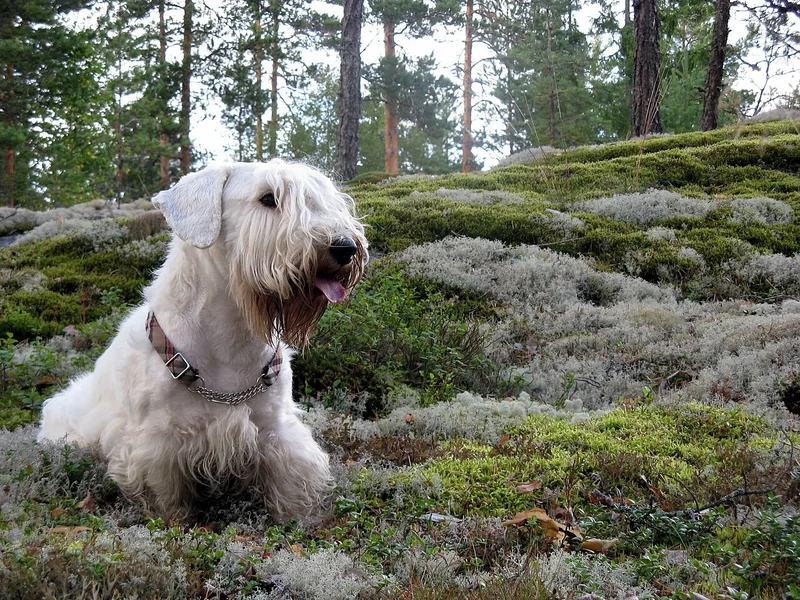 Featured photosealyham-terrier.jpg
The Sealyham Terrier is a Captain Edwardes's 1850-1891 Pembrokeshire badger and otter working white terrier. The Sealyham Terrier was developed between 1850 and 1891 by Captain John Edwardes of Sealyham House in Pembrokeshire, Wales, who crossed the now-extinct White English Terrier with various other terriers — believed to include the Dandie Dinmont, Bull Terrier, West Highland White, and Wire Fox Terrier — to produce a small, predominantly-white terrier capable of working badger and otter.
Quick facts
- AKC group
- Terrier
- Origin country
- Wales (Pembrokeshire)
- Origin period
- Mid-19th century (formalized 1908)
- Coat type
- Wirehaired
- Coat colors
- All White, White with Lemon, Tan, Brown, or Badger Markings on the head and ears
- Average lifespan
- 12-14 years
- Recognition
- AKC 1911 · FCI 1954 · UKC 1948 · Group 3 — Terriers (Section 2: Small-sized Terriers)
Origin
The Sealyham Terrier was developed between 1850 and 1891 by Captain John Edwardes (1809-1891) of Sealyham House in Pembrokeshire, Wales. Captain Edwardes kept no stud-book and the foundation crosses are not documented in detail, but are believed to have included the now-extinct White English Terrier, the Dandie Dinmont Terrier, the Bull Terrier, the West Highland White Terrier, and the Wire Fox Terrier. Edwardes selected for a small, predominantly-white terrier capable of working badger and otter — the white coat was selected so the terrier could be distinguished from its quarry by the working pack and not mistaken for the badger when both emerged from the sett. The Kennel Club registered the breed in 1908 and the AKC followed in 1911.
Recognition
The American Kennel Club admitted the breed in 1911, the United Kennel Club followed in 1948, and the Federation Cynologique Internationale published the international standard (FCI No. 74) in 1954. The FCI assigns the breed to Group 3 — Terriers (Section 2: Small-sized Terriers).
Standard
The AKC and FCI standards describe a freely-built dog of substance and balance — a small, sturdy, working terrier. The defining feature is the predominantly white coat: a soft, dense, woolly undercoat under a hard, wiry, weather-resistant outer coat. Recognized markings are lemon, tan, brown, or badger on the head and ears only — markings on the body are faulted. The skull is slightly domed, the muzzle long and powerful, and the small ears fold down close to the cheek.
Sources & further reading (3)
- kennel-club-registry — accessed 2026-04-30
- encyclopedia — accessed 2026-04-30
- fci-standard — accessed 2026-04-30
Frequently asked questions
What is the Sealyham Terrier's AKC group?
The American Kennel Club places the Sealyham Terrier in the Terrier Group. The Terrier Group gathers breeds developed to hunt and dispatch vermin or to go to ground after fox and badger; the name derives from the Latin terra ('earth'). The breed's foundation working role was as a Captain Edwardes's 1850-1891 Pembrokeshire badger and otter working white terrier.
When was the Sealyham Terrier officially recognized?
The American Kennel Club admitted the breed in 1911; the United Kennel Club followed in 1948; the Federation Cynologique Internationale published the international standard (FCI No. 74) in 1954.
What is the average lifespan of a Sealyham Terrier?
Kennel-club longevity surveys place the Sealyham Terrier's average lifespan in the 12-14 years range. The figure here represents the spread reported by the major parent-club studies and the Kennel Club (UK) purebred-dog health surveys.