Canis lupus familiaris
Border Terrier
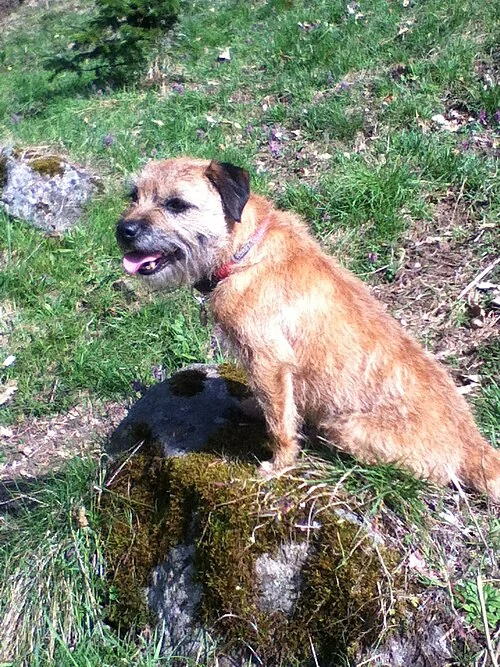 Featured photoborder-terrier.jpg
The Border Terrier is a Anglo-Scottish border fox-terrier — running with foxhounds, going to ground in setts. The Border Terrier was developed in the hill country of the Anglo-Scottish border — particularly in Northumberland and the Scottish Borders — as a fox-hunting working terrier capable of running with the foxhounds and going to ground after fox.
Quick facts
- AKC group
- Terrier
- Origin country
- United Kingdom (Anglo-Scottish border)
- Origin period
- 18th century (formalized 1920)
- Coat type
- Wirehaired
- Coat colors
- Red, Wheaten, Grizzle and Tan, Blue and Tan
- Average lifespan
- 13-15 years
- Recognition
- AKC 1930 · FCI 1954 · UKC 1948 · Group 3 — Terriers (Section 1: Large and medium-sized Terriers)
Origin
The Border Terrier was developed in the hill country of the Anglo-Scottish border — particularly in Northumberland (the Coquetdale Foxhound country) and the Scottish Borders — from the 18th century onward as a working fox terrier. The breed's defining requirement was that it should be small and tough enough to follow a fox to ground in the borderland's rocky setts, but tall and game enough to run with the foxhounds across open hill country between earths. The Border Hunt of Northumberland kept the foundation pack from the 1860s onward; the breed was the last of the British working terriers to gain show recognition, with the Kennel Club registering it in 1920 and the Border Terrier Club founded the same year. The AKC admitted the breed in 1930.
Recognition
The American Kennel Club admitted the breed in 1930, the United Kennel Club followed in 1948, and the Federation Cynologique Internationale published the international standard (FCI No. 10) in 1954. The FCI assigns the breed to Group 3 — Terriers (Section 1: Large and medium-sized Terriers).
Standard
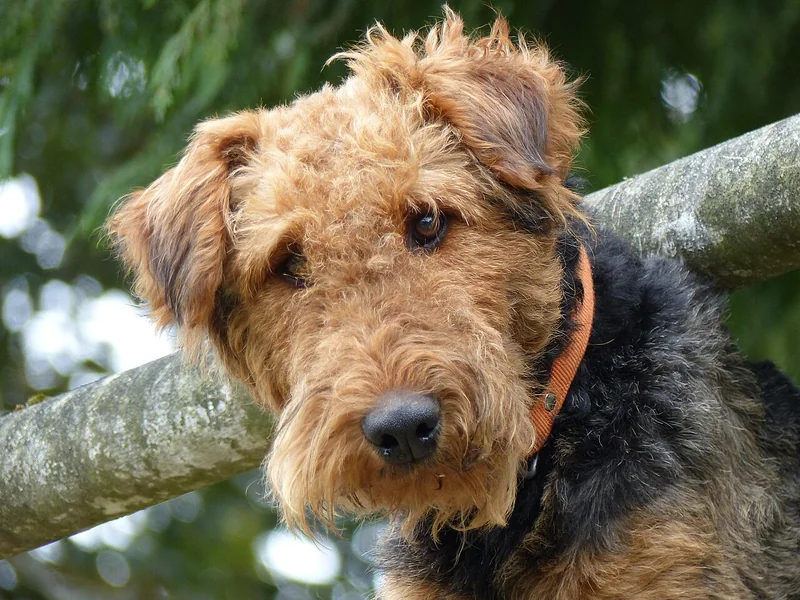
The AKC and FCI standards describe an active terrier of medium bone, slightly longer in the leg than other British terriers — capable of running with the foxhounds — with a head that is described as 'otter-like' (a key breed-defining feature) and an alert, active, and good-natured expression. The defining feature is the harsh, dense, wiry outer coat over a close, soft undercoat, with a thick, naturally-loose hide that allows the dog to be seized without injury. Recognized colours are red (any shade), wheaten, grizzle-and-tan, and blue-and-tan.
Sources & further reading (3)
- kennel-club-registry — accessed 2026-04-30
- encyclopedia — accessed 2026-04-30
- fci-standard — accessed 2026-04-30
Frequently asked questions
What is the Border Terrier's AKC group?
The American Kennel Club places the Border Terrier in the Terrier Group. The Terrier Group gathers breeds developed to hunt and dispatch vermin or to go to ground after fox and badger; the name derives from the Latin terra ('earth'). The breed's foundation working role was as a Anglo-Scottish border fox-terrier — running with foxhounds, going to ground in setts.
When was the Border Terrier officially recognized?
The American Kennel Club admitted the breed in 1930; the United Kennel Club followed in 1948; the Federation Cynologique Internationale published the international standard (FCI No. 10) in 1954.
What is the average lifespan of a Border Terrier?
Kennel-club longevity surveys place the Border Terrier's average lifespan in the 13-15 years range. The figure here represents the spread reported by the major parent-club studies and the Kennel Club (UK) purebred-dog health surveys.