Canis lupus familiaris
Norfolk Terrier
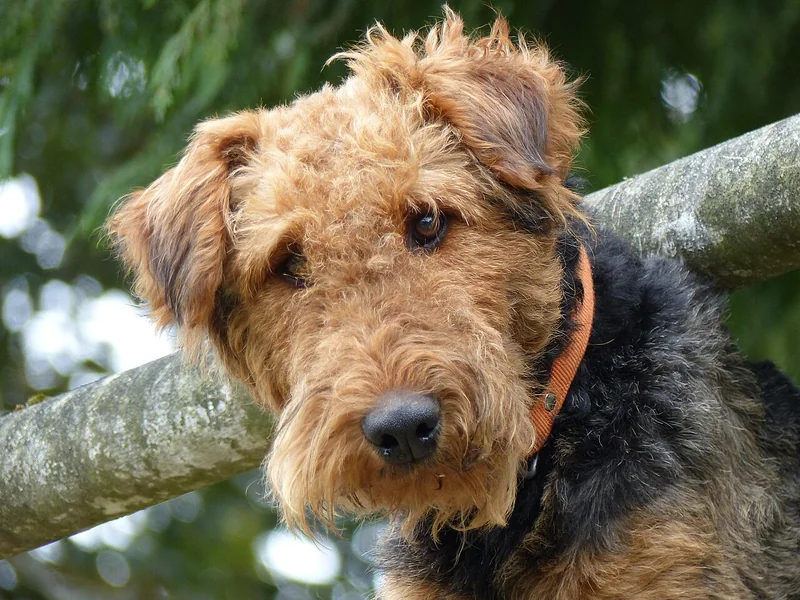
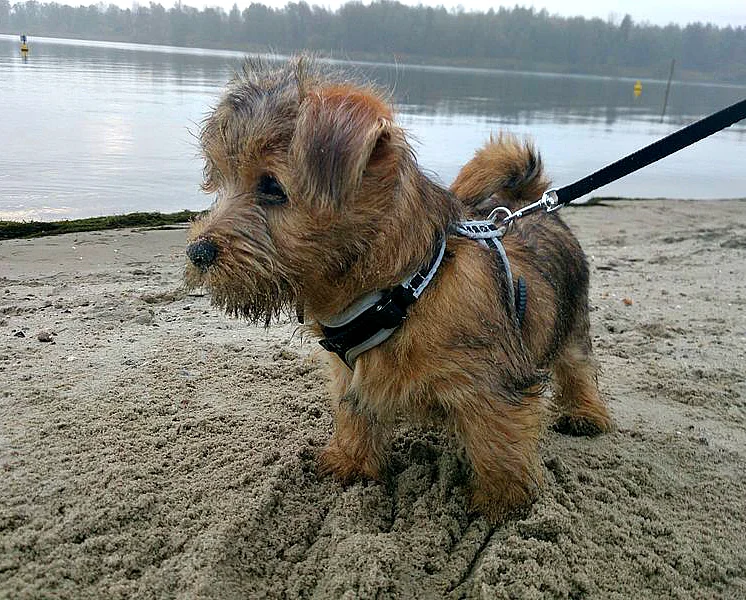 Featured photonorfolk-terrier.jpg
The Norfolk Terrier is a drop-eared variant of the original Norwich Terrier — split as a separate breed in 1964. The Norfolk Terrier was originally registered together with the Norwich Terrier as a single breed (Norwich Terrier) — distinguished only by ear carriage — until the Kennel Club split the two into separate breeds in 1964.
Quick facts
- AKC group
- Terrier
- Origin country
- England (East Anglia)
- Origin period
- Late 19th century (split from Norwich 1964)
- Coat type
- Wirehaired
- Coat colors
- Red, Wheaten, Black and Tan, Grizzle
- Average lifespan
- 13-15 years
- Recognition
- AKC 1979 · FCI 1965 · UKC 1979 · Group 3 — Terriers (Section 2: Small-sized Terriers)
Origin
The Norfolk and Norwich Terriers share a common origin in late-19th-century East Anglia, particularly around the city of Norwich. Foundation crosses involved various small Irish, Yorkshire, and Trumpington Terrier-type dogs developed by Frank 'Roughrider' Jones (1875-1962) of Norwich. The original Norwich Terrier was registered by the Kennel Club in 1932 with both ear carriages permitted; in 1964 the Kennel Club split the breed into Norfolk Terrier (drop ears) and Norwich Terrier (prick ears) as separate breeds. The American Kennel Club followed in 1979. Norfolk and Norwich Terriers are interchangeable in working ability — the only formal difference between the breeds is the ear carriage.
Recognition
The American Kennel Club admitted the breed in 1979, the United Kennel Club followed in 1979, and the Federation Cynologique Internationale published the international standard (FCI No. 272) in 1965. The FCI assigns the breed to Group 3 — Terriers (Section 2: Small-sized Terriers).
Standard
The AKC and FCI standards describe one of the smallest of the working terriers, a sturdy, compact, short-legged dog of substance and stamina. The defining features are the slightly rounded skull, the wedge-shaped muzzle, and the small, V-shaped, drop ears carried close to the cheek with the tip falling slightly forward. The hard, wiry, straight outer coat lies close to the body, with longer hair on the neck and shoulders forming a slight ruff. Recognized colours are red (any shade), wheaten, black-and-tan, and grizzle.
Sources & further reading (3)
- kennel-club-registry — accessed 2026-04-30
- encyclopedia — accessed 2026-04-30
- fci-standard — accessed 2026-04-30
Frequently asked questions
What is the Norfolk Terrier's AKC group?
The American Kennel Club places the Norfolk Terrier in the Terrier Group. The Terrier Group gathers breeds developed to hunt and dispatch vermin or to go to ground after fox and badger; the name derives from the Latin terra ('earth'). The breed's foundation working role was as a drop-eared variant of the original Norwich Terrier — split as a separate breed in 1964.
When was the Norfolk Terrier officially recognized?
The American Kennel Club admitted the breed in 1979; the United Kennel Club followed in 1979; the Federation Cynologique Internationale published the international standard (FCI No. 272) in 1965.
What is the average lifespan of a Norfolk Terrier?
Kennel-club longevity surveys place the Norfolk Terrier's average lifespan in the 13-15 years range. The figure here represents the spread reported by the major parent-club studies and the Kennel Club (UK) purebred-dog health surveys.