Canis lupus familiaris
Lakeland Terrier
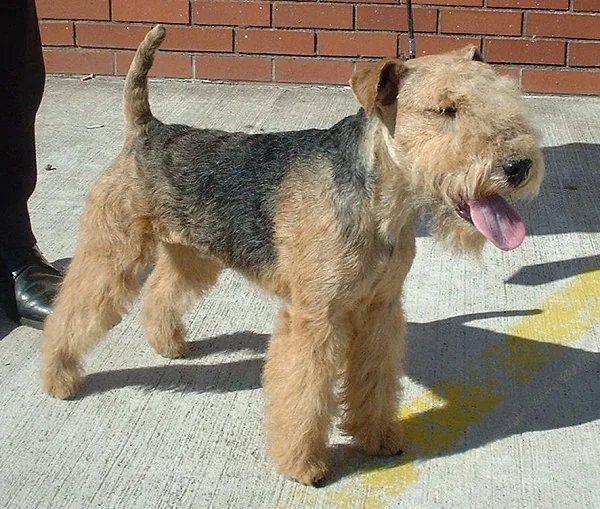 Featured photolakeland-terrier.jpg
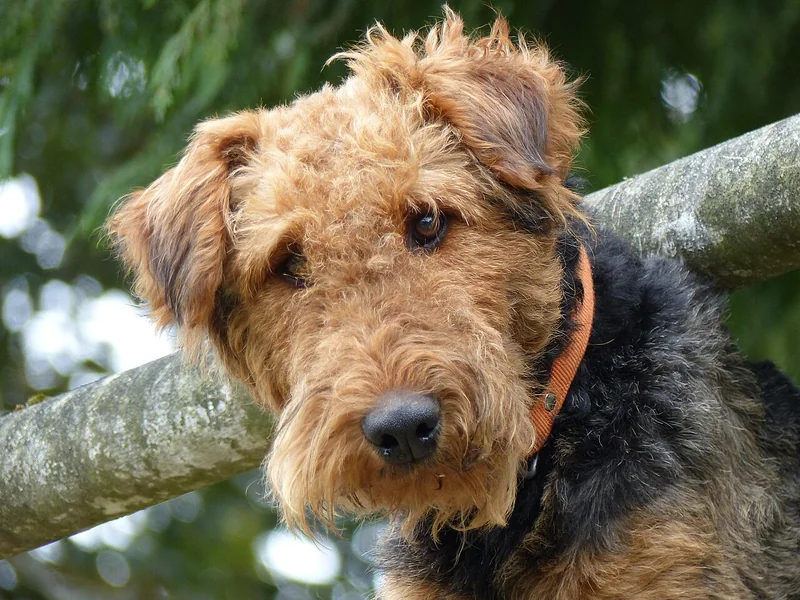
The Lakeland Terrier is a English Lake District fell-hunt fox-terrier — running with fell-hounds, going to ground in rocky setts. The Lakeland Terrier was developed in the Lake District (Cumbria, northwest England) from the 18th century onward as a fell-hunt terrier — used to follow fell hounds and go to ground after fox in the rocky terrain.
Quick facts
- AKC group
- Terrier
- Origin country
- England (Lake District)
- Origin period
- 18th-19th century (formalized 1912)
- Coat type
- Wirehaired
- Coat colors
- Black and Tan, Blue and Tan, Wheaten, Red, Liver, Grizzle
- Average lifespan
- 12-15 years
- Recognition
- AKC 1934 · FCI 1954 · UKC 1948 · Group 3 — Terriers (Section 1: Large and medium-sized Terriers)
Origin
The Lakeland Terrier was developed in the Lake District (Cumbria, northwest England) — particularly in the fells around Coniston, Patterdale, and Ullswater — from the 18th century onward as a fell-hunt working terrier. The breed was used to follow fell-hounds (the John Peel-style Lake District fox-hunt) on foot and to go to ground after fox in the broken rocky terrain of the high fells. Foundation crosses likely involved the Old English Black-and-Tan Wire-Haired Terrier, the Bedlington, the Border, and the Fox Terrier. The breed was originally called the Patterdale Terrier (after the village of Patterdale at the head of Ullswater) before that name was reassigned to a separate, distinct working terrier line in the early 20th century. The Lakeland Terrier Association was founded in 1912 and the Kennel Club recognized the breed in 1928.
Recognition
The American Kennel Club admitted the breed in 1934, the United Kennel Club followed in 1948, and the Federation Cynologique Internationale published the international standard (FCI No. 70) in 1954. The FCI assigns the breed to Group 3 — Terriers (Section 1: Large and medium-sized Terriers).
Standard
The AKC and FCI standards describe a small, workmanlike, wiry-coated dog of square outline, balanced and free-moving. The defining features are the rectangular head with a strong jaw, the small dropping V-shaped ears, and the hard, dense, weather-resistant double coat. Recognized colours are black-and-tan, blue-and-tan, wheaten, red, liver, and grizzle (with or without saddle markings). The breed stands 34-37 cm at the withers and weighs 7-8 kg.
Sources & further reading (3)
- kennel-club-registry — accessed 2026-04-30
- encyclopedia — accessed 2026-04-30
- fci-standard — accessed 2026-04-30
Frequently asked questions
What is the Lakeland Terrier's AKC group?
The American Kennel Club places the Lakeland Terrier in the Terrier Group. The Terrier Group gathers breeds developed to hunt and dispatch vermin or to go to ground after fox and badger; the name derives from the Latin terra ('earth'). The breed's foundation working role was as a English Lake District fell-hunt fox-terrier — running with fell-hounds, going to ground in rocky setts.
When was the Lakeland Terrier officially recognized?
The American Kennel Club admitted the breed in 1934; the United Kennel Club followed in 1948; the Federation Cynologique Internationale published the international standard (FCI No. 70) in 1954.
What is the average lifespan of a Lakeland Terrier?
Kennel-club longevity surveys place the Lakeland Terrier's average lifespan in the 12-15 years range. The figure here represents the spread reported by the major parent-club studies and the Kennel Club (UK) purebred-dog health surveys.