Canis lupus familiaris
Bedlington Terrier
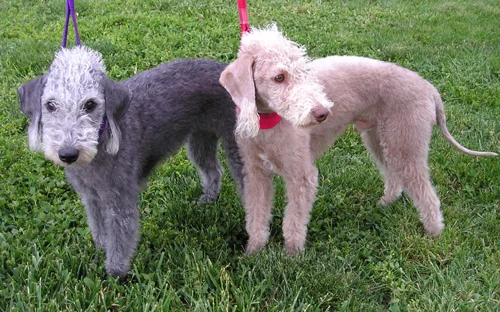 Featured photobedlington-terrier.jpg
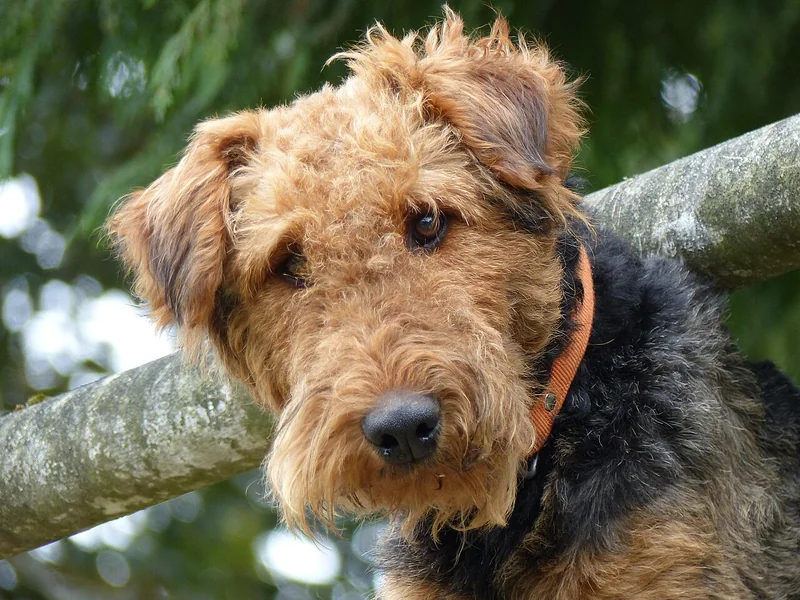
The Bedlington Terrier is a Northumberland mining-village Whippet-cross terrier with the breed-defining lamb-like appearance. The Bedlington Terrier was developed in late-18th-century Northumberland, England, in the mining village of Bedlington (the name was adopted in 1825) and the neighbouring village of Rothbury — the breed was originally called the Rothbury Terrier.
Quick facts
- AKC group
- Terrier
- Origin country
- England (Northumberland)
- Origin period
- Late 18th century (formalized 1877)
- Coat type
- Curly
- Coat colors
- Blue, Sandy, Liver — solid or with tan markings; born dark and lightening with maturity
- Average lifespan
- 13-15 years
- Recognition
- AKC 1886 · FCI 1955 · UKC 1948 · Group 3 — Terriers (Section 1: Large and medium-sized Terriers)
Origin
The Bedlington Terrier was developed in late-18th-century Northumberland, England, in the mining village of Bedlington (the name was adopted in 1825 from the village) and the neighbouring village of Rothbury — the breed was originally called the Rothbury Terrier. Foundation crosses likely involved the now-extinct Rothbury Terrier landrace, the Whippet (which contributed the racy outline and speed), and possibly the Dandie Dinmont Terrier (which contributed the topknot). The breed was used by Northumberland miners and gypsies as a working ratter, fox-and-otter terrier, and pit-fighting dog. The first formal breed standard was published in 1877; the AKC admitted the Bedlington in 1886. The breed is famous for its lamb-like appearance produced by the curly coat and the traditional show clip — a breed sometimes called 'a wolf in sheep's clothing'.
Recognition
The American Kennel Club admitted the breed in 1886, the United Kennel Club followed in 1948, and the Federation Cynologique Internationale published the international standard (FCI No. 9) in 1955. The FCI assigns the breed to Group 3 — Terriers (Section 1: Large and medium-sized Terriers).
Standard
The AKC and FCI standards describe a graceful, lithe, well-balanced terrier of definite character — capable of galloping speed combined with great endurance, with a topknot of soft, profuse hair on the head. The defining feature is the unique 'lamb-like' appearance, produced by the curly, crisp coat and the traditional clip — the head is left with a profuse topknot, the body coat is trimmed to about 2-3 cm length, and the legs are left with longer hair. Recognized colours are blue, sandy, and liver — solid or with tan markings — and all are born dark and lighten with maturity. Males stand 40-43 cm at the withers, females 38-41 cm.
Sources & further reading (3)
- kennel-club-registry — accessed 2026-04-30
- encyclopedia — accessed 2026-04-30
- fci-standard — accessed 2026-04-30
Frequently asked questions
What is the Bedlington Terrier's AKC group?
The American Kennel Club places the Bedlington Terrier in the Terrier Group. The Terrier Group gathers breeds developed to hunt and dispatch vermin or to go to ground after fox and badger; the name derives from the Latin terra ('earth'). The breed's foundation working role was as a Northumberland mining-village Whippet-cross terrier with the breed-defining lamb-like appearance.
When was the Bedlington Terrier officially recognized?
The American Kennel Club admitted the breed in 1886; the United Kennel Club followed in 1948; the Federation Cynologique Internationale published the international standard (FCI No. 9) in 1955.
What is the average lifespan of a Bedlington Terrier?
Kennel-club longevity surveys place the Bedlington Terrier's average lifespan in the 13-15 years range. The figure here represents the spread reported by the major parent-club studies and the Kennel Club (UK) purebred-dog health surveys.