Felis catus
Turkish Angora
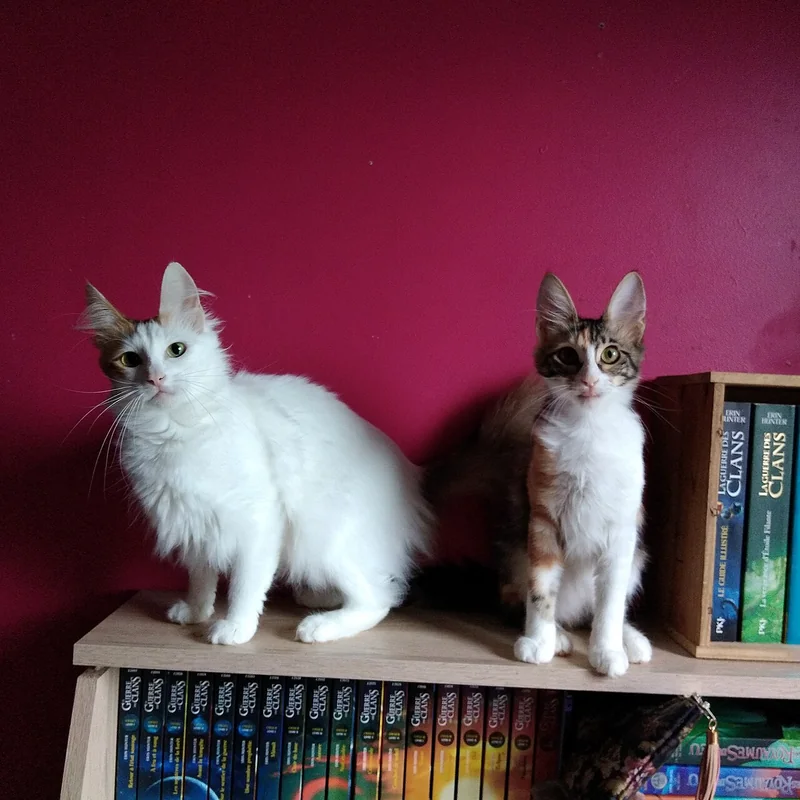 Featured phototurkish-angora.jpg
The Turkish Angora is a natural long-haired breed from the Ankara (formerly Angora) region of Turkey, where it is known as Ankara Kedisi. It is among the oldest long-haired breeds and was the original source of the 'angora' coat type introduced to European cat fanciers in the 17th century. The Ankara Zoo established a preservation programme in 1917. CFA recognized the Turkish Angora in 1972; TICA recognized it at its 1979 founding; and FIFe published its standard in 1988.
Quick facts
- Origin country
- Turkey (Ankara region)
- Origin period
- Natural Turkish breed; Ankara Zoo preservation programme 1917; CFA recognition 1972
- Coat type
- Long
- Coat colors
- Solid White, Solid Black, Solid Blue, Solid Red, Solid Cream, Tabby, Tortoiseshell, Bicolor, Smoke
- Size category
- Medium
- Average lifespan
- 12-18 years
- Recognition
- CFA 1972 · TICA 1979 · FIFe 1988
Origin
Long-haired cats from the Ankara region of Turkey were among the earliest long-haired cats introduced to Western Europe. By the 17th century the French naturalist Peiresc is credited with importing Angora cats from the Ottoman Empire to France. In Turkey, the Ankara Zoo formalized a preservation programme in 1917 focused on white Turkish Angoras with odd eyes — amber and blue — which are regarded as a national symbol. The zoo continues to maintain the programme today.
Recognition
American breeders obtained Ankara Zoo breeding pairs beginning in the 1960s and established the foundation for the North American pedigree registry. The Cat Fanciers' Association recognized the Turkish Angora in 1972, initially admitting only white specimens. Additional colour divisions were admitted later. The International Cat Association recognized the breed at its 1979 founding in Texas, and the Fédération Internationale Féline published its standard in 1988.
Standard
The CFA standard describes a fine-boned, elegant, medium-sized cat with long tapering lines. The head is a medium-length wedge with a long nose and large pointed ears set high and wide. The silky coat is medium-long with a fine single-layer texture — unlike the Persian's double coat. The tail is long and full and carried slightly higher than the back. White is the original and most historically significant colour; the odd-eyed white (one blue, one amber eye) is particularly associated with the Ankara Zoo preservation lines. All traditional colours and patterns are recognized except pointed, ticked, and chocolate or lavender.
Sources & further reading (3)
- registry-breed-profile — accessed 2026-04-30
- encyclopedia — accessed 2026-04-30
- fife-standard — accessed 2026-04-30
Frequently asked questions
Why did the Ankara Zoo establish a preservation programme?
The Ankara Zoo established its Turkish Angora preservation programme in 1917 because the breed's population had declined sharply in Turkey as the term 'angora' became genericized in Europe and breeders shifted focus to the Persian. The zoo specifically preserved white odd-eyed specimens — regarded in Turkey as a national symbol and associated with Mustafa Kemal Ataturk's reported affection for the type.
When was the Turkish Angora recognized internationally?
The Cat Fanciers' Association recognized the Turkish Angora in 1972. The International Cat Association recognized the breed at its 1979 founding. The Fédération Internationale Féline published its standard in 1988. The GCCF does not maintain a separate registry for the Turkish Angora under that breed name.
What distinguishes the Turkish Angora coat from the Persian?
The Turkish Angora has a fine, silky, single-layer coat with no woolly undercoat, whereas the Persian carries a dense, flowing double coat with a thick undercoat. The Turkish Angora coat does not mat as readily and lies more smoothly against the body. Both the CFA and FIFe standards emphasize the single-layer silky texture as a defining characteristic of the Turkish Angora.