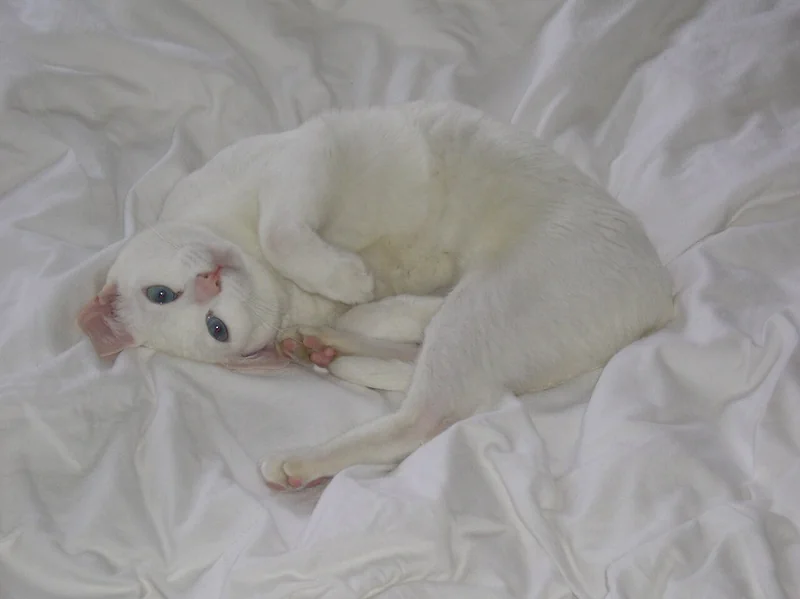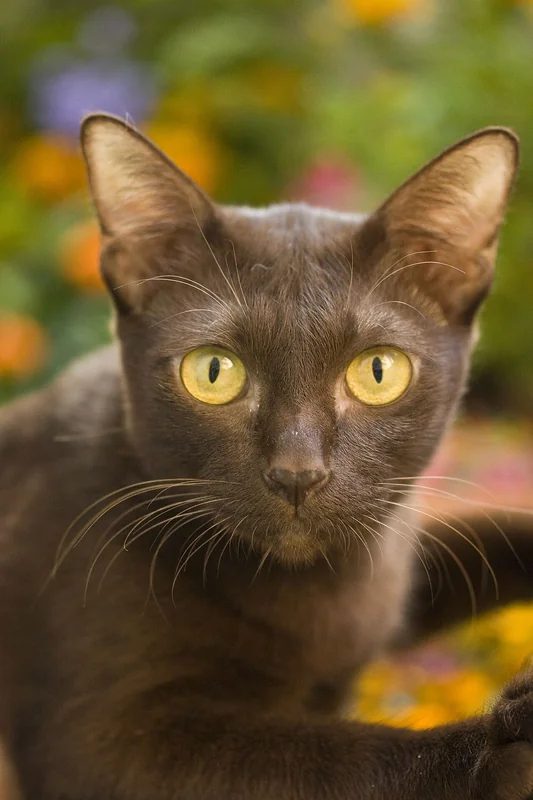
The Thai is the traditional or 'Old-Style' Siamese — closer in conformation to the original 19th-century Thai imports than the modern wedge-headed CFA Siamese. The breed was formalized as a separate breed from the Siamese by TICA in 2007 and by FIFe in 2018. Thai breed clubs and Old-Style Siamese preservationists have campaigned since the 1980s to maintain the original conformation. CFA and GCCF do not maintain a separate Thai breed register. The standard describes a medium-sized, moderate-foreign cat with point colouration.
Quick facts
- Origin country
- Thailand
- Origin period
- Old-Style Siamese; TICA recognized 2007 (separate from modern Siamese)
- Coat type
- Short
- Coat colors
- Seal Point, Blue Point, Chocolate Point, Lilac Point, Red Point, Cream Point, Tortoiseshell Point, Lynx Point variants
- Size category
- Medium
- Average lifespan
- 12-16 years
- Recognition
- TICA 2007 · FIFe 2018
Origin
The Thai is the traditional or 'Old-Style' Siamese — closer in conformation to the original 19th-century Thai imports than the modern wedge-headed CFA Siamese. The original Pho and Mia (1884), Sita (1880s), and the cats depicted in the Tamra Maew manuscripts had a moderate body, rounded head, and apple-shaped facial structure. Through the 20th century the CFA Siamese show form diverged into an extreme long-wedge head and tubular body type. Preservationists campaigned to maintain the original conformation as a separate breed under the name Thai.
Recognition
TICA accepted the Thai for registration in the early 2000s and granted full championship status in 2007 — formalizing the separation from the modern Siamese. The Fédération Internationale Féline granted championship status in 2018. CFA and GCCF do not maintain separate Thai breed registers; in those registries, Old-Style Siamese-type cats are still shown within the Siamese breed class. The Thai breed is recognized in the same point colours as the Siamese.
Standard
The TICA standard describes a medium-sized cat of moderate foreign type with a moderate wedge head, rounded contours, almond-shaped blue eyes, and a body that is long but not extreme. The coat is short, fine, and close-lying with the same point colour pattern as the Siamese: pale body with darker mask, ears, legs, and tail. The breed is recognized in the same point colours as the Siamese under TICA — seal, blue, chocolate, lilac, red, cream, tortoiseshell, and all lynx-point variants.
Sources & further reading (3)
- tica-standard — accessed 2026-04-30
- encyclopedia — accessed 2026-04-30
- fife-standard — accessed 2026-04-30
Frequently asked questions
What is the difference between the Thai and the Siamese?
The Thai is the traditional or 'Old-Style' Siamese — closer in conformation to the original 19th-century Thai imports. The modern Siamese (especially the CFA show standard) has an extreme long-wedge head and tubular body. The Thai retains a moderate, rounded conformation. Both breeds carry the same point colour pattern and originate from the same Thai foundation stock.
When was the Thai recognized as a separate breed?
TICA granted championship status to the Thai in 2007. FIFe granted championship status in 2018. CFA and GCCF do not maintain separate Thai breed registers; in those registries Old-Style Siamese-type cats are shown within the Siamese class.
Is the Thai the same as the Wichienmaat?
Wichienmaat is the original Thai-language name for the cat depicted in the Tamra Maew manuscripts as a point-coloured cat — the historical ancestor of both the modern Siamese and the Thai. The Thai breed standard explicitly preserves the conformation of the Wichienmaat as documented in the Tamra Maew. The Wichienmaat name is sometimes used interchangeably with Thai by Thai breed clubs.