The Norwegian Forest Cat is a natural long-haired breed from Norway, where it is known as the Norsk Skogkatt. Long-haired cats appear in Norwegian folklore and Norse mythology, and a distinct large-bodied forest cat type is attested in Scandinavian literature by the 19th century. The Norsk Skogkattring was founded in 1975 to preserve the breed; FIFe recognized it in 1977. TICA recognized the Norwegian Forest Cat at its 1979 founding, and CFA granted championship status in 1993.
Quick facts
- Origin country
- Norway
- Origin period
- Natural Scandinavian breed; FIFe recognition 1977; CFA recognition 1993
- Coat type
- Long
- Coat colors
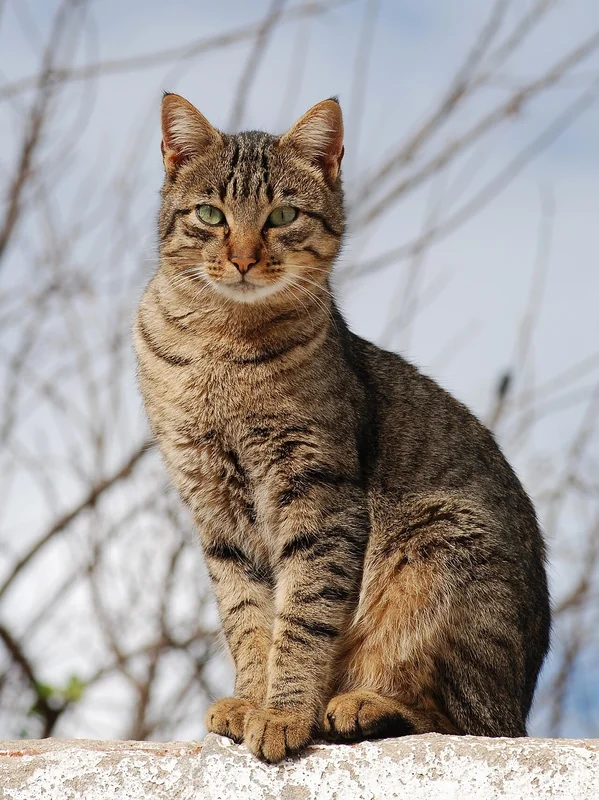
- Brown Tabby, Silver Tabby, Blue Tabby, Solid Black, Solid White, Solid Blue, Solid Red, Tortoiseshell, Bicolor, Smoke, Shaded
- Size category
- Large
- Average lifespan
- 14-16 years
- Recognition
- CFA 1993 · TICA 1979 · FIFe 1977
Origin
Long-haired cats resembling the Norwegian Forest Cat appear in Norwegian folklore and are referenced in Norse mythology. A distinct large forest cat type adapted to the Scandinavian climate is attested in 19th-century literature. The breed's water-resistant double coat, tufted paws, and large muscular body are regarded as natural adaptations to the harsh Scandinavian winter. Norwegian breeders formalized the type in the 20th century, establishing the Norsk Skogkattring in 1975.
Recognition
The Fédération Internationale Féline recognized the Norwegian Forest Cat in 1977, providing the first international standard for the breed. The International Cat Association recognized it at its 1979 founding in Texas. The Cat Fanciers' Association granted championship status in 1993 following a sustained campaign by North American breeders. The breed is shown across all major European registries under the FIFe standard or equivalent national standards.
Standard
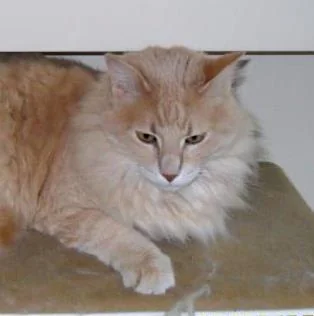
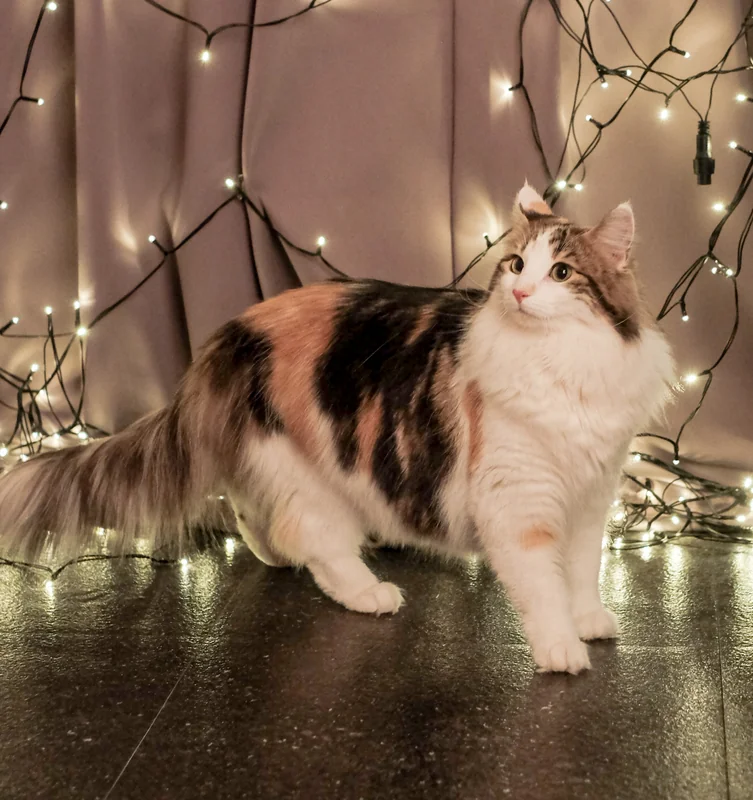
The FIFe and CFA standards describe a large, solidly built cat with a long body, substantial bone, and well-developed muscles. The head is an equilateral triangle with a straight profile, a strong chin, and a long flat forehead. The ears are large, pointed, with prominent tufts. The coat has two distinct layers: a dense woolly undercoat and a long water-resistant outer coat with a full mane at the neck and chest. All colours and patterns except pointed are recognized; chocolate, lilac, cinnamon, and fawn are excluded under the FIFe standard.
Sources & further reading (3)
- registry-breed-profile — accessed 2026-04-30
- encyclopedia — accessed 2026-04-30
- fife-standard — accessed 2026-04-30
Frequently asked questions
When was the Norwegian Forest Cat recognized internationally?
The Fédération Internationale Féline recognized the Norwegian Forest Cat in 1977. The International Cat Association recognized it at its 1979 founding. The Cat Fanciers' Association granted championship status in 1993. The breed is recognized across all major European registries.
What distinguishes the Norwegian Forest Cat's coat?
The Norwegian Forest Cat has a dense woolly undercoat and a long, semi-water-resistant outer coat — both regarded as natural adaptations to the Scandinavian climate. The FIFe standard emphasizes the coat's two-layer structure and the full mane at neck and chest as essential breed characteristics.
How large is a Norwegian Forest Cat?
Adult males commonly weigh 6 to 9 kilograms; adult females weigh 3.5 to 5 kilograms. The breed matures slowly over three to five years and is one of the largest recognized domestic cat breeds, alongside the Maine Coon and the Ragdoll.