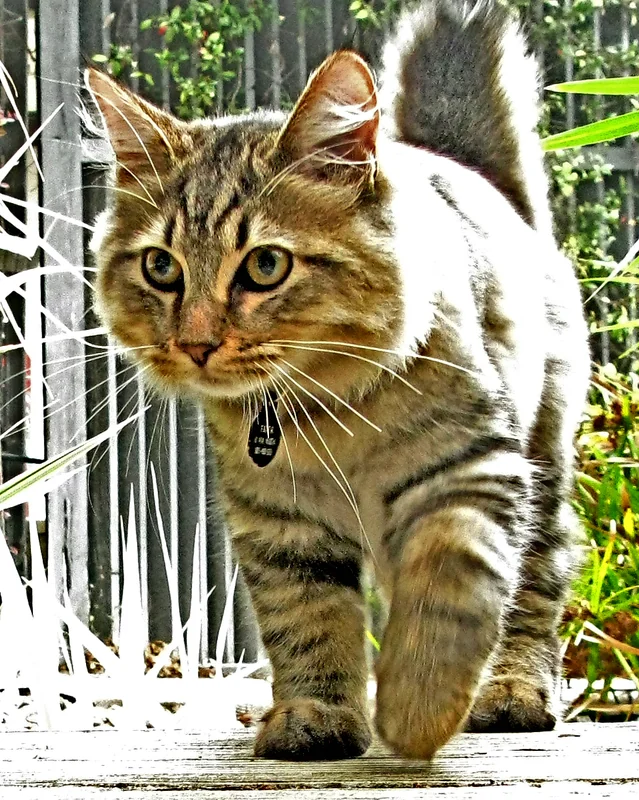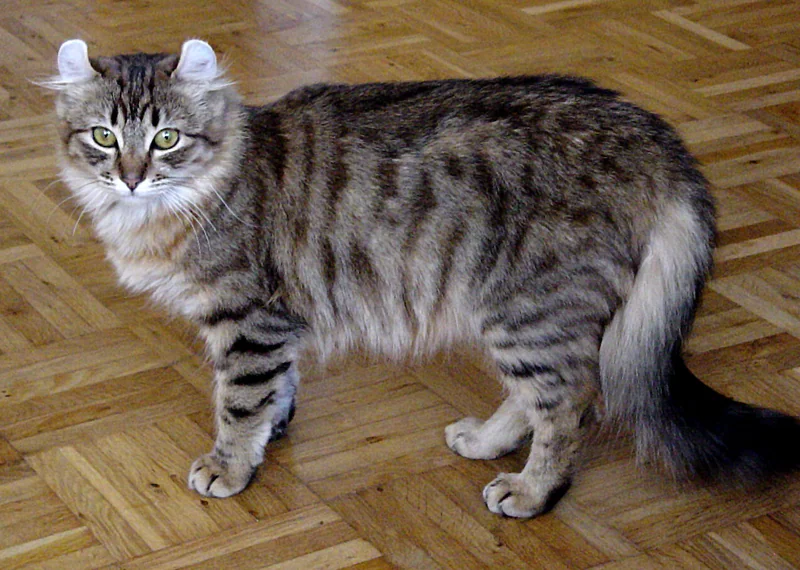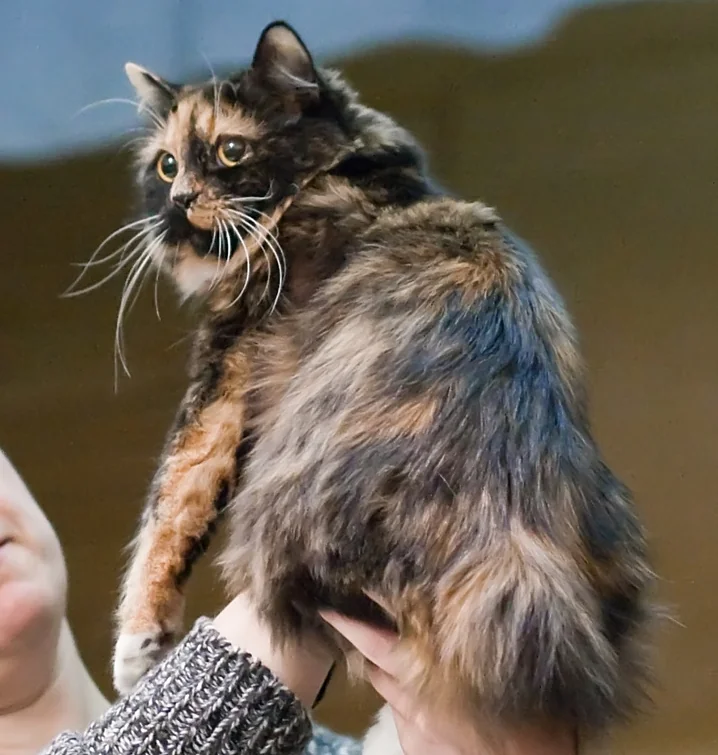
The Cymric is the long-haired variety of the Manx, recognized as a separate breed by CFA since 1994 and by TICA at its 1979 founding. Long-haired Manx kittens appeared naturally in Manx litters in Canada and on the Isle of Man; Canadian breeder Blair Wright and American breeder Leslie Falteisek formalized the breed in the 1960s. The name Cymric is derived from the Welsh name for Wales. The standard is identical to the Manx except for coat length.
Quick facts
- Origin country
- Canada / Isle of Man
- Origin period
- 1960s long-haired Manx mutation documented in Canada; CFA recognition 1994
- Coat type
- Long
- Coat colors
- All colours and patterns recognized (same restrictions as Manx: no chocolate, lavender, or Himalayan pattern in CFA)
- Size category
- Medium
- Average lifespan
- 8-14 years
- Recognition
- CFA 1994 · TICA 1979
Origin
Long-haired Manx kittens appeared naturally in Canadian breeding programmes in the 1960s, carrying a recessive longhair gene (l) that had entered Manx lines through uncontrolled breeding. Blair Wright and Leslie Falteisek in North America began developing the long-haired Manx as a separate breed and proposed the name Cymric — from the Welsh word for the Welsh people — as a Celtic parallel to Manx. Long-haired Manx had also appeared on the Isle of Man itself in the same period.
Recognition
TICA recognized the Cymric at its 1979 founding. CFA recognized the Cymric as a separate breed in 1994. GCCF-affiliated clubs in the United Kingdom classify the long-haired Manx as the Manx Longhair rather than the Cymric. FIFe has not published a separate Cymric standard. The Cymric is shown by the same breed standard as the Manx in all respects except coat length and texture.
Standard
The CFA standard describes a Cymric as conforming to the Manx standard in all respects except coat length. The coat is medium-long, silky, and of even texture, with a ruff at the neck and fuller breeches on the hind legs. The taillessness spectrum is identical to the Manx — Rumpy (no tail) and Rumpy Riser (small rise) are the only tail types accepted in CFA championship competition. All Manx colours and patterns are recognized, with the same restriction excluding chocolate, lavender, and Himalayan pattern under the CFA standard.
Sources & further reading (3)
- registry-breed-profile — accessed 2026-04-30
- encyclopedia — accessed 2026-04-30
- tica-standard — accessed 2026-04-30
Frequently asked questions
How does the Cymric differ from the Manx?
The Cymric and the Manx carry the same dominant taillessness gene (M) and are genetically identical in all respects except coat length. The Cymric has a medium-long silky coat; the Manx has a short double coat. CFA and TICA maintain them as separate breeds; some other registries, including GCCF-affiliated clubs, classify the long-haired Manx as the Manx Longhair rather than the Cymric.
When was the Cymric recognized?
TICA recognized the Cymric at its 1979 founding. CFA recognized the Cymric as a separate breed in 1994. GCCF classifies the long-haired Manx as the Manx Longhair. FIFe has not published a Cymric standard.
What does Cymric mean?
Cymric is the Welsh-derived adjective for 'Welsh' or 'Celtic'. Canadian breeders chose the name in the 1960s as a Celtic parallel to Manx — the Isle of Man is a Celtic island, and Wales (Cymru) is another Celtic nation. The name was accepted by TICA and CFA when the breed was registered.