Streptocarpus candidus
Streptocarpus candidus (White Cape Primrose) Care Guide
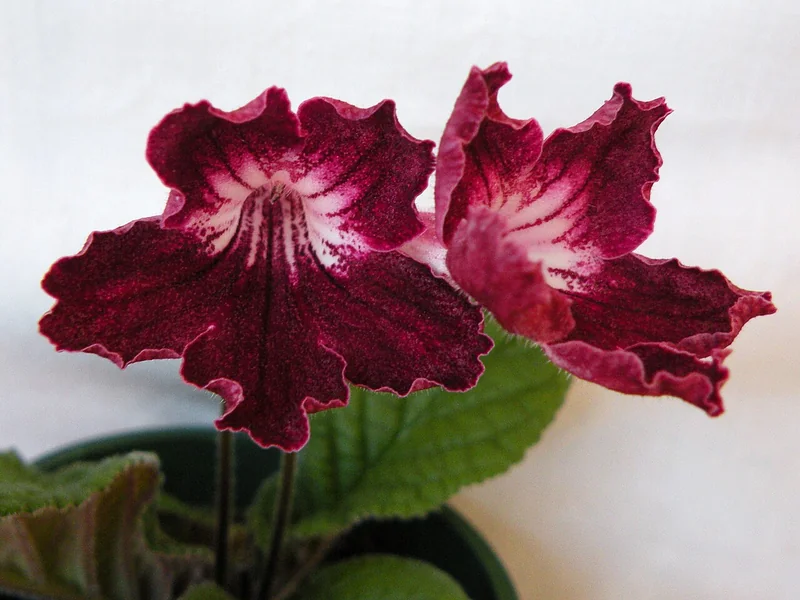 Featured photostreptocarpus-candidus.jpg
Streptocarpus candidus, sold as White Cape Primrose, is a member of *Streptocarpus*, an African gesneriad genus of about 175 species closely related to African violets. A KwaZulu-Natal species with broad strap-like leaves and tall stalks carrying pure white trumpet flowers with yellow throat markings. One of few Streptocarpus species with reliably white wild-type flowers. Streptocarpus tolerates lower light than most flowering houseplants and produces successive flushes of trumpet-shaped flowers across the year when given consistent care.
Care facts at a glance
- Light
- Bright indirect
- Water
- Water when the top 2 cm of mix has dried, then water at the soil only.
- Humidity
- 40–70 %
- Temperature
- 15–24 °C
- Soil
- Light, free-draining gesneriad mix with peat or coir and extra perlite for aeration.
- Origin
- Eastern and southern Africa, with the centre of diversity in the Drakensberg mountains and KwaZulu-Natal.
- Mature size
- 15 to 30 cm tall and wide.
Overview
Streptocarpus candidus sits in Streptocarpus (Gesneriaceae), a genus closely related to African violets and centred on the eastern slopes of the Drakensberg. A KwaZulu-Natal species with broad strap-like leaves and tall stalks carrying pure white trumpet flowers with yellow throat markings. One of few Streptocarpus species with reliably white wild-type flowers. Modern molecular taxonomy has folded the former Saintpaulia (African violet) into Streptocarpus, so the cape primroses and African violets are now technically congeneric.
Care Priorities
- Bright filtered light; direct sun bleaches the leaves.
- Water when the top 2 cm of mix has dried — never let the crown sit wet.
- High humidity (above 50 percent) keeps the foliage crisp.
- Feed lightly and often during flowering.
Common Problems
Wilting with moist soil indicates root rot. Brown crown is overwatering at the centre — water at the soil edge only. Pale or scorched leaves are too much direct sun. Failure to flower is usually low light.
Sources & further reading (2)
- encyclopedia — accessed 2026-04-29
- botanical-garden — accessed 2026-04-29
Frequently asked questions
Why are the flowers so pure white?
S. candidus is one of the species with white-flowered wild populations — most Streptocarpus produce purple, lavender, or pink flowers in habitat. The pure white is genetic, and the species has been used as a parent in white-flowered hybrid lines.
Can I propagate from a single leaf?
Yes — Streptocarpus is one of the easiest plants to propagate from leaves. Cut a healthy leaf in half along the midrib and stand each half cut-edge-down in moist propagation mix; multiple plantlets emerge along the cut within a few weeks.
How do I keep the flowers coming?
Streptocarpus blooms best with steady moisture, bright filtered light, and regular dilute feeding. Pinch off spent flower stalks at the base to encourage new bud production rather than seed-set.