Begonia bowerae
Begonia bowerae (Eyelash) Care Guide
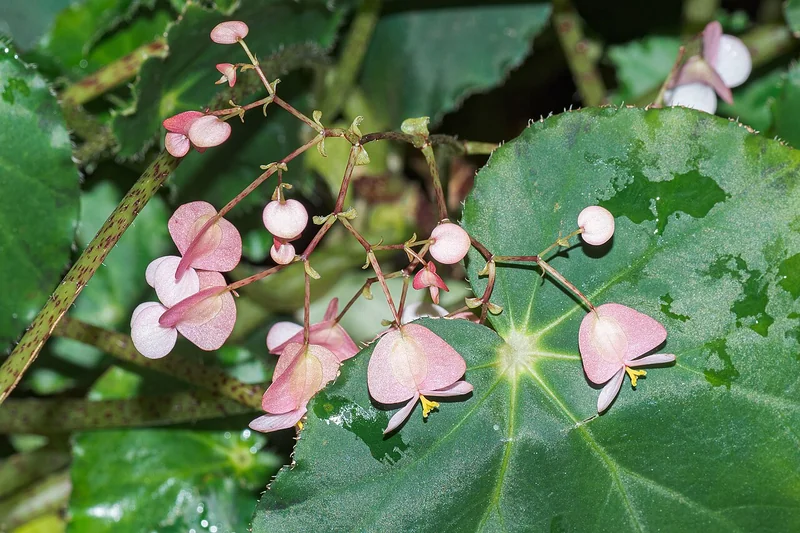 Featured photobegonia-bowerae.jpg
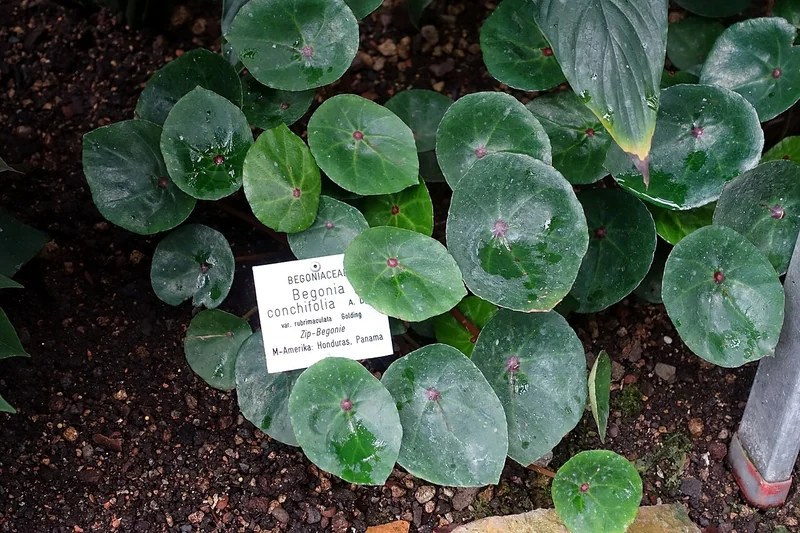
Begonia bowerae is the eyelash begonia, a Mexican rhizomatous begonia with small heart-shaped leaves edged in fine fringed hairs that look exactly like eyelashes. The leaves are dark green marked with chocolate-brown spots and the texture is striking under bright light. It stays compact and is one of the more humidity-tolerant rhizomatous begonias.
Care facts at a glance
- Light
- Bright indirect
- Water
- Water when the top 2 cm of mix has dried.
- Humidity
- 50–70 %
- Temperature
- 16–24 °C
- Soil
- Airy peat or coir mix with perlite.
- Origin
- Mexico.
- Mature size
- 15 to 25 cm tall.
Overview
Begonia bowerae was described in the 1950s and is the parent of many small-leaved hybrid begonias. The eyelash hairs are species-typical and most visible against backlight.
Care Priorities
- Bright filtered light shows off the eyelash texture.
- Higher humidity than cane begonias.
- Water at the soil only; wet leaves develop mildew.
- Compact pots suit the small rhizome.
Common Problems
Powdery mildew is the most common disease. Yellow leaves are overwatering. Loss of fringe definition is too little light.
Sources & further reading (2)
- encyclopedia — accessed 2026-04-28
- botanical-garden — accessed 2026-04-28
Frequently asked questions
Why are the leaves fringed?
The fine hairs on leaf margins are species-typical. They give the plant its eyelash trade name and are a feature of several Begonia bowerae hybrids.
Can I propagate from a leaf?
Yes — leaf-vein propagation works for rhizomatous begonias including bowerae. Lay a leaf flat with veins slit and small plants emerge from cuts.
Best display?
A small shallow pot or shared dish; the rhizome creeps over the edge and the small leaves work well in foreground positions.