Strelitzia reginae
Strelitzia reginae (Bird of Paradise) Care Guide
 Featured photostrelitzia-reginae.jpg
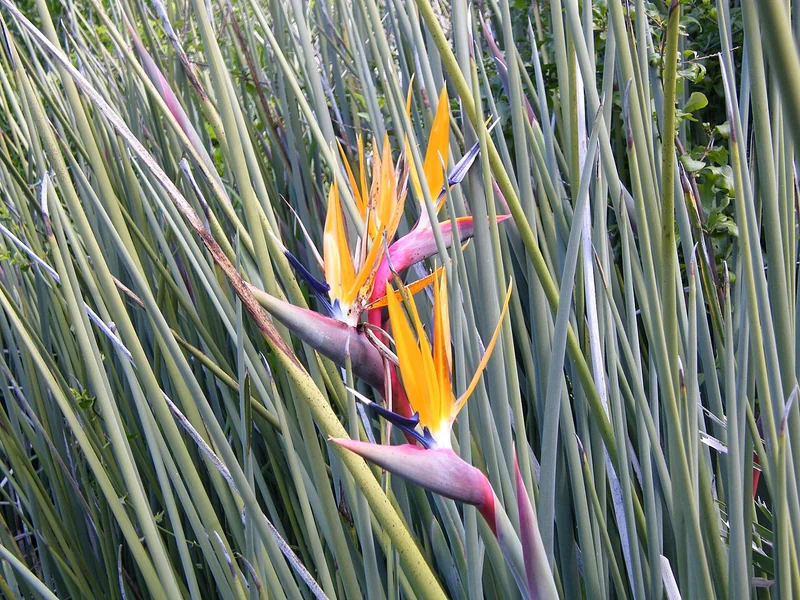
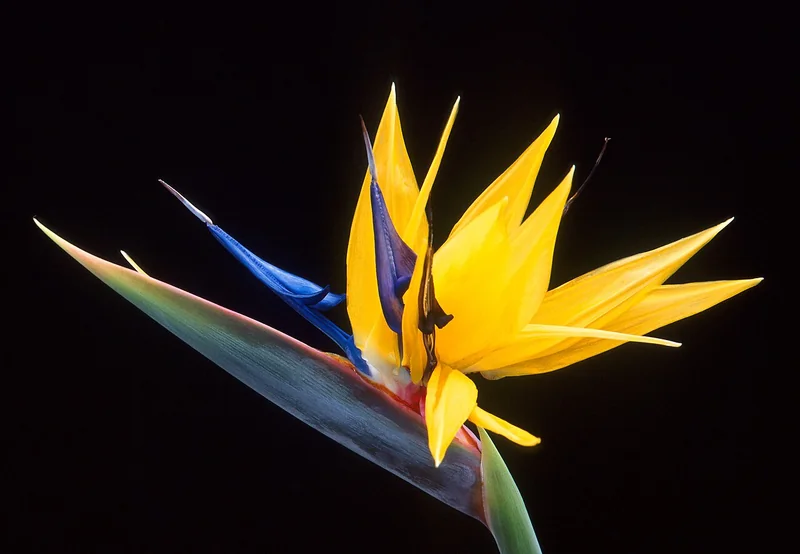
Strelitzia reginae, sold as Bird of Paradise, is a member of *Strelitzia*, a small southern African genus of dramatic monocot plants in Strelitziaceae. A South African Strelitzia with stiff paddle-shaped grey-green leaves on long stalks, reaching 1.5 to 2 m tall, and producing the iconic orange-and-blue crane-shaped flowers on mature plants. Strelitzia produces long stiff paddle-shaped leaves on tall stalks and, on mature plants, the unmistakable bird-of-paradise inflorescence.
Care facts at a glance
- Light
- Full sun
- Water
- Water deeply when the top 3 to 4 cm of mix has dried.
- Humidity
- 40–60 %
- Temperature
- 15–27 °C
- Soil
- Rich loamy mix with extra perlite and bark for aeration; Strelitzia tolerates a wide range of substrates.
- Origin
- Eastern and southern Africa, mostly KwaZulu-Natal coastal zones.
- Mature size
- 1.5 to 6 m tall depending on species; indoor specimens stay considerably smaller.
Overview
Strelitzia reginae sits in Strelitzia, a small genus of five species in Strelitziaceae, all native to coastal South Africa. A South African Strelitzia with stiff paddle-shaped grey-green leaves on long stalks, reaching 1.5 to 2 m tall, and producing the iconic orange-and-blue crane-shaped flowers on mature plants. The flowers are pollinated by sunbirds in habitat — the rigid bract acts as a perch and the petals open mechanically when the bird's weight presses against them, dusting it with pollen.
Care Priorities
- Bright direct light or full sun supports flowering on mature plants.
- Free-draining loamy mix.
- Water deeply, then let the top 3 to 4 cm dry.
- Patience — Strelitzia takes 4 to 7 years from seed or division to reach flowering size.
Common Problems
Curled or split leaves are normal in mature Strelitzia — wind tear in habitat, mechanical stress indoors. Yellow lower leaves are usually overwatering. Failure to flower is most often insufficient direct light or immature root system.
Sources & further reading (2)
- encyclopedia — accessed 2026-04-29
- botanical-garden — accessed 2026-04-29
Frequently asked questions
Why is it called bird of paradise?
The flower head of S. reginae looks remarkably like the head of an exotic bird — a pointed orange crest above a blue tongue-like petal, set against a horizontal green bract that suggests a beak. The species was named for that resemblance and the floral image is famous enough to appear on the South African 50-cent coin.
Why won't my bird of paradise flower?
Strelitzia takes 4 to 7 years from seed or division to reach flowering size, and even mature plants need substantial direct light to set buds. A south-facing window or summer outdoors with bright sun is usually the difference between foliage-only and flowering plants.
Why do the leaves split naturally?
Strelitzia leaves split along their length both indoors and in habitat — it is a structural adaptation that lets wind pass through the leaf rather than tearing it from the stalk. The splits are species-typical, not damage.