Scindapsus pictus
Scindapsus pictus (Satin Pothos) Care Guide
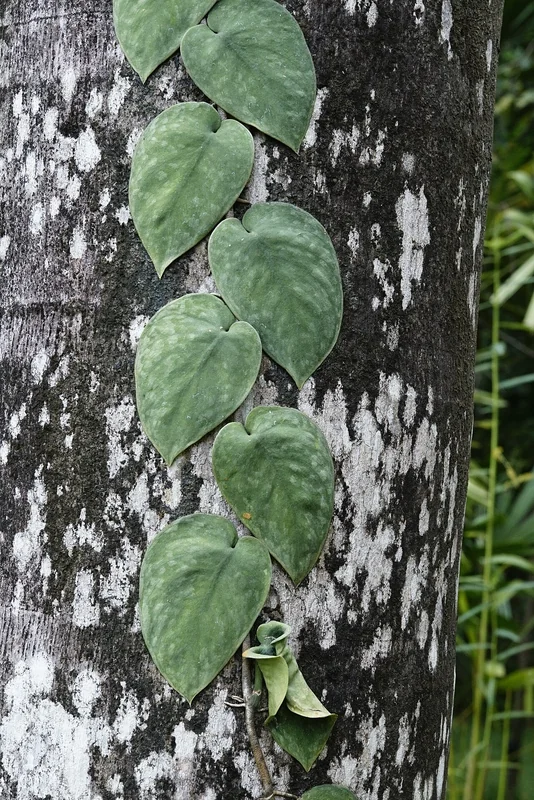 Featured photoscindapsus-pictus.jpg
Scindapsus pictus is a vining aroid often called satin pothos, although it is in the related genus Scindapsus rather than Epipremnum. Its matte, heart-shaped leaves are mottled with silver patches that catch the light without shining. The Argyraeus and Exotica cultivars are the most common in trade. It is as easy as a regular pothos for everyday rooms.
Care facts at a glance
- Light
- Bright indirect
- Water
- Water when the top 2 to 3 cm of mix has dried.
- Humidity
- 50–70 %
- Temperature
- 18–29 °C
- Soil
- Chunky aroid mix of bark, perlite, and coir.
- Origin
- Tropical Southeast Asia, including Indonesia, the Philippines, and Thailand.
- Mature size
- Vines to 2 to 3 metres indoors with support.
Overview
Scindapsus pictus is closely related to the pothos but in a separate genus. The matte leaf finish and bold silver spotting are the field marks. Argyraeus has small evenly distributed spots; Exotica has larger silver patches.
Care Priorities
- Bright filtered light keeps silver patches bright; deep shade dulls them.
- Allow the top layer of mix to dry between waterings.
- Give it a moss pole if you want larger leaves; trail it for the more typical small-leaf look.
- Pinch back to encourage branching.
Common Problems
Yellow leaves are overwatering. Curled leaves are thirst — water and they unfurl. Long stems with tiny leaves between mean the plant wants more light.
Sources & further reading (2)
- encyclopedia — accessed 2026-04-28
- botanical-garden — accessed 2026-04-28
Frequently asked questions
Is it a true pothos?
Botanically no — it is Scindapsus, not Epipremnum. Trade calls them both pothos because the care is similar.
Argyraeus vs Exotica vs Silvery Ann — different plants?
All cultivars of Scindapsus pictus, varying mostly in spot size and density. Care is the same.
Why are leaves curling and crispy?
Curling alone is thirst; curling plus crispy edges is dry air. Water and run a humidifier.