Platycerium bifurcatum
Platycerium bifurcatum (Staghorn Fern) Care Guide
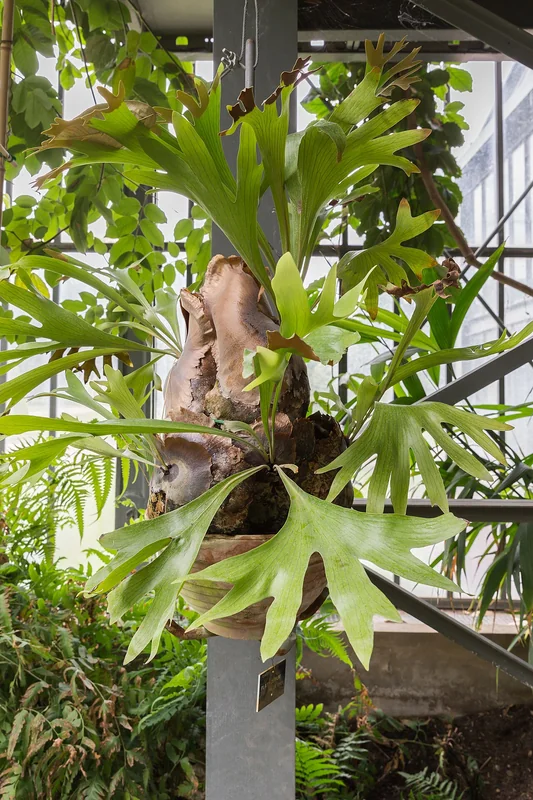 Featured photoplatycerium-bifurcatum.jpg
Platycerium bifurcatum is the staghorn fern, an Australian-Polynesian epiphyte with two distinct frond types: round, papery shield fronds that anchor the plant against bark, and forked, antler-shaped fertile fronds that produce spores. It is most often grown mounted on cork or wood, where the antler fronds drape naturally. It is the most forgiving staghorn species and the best one to start with.
Care facts at a glance
- Light
- Bright indirect
- Water
- Water by soaking the mount or pot weekly; less in winter.
- Humidity
- 50–70 %
- Temperature
- 15–27 °C
- Soil
- Mounted on cork or untreated wood with sphagnum moss; potted plants need a chunky bark and perlite mix.
- Origin
- Australia, Java, New Guinea, and Polynesia.
- Mature size
- Mounted plants 60 to 120 cm wide with mature antler fronds.
Overview
Platycerium bifurcatum is the most-grown staghorn fern because of its tolerance of a range of conditions. The two frond types — shield fronds for anchoring, antler fronds for spore production — are species-typical.
Care Priorities
- Mount on cork, wood, or in a wire basket with sphagnum.
- Soak weekly by submerging the mount or pot in water for 10 to 20 minutes.
- Bright filtered light; tolerates a few hours of direct morning sun.
- Do not pull off old shield fronds — they form a protective layer over time.
Common Problems
Black, mushy rhizome is rot from prolonged wet conditions. Crispy antler fronds are dry air. Brown shield fronds are usually old age and a normal part of the layering process.
Sources & further reading (2)
- encyclopedia — accessed 2026-04-28
- botanical-garden — accessed 2026-04-28
Frequently asked questions
Why is the round shield turning brown?
Shield fronds are designed to age and brown — they form a layered base that protects the rhizome. Do not pull them off; they are part of the plant's structure.
How often should I soak it?
Once a week in summer, every 10 to 14 days in winter. Pot weight is the easiest indicator — light pot means soak.
Can it grow indoors year-round?
Yes — staghorn ferns adapt well to indoor conditions when mounted properly and soaked on a steady rhythm.