Microsorum musifolium
Microsorum musifolium (Crocodile Fern) Care Guide
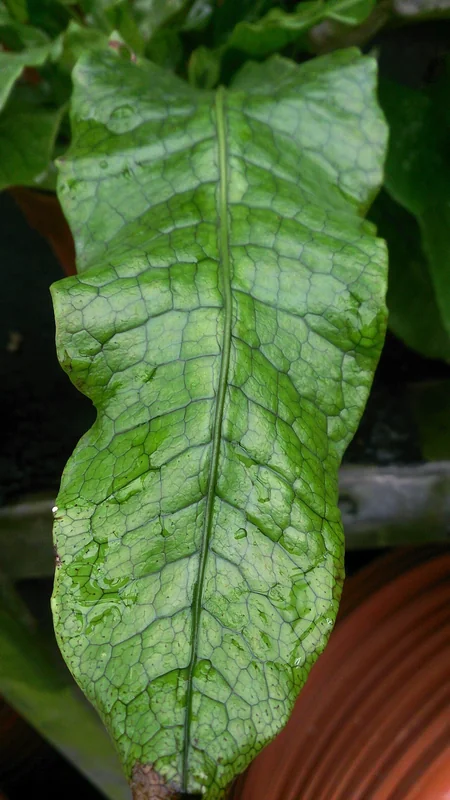 Featured photomicrosorum-musifolium.jpg
Microsorum musifolium is the crocodile fern, a Southeast Asian epiphytic fern with broad, strap-shaped, glossy fronds marked in dark green veins that look exactly like crocodile skin. The Crocodyllus cultivar with the boldest pattern is the most common in trade. It tolerates ordinary indoor humidity better than tropical ferns and is striking enough to anchor a foliage display.
Care facts at a glance
- Light
- Bright indirect
- Water
- Water when the top 2 cm of mix has dried.
- Humidity
- 50–70 %
- Temperature
- 18–27 °C
- Soil
- Airy epiphytic mix of bark, perlite, and coir.
- Origin
- Forests of Indonesia, Malaysia, Australia, and the western Pacific.
- Mature size
- 60 to 90 cm tall, similar spread.
Overview
Microsorum musifolium is one of several broad-leaved epiphytic ferns from Southeast Asia. The crocodile-skin venation pattern is species-typical and intensifies on healthy plants in good light.
Care Priorities
- Bright filtered light shows off the venation pattern.
- Use an airy epiphytic mix.
- Allow the top of the mix to dry between waterings.
- Wipe the broad fronds gently to remove dust.
Common Problems
Yellow fronds are overwatering. Crispy edges are dry air. Pale, washed-out venation is too little light.
Sources & further reading (2)
- encyclopedia — accessed 2026-04-28
- botanical-garden — accessed 2026-04-28
Frequently asked questions
Why is it called crocodile fern?
The dark green vein pattern on the bright green leaf surface looks exactly like crocodile skin from a few metres away.
Easier than maidenhair fern?
Yes — much easier. Crocodile fern tolerates a wider range of indoor conditions.
Will it grow on a moss pole?
It is epiphytic in nature, so yes — but most growers keep it in pots because it stays compact and tidy.