Peperomia prostrata
Peperomia prostrata (String of Turtles) Care Guide
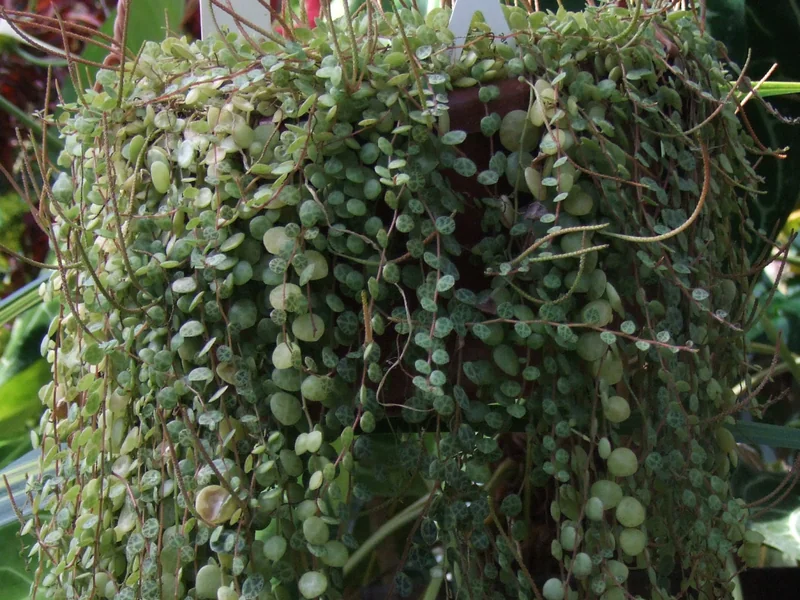 Featured photopeperomia-prostrata.jpg
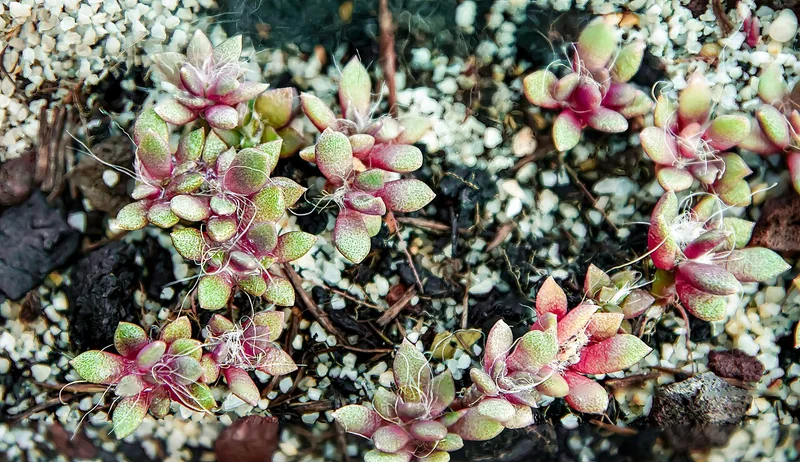
Peperomia prostrata is the string of turtles — a creeping rainforest peperomia with tiny round leaves marked in pale veins that look exactly like turtle shells. The threadlike stems trail and root along their length. It is more humidity-loving than most peperomias and a popular choice for terrariums and small hanging pots.
Care facts at a glance
- Light
- Bright indirect
- Water
- Water when the top of the mix has dried; do not let it dry to the bone.
- Humidity
- 60–80 %
- Temperature
- 18–27 °C
- Soil
- Loose, airy mix of bark, perlite, and sphagnum.
- Origin
- Rainforests of Brazil and Ecuador.
- Mature size
- Trailing stems to 30 cm long, leaves under 1 cm.
Overview
Peperomia prostrata is from the floor of South American rainforests, where it creeps over fallen wood and leaf litter. The patterned leaves are exactly the size and texture of small turtle shells, hence the trade name.
Care Priorities
- Bright but soft filtered light; direct sun bleaches the small leaves.
- Higher humidity than most peperomias — terraria and bathrooms work well.
- Keep the mix consistently lightly moist.
- Use shallow pots; the root system is small.
Common Problems
Strands shrivelling is usually a humidity drop. Yellow strands are overwatering. Bare patches in the middle of the trail can be light deprivation under denser growth above.
Sources & further reading (2)
- encyclopedia — accessed 2026-04-28
- botanical-garden — accessed 2026-04-28
Frequently asked questions
Why does my string of turtles dry out so fast?
The small leaves transpire quickly relative to the tiny root system, especially in dry indoor air. Higher humidity and consistent moisture solve most cases.
Is it really a peperomia?
Yes — the small flower spikes and the flesh of the stems give it away despite the unusual leaves.
Best display?
Shallow hanging pot, a terrarium, or a closed glass cloche. The trailing strands look best from above.