Maranta leuconeura
Maranta leuconeura Kerchoveana (Rabbit's Foot) Care Guide
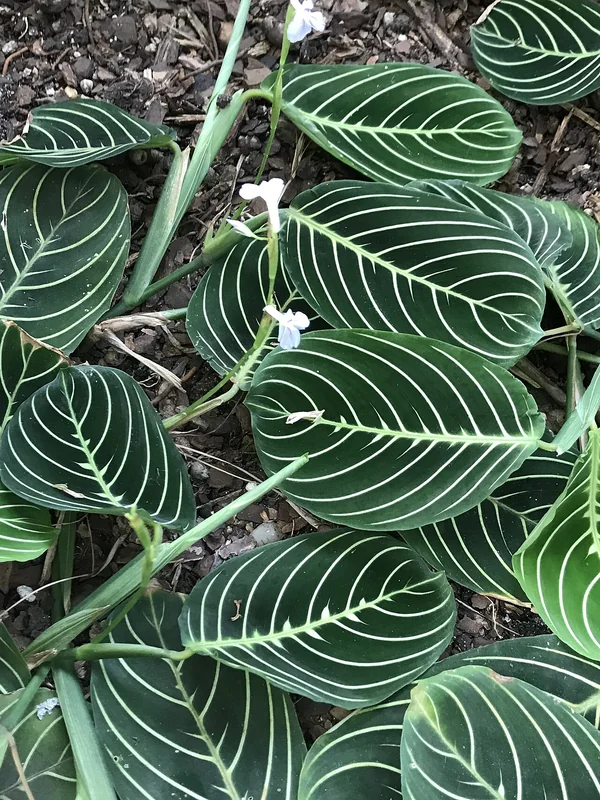 Featured photomaranta-leuconeura-kerchoveana.jpg
Maranta leuconeura Kerchoveana is the rabbit's foot prayer plant, a Brazilian prayer plant cultivar with apple-green leaves marked by two rows of dark green-purple spots that resemble rabbit footprints. Like all marantas it folds its leaves upward at night. It is one of the easier prayer plants for ordinary indoor humidity and tolerates more variable conditions than calatheas.
Care facts at a glance
- Light
- Bright indirect
- Water
- Water when the top 1 to 2 cm of mix has dried.
- Humidity
- 50–70 %
- Temperature
- 18–27 °C
- Soil
- Peat-rich, well-draining mix with perlite.
- Origin
- Forests of Brazil.
- Mature size
- 20 to 30 cm tall, spreading.
Overview
Maranta leuconeura Kerchoveana is one of the original cultivars of the species and predates the more colourful red-veined Erythroneura form. Both share the prayer-plant leaf-folding behaviour.
Care Priorities
- Soft filtered light keeps the spots vivid.
- Filtered water; marantas are sensitive to chloride.
- Keep evenly moist, never bone-dry.
- Higher humidity than typical houseplants suits it best.
Common Problems
Crispy edges are tap-water salts or dry air. Yellow leaves are overwatering. Curled leaves are usually low humidity or thirst.
Sources & further reading (2)
- encyclopedia — accessed 2026-04-28
- botanical-garden — accessed 2026-04-28
Frequently asked questions
Easier than calathea?
Yes — marantas tolerate ordinary indoor humidity better than calatheas, although both still prefer 60+ percent.
Why does it fold up at night?
All prayer plants do this — specialised cells at the base of the petiole change pressure with light cycles, lifting the leaves upright at night.
Kerchoveana vs Erythroneura?
Different cultivars of the same species. Kerchoveana has plain green leaves with dark spots; Erythroneura has red veins on dark green.