Hoya retusa
Hoya retusa (Grass-Leafed Hoya) Care Guide
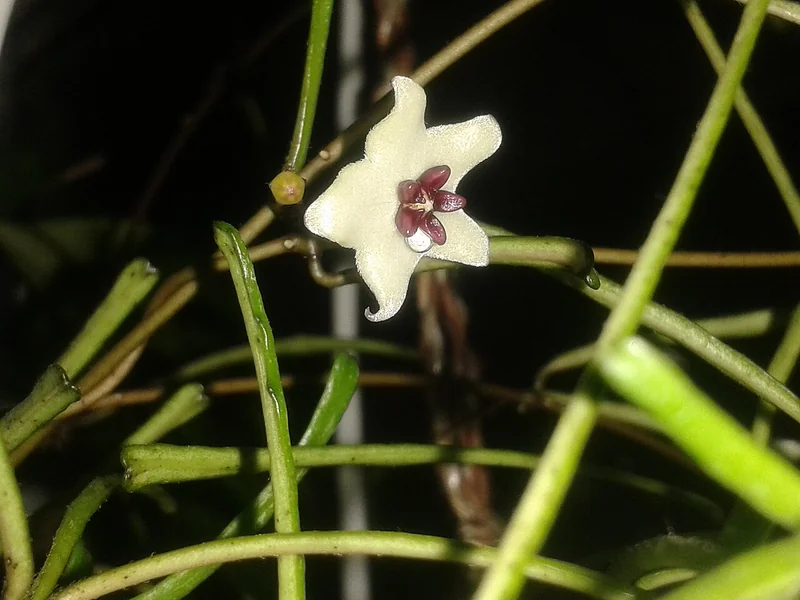 Featured photohoya-retusa.jpg
Hoya retusa is one of the most unusual hoyas, with flat, narrow, grass-like leaves clustered along thin stems. It is native to southern India, grows quickly when given bright light and a chunky mix, and produces small but very fragrant single white-and-red star flowers. It tolerates indoor conditions well and rewards patient growers with reliable summer blooms.
Care facts at a glance
- Light
- Bright indirect
- Water
- Water when the top 2 to 3 cm of mix has dried.
- Humidity
- 40–60 %
- Temperature
- 16–27 °C
- Soil
- Very free-draining mix of orchid bark, perlite, and coir.
- Origin
- Western Ghats and southern India.
- Mature size
- Trailing stems to 60 cm long.
Overview
Hoya retusa was described in the 1880s and is one of a small group of hoyas with reduced, grass-like leaves. The species name retusa refers to the slightly notched leaf tip.
Care Priorities
- Bright filtered light or a few hours of direct sun.
- Allow the top of the mix to dry between waterings.
- Hanging pot or shallow dish; the thin trailing stems display well.
- Keep peduncles intact for repeat blooming.
Common Problems
Yellow leaves are overwatering. Spindly growth with sparse leaves is too little light. Sudden bud drop is a watering swing during flower formation.
Sources & further reading (2)
- encyclopedia — accessed 2026-04-28
- botanical-garden — accessed 2026-04-28
Frequently asked questions
Why does my retusa rarely flower?
Flowering needs bright light, a slightly root-bound pot, and intact peduncles. Many indoor plants are simply too shaded.
Are the leaves really single grass blades?
Yes — each leaf is a single narrow strap rather than the typical thick oval of other hoyas. The form is genus-typical for retusa, not stunting.
Best display?
A small hanging pot or a wide shallow dish; the trailing stems and grass leaves look best from above or eye level.