Hoya obovata
Hoya obovata Care Guide
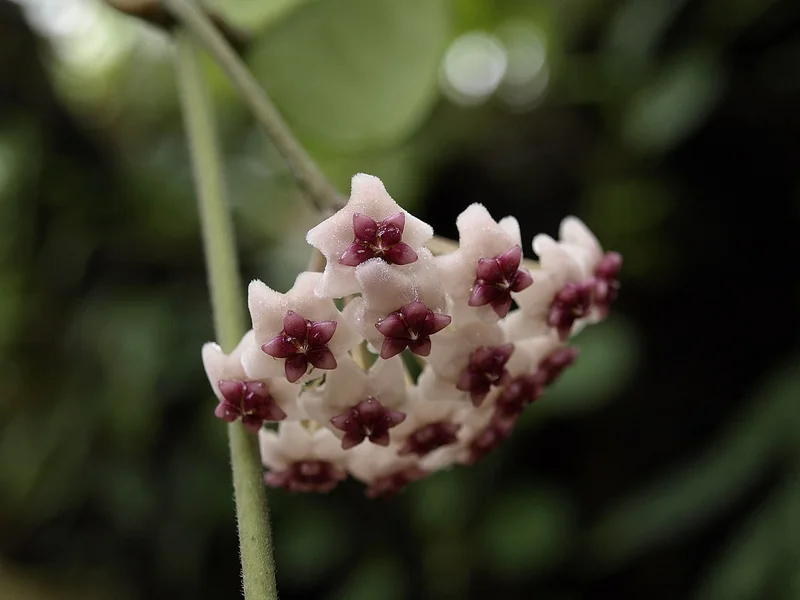 Featured photohoya-obovata.jpg
Hoya obovata is a robust hoya with large, rounded, succulent leaves often speckled in silver-white. It is native to a wide range across India, Indonesia, and Fiji, and is one of the easiest hoyas for new growers because of its large reserves and tolerance of imperfect watering. Mature plants flower reliably with pink-and-red star umbels.
Care facts at a glance
- Light
- Bright indirect
- Water
- Water when the top 3 to 4 cm of mix has dried.
- Humidity
- 40–60 %
- Temperature
- 16–27 °C
- Soil
- Very free-draining mix of orchid bark, perlite, and coir.
- Origin
- Tropical Asia and the western Pacific, from India to Fiji.
- Mature size
- Vines to 2 to 3 metres indoors with support.
Overview
Hoya obovata was described in the 1800s and is one of the more cold-tolerant hoyas in cultivation. The silver flecks on the leaves are species-typical and intensify in brighter light.
Care Priorities
- Bright filtered light brings out the silver speckles.
- Water sparingly — the thick leaves store reserves for weeks.
- Trellis or hoop support for climbing growth and bigger leaves.
- Leave peduncles intact for repeat flowering.
Common Problems
Yellow leaves with mushy bases is overwatering. Wrinkled leaves are extreme drought (rare). No flowers usually means too little light or removed peduncles.
Sources & further reading (2)
- encyclopedia — accessed 2026-04-28
- botanical-garden — accessed 2026-04-28
Frequently asked questions
Are the silver flecks variegation?
Not in the genetic sense — they are surface flecks that appear on healthy plants in good light. They can be patchy on stressed plants.
How big do the leaves get?
Large for a hoya — 8 to 12 cm long on a mature climbing plant. Hanging plants tend to have smaller leaves.
Best for beginners?
Yes — obovata is one of the most forgiving hoyas because of its large leaf reserves.