Hoya linearis
Hoya linearis (String Hoya) Care Guide
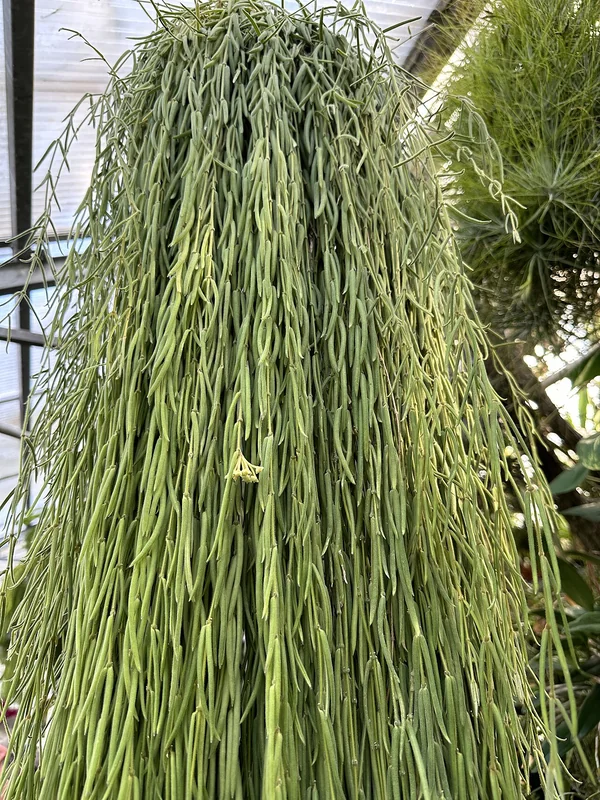 Featured photohoya-linearis.jpg
Hoya linearis is a Himalayan hoya with very thin, soft, hairy needle-like leaves on long pendant stems. It looks more like a thin moss than a typical hoya and trails dramatically from a hanging pot. It is more humidity-loving and cool-tolerant than most hoyas, reflecting its mid-elevation Himalayan origins.
Care facts at a glance
- Light
- Bright indirect
- Water
- Water when the top of the mix has dried; do not let the long roots fully dry.
- Humidity
- 50–70 %
- Temperature
- 10–24 °C
- Soil
- Loose, airy mix of bark, perlite, and sphagnum.
- Origin
- Himalayan foothills in northern India, Nepal, Bhutan, and southwestern China.
- Mature size
- Pendant stems to 1 metre long.
Overview
Hoya linearis was described in the 1800s and remains one of the most distinctive hoyas because of its needle-leaf form. Its mid-elevation origins make it cooler-tolerant and slightly less drought-tolerant than typical lowland hoyas.
Care Priorities
- Bright filtered light keeps the cascading habit dense.
- Higher humidity than most hoyas — do not let it dry to the bone.
- Cooler temperatures (down to 10 °C in winter) suit it well.
- Hanging pots are ideal; the long pendant stems display naturally.
Common Problems
Whole strands shrivelling at once is usually rot at the soil line — check the crown carefully. Sparse, thin growth is too little light. Stunted new tips can be spider mite damage on the unfurling leaves.
Sources & further reading (2)
- encyclopedia — accessed 2026-04-28
- botanical-garden — accessed 2026-04-28
Frequently asked questions
Is linearis really a hoya?
Yes — the small white star flowers and milky sap give it away despite the unusual leaves.
How do I keep it humid in winter?
Group it with other plants, use a pebble tray, or run a small humidifier near the pot. It crisps below 50 percent humidity.
Why do my strands keep dying back?
Crown rot is the textbook linearis failure. Use a chunky mix, water from the side rather than the centre, and avoid sealed cachepots.