Caladium bicolor
Caladium bicolor (Angel Wings) Care Guide
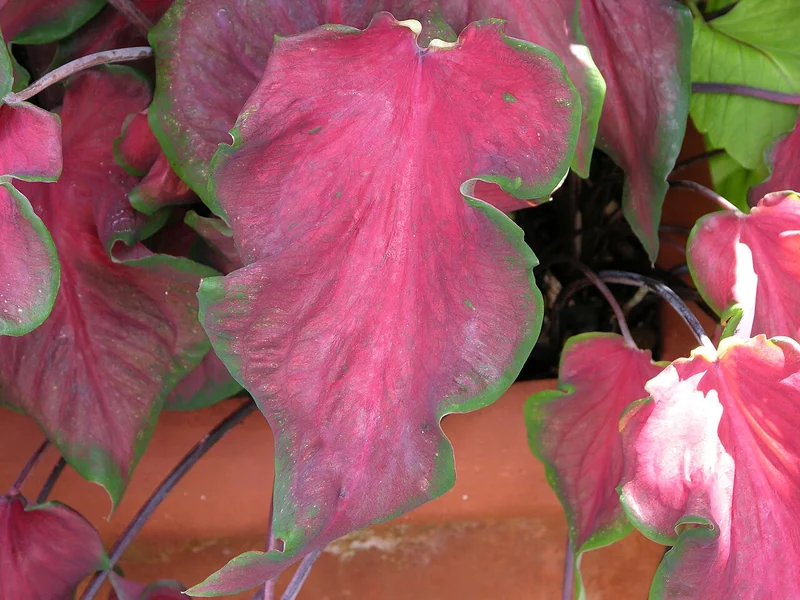 Featured photocaladium-bicolor.jpg
Caladium bicolor is a tuberous aroid from tropical America that produces large, paper-thin, heart-shaped leaves marked in dramatic combinations of green, white, pink, and red. It grows from corms, goes dormant in winter, and re-emerges in spring. Indoors it is treated as a seasonal display plant rather than a permanent foliage piece.
Care facts at a glance
- Light
- Bright indirect
- Water
- Keep the mix evenly moist while in active growth; let it dry as the plant goes dormant in autumn.
- Humidity
- 60–80 %
- Temperature
- 21–29 °C
- Soil
- Peat-rich, well-draining mix with extra perlite.
- Origin
- Tropical forests of South America from the Amazon basin to Brazil.
- Mature size
- 30 to 60 cm tall and wide during active growth.
Overview
Caladium bicolor has been cultivated for centuries in South America and Europe; modern trade offers hundreds of cultivars varying in size, leaf shape, and colour pattern. Indoor plants generally last a few months before going dormant.
Care Priorities
- Warm temperatures above 21 °C — caladiums sulk in cool conditions.
- High humidity prevents the thin leaves from crisping.
- Bright filtered light intensifies leaf colour without bleaching it.
- Honour dormancy — let the foliage die back, then store the dry corm at 18 to 21 °C until spring.
Common Problems
Brown crispy edges are dry air. Sudden leaf yellowing in autumn is normal dormancy onset, not a problem. Failure to re-emerge after dormancy usually means the corm rotted or stored too cold.
Sources & further reading (2)
- encyclopedia — accessed 2026-04-28
- botanical-garden — accessed 2026-04-28
Frequently asked questions
Why is my caladium dying back in autumn?
It is supposed to. Caladiums are tuberous and naturally go dormant when day length and temperature drop. Stop watering, let leaves yellow, and store the corm dry.
Can I keep it as a year-round houseplant?
Some cultivars stay evergreen with constant warmth above 21 °C and bright light, but most go dormant regardless.
Indoor or outdoor?
Both. In warm-summer climates caladiums make excellent shaded patio plants; bring corms inside before temperatures fall below 15 °C.