Begonia soli-mutata
Begonia soli-mutata Care Guide
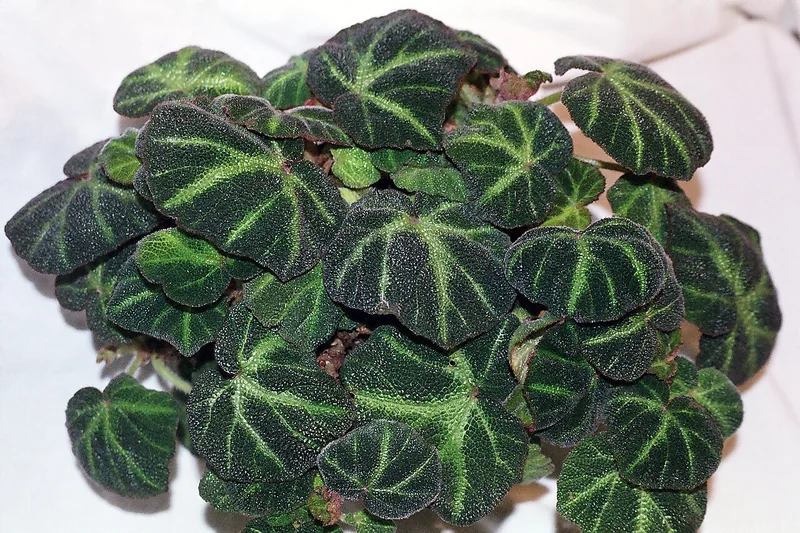 Featured photobegonia-soli-mutata.jpg
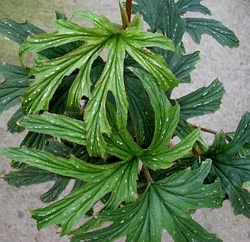
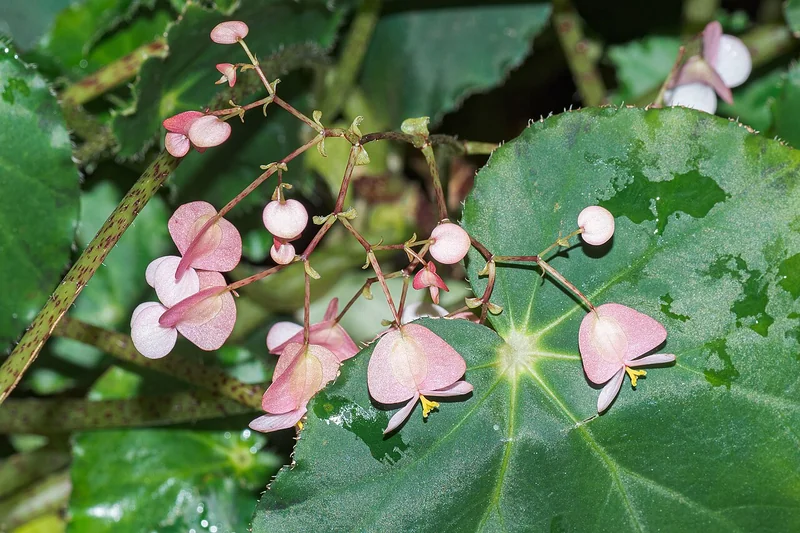
Begonia soli-mutata is a Brazilian rhizomatous begonia with deeply quilted, almost reptilian leaves that shift colour from dark green in shade to bronze-purple in bright sun — the species name literally means sun-changing. It is more sun-tolerant than typical begonias and produces small pink flowers on tall stalks.
Care facts at a glance
- Light
- Bright indirect
- Water
- Water when the top 2 cm of mix has dried.
- Humidity
- 50–70 %
- Temperature
- 18–27 °C
- Soil
- Airy peat or coir mix with perlite.
- Origin
- Forests of southeastern Brazil.
- Mature size
- 20 to 30 cm tall.
Overview
Begonia soli-mutata was described in the 1980s and is one of the more sun-tolerant rhizomatous begonias. The colour-shifting leaves are species-typical and reversible — moving the plant changes the colour back.
Care Priorities
- Bright filtered light or a few hours of direct morning sun.
- Higher humidity than cane begonias.
- Water at the soil only.
- The textured leaves prefer a chunkier airy mix.
Common Problems
Powdery mildew is the most common disease. Loss of bronze tone is from low light. Yellow leaves are overwatering.
Sources & further reading (2)
- encyclopedia — accessed 2026-04-28
- botanical-garden — accessed 2026-04-28
Frequently asked questions
Why does the colour change?
The leaves are reversibly chromogenic — they produce more anthocyanin pigment in bright sun, shifting from green toward bronze-purple. Moving back to shade reverses the change.
Tolerant of direct sun?
More than typical begonias, but full midday sun still bleaches the leaves. A few hours of morning sun is the sweet spot.
Easy to propagate?
Yes — leaf-vein propagation works well, like other rhizomatous begonias.