Begonia masoniana
Begonia masoniana (Iron Cross) Care Guide
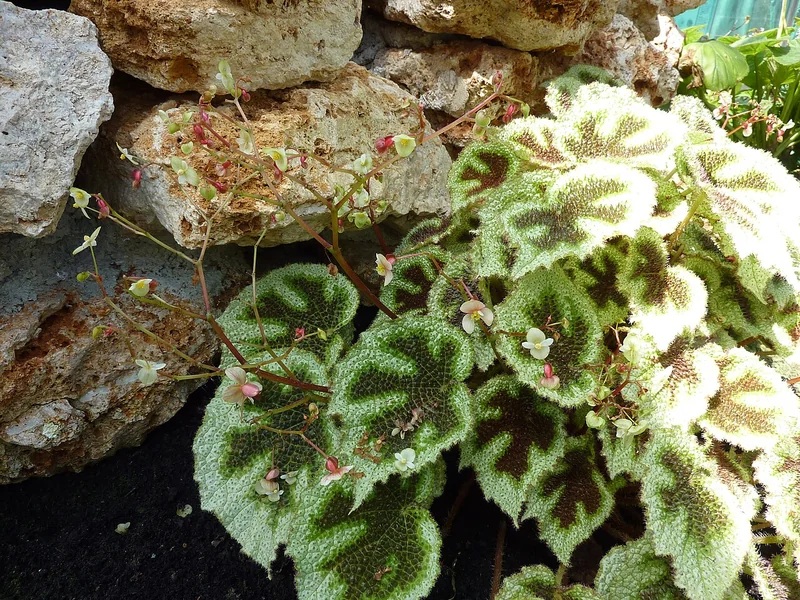 Featured photobegonia-masoniana.jpg
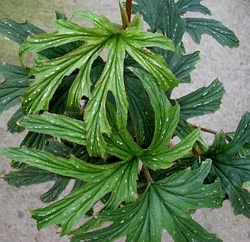
Begonia masoniana is the iron cross begonia — apple-green leaves with a deep brown-purple cross pattern in the centre and a heavily puckered, almost reptilian texture. The mark is so distinctive it gave the plant its trade name. It is a rhizomatous begonia from southern China and Vietnam and one of the more dramatic-looking begonias for foliage display.
Care facts at a glance
- Light
- Bright indirect
- Water
- Water when the top 2 cm of mix has dried.
- Humidity
- 50–70 %
- Temperature
- 16–24 °C
- Soil
- Airy mix of peat or coir with perlite; slightly acidic.
- Origin
- Southern China and Vietnam.
- Mature size
- 30 to 45 cm tall, similar spread.
Overview
Begonia masoniana was described in the 1950s from material collected by L. Maurice Mason. The dark central cross is sometimes compared to the German Iron Cross military medal, hence the trade name.
Care Priorities
- Bright filtered light keeps the cross pattern crisp.
- Keep the rhizome lightly moist; never let it dry to bone-dry.
- Avoid wetting the textured leaves.
- Higher humidity than cane begonias; bathrooms and grouped plants suit it.
Common Problems
Powdery mildew is the most common issue. Yellowing leaves with mushy bases is rhizome rot from overwatering. Faded cross pattern is too little light or aging leaves.
Sources & further reading (2)
- encyclopedia — accessed 2026-04-28
- botanical-garden — accessed 2026-04-28
Frequently asked questions
Why is the leaf so puckered?
The texture is species-typical — the upper surface has raised cell layers while the underside is flatter. It looks more dramatic on healthy, well-fed plants.
Can I propagate from leaf cuttings?
Yes — like other rhizomatous begonias, leaf-vein propagation works well. Lay a leaf flat on moist mix with the veins nicked.
Indoor and outdoor?
Indoor only in temperate climates. Outdoor exposure to anything below 12 °C damages the rhizome.