Asparagus setaceus
Asparagus setaceus (Asparagus Fern) Care Guide
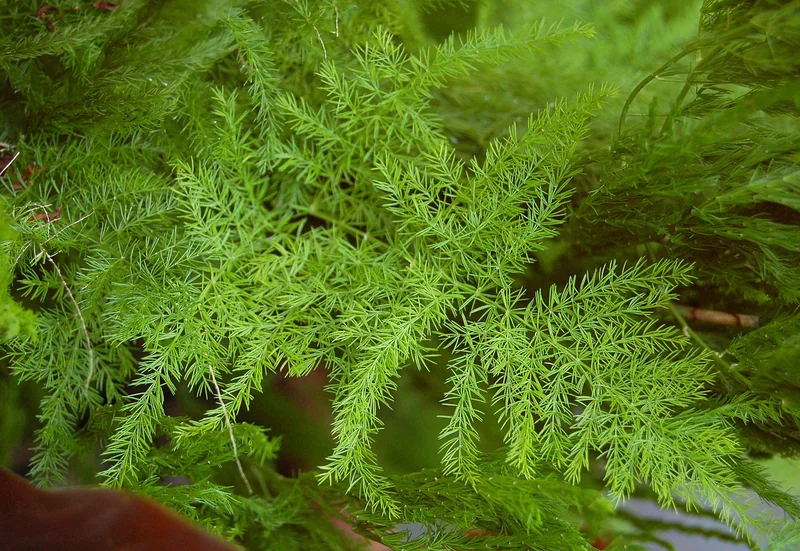 Featured photoasparagus-setaceus.jpg
Asparagus setaceus, sold as Asparagus Fern, is a member of *Asparagus* — the same genus as the culinary asparagus. A southern African Asparagus with extremely fine feathery cladodes on slender twining stems, giving the plant a delicate fern-like appearance. Mature plants climb to 2 m on supports. Despite the trade names that compare them to ferns, these species reproduce by seed rather than spores, and the fine 'foliage' is made of modified stems (cladodes) rather than true leaves.
Care facts at a glance
- Light
- Bright indirect
- Water
- Water when the top 2 cm of mix has dried.
- Humidity
- 40–60 %
- Temperature
- 15–27 °C
- Soil
- Free-draining houseplant mix with perlite.
- Origin
- Eastern South Africa.
- Mature size
- 30 to 90 cm tall, spreading.
Overview
Asparagus setaceus sits in Asparagaceae alongside the culinary asparagus. A southern African Asparagus with extremely fine feathery cladodes on slender twining stems, giving the plant a delicate fern-like appearance. Mature plants climb to 2 m on supports. What looks like fine fronds are actually modified stems called cladodes that do photosynthesis — true leaves are reduced to small scales hidden along the woody stems.
Care Priorities
- Bright filtered light or a few hours of direct morning sun.
- More drought-tolerant than true ferns.
- Wear gloves when handling — small thorns hide between the cladodes.
- Trim back yellowing stems at the base; new ones emerge from the rhizome.
Common Problems
Yellowing cladodes are usually overwatering or, in winter, too cold. Loss of fine cladodes in dry air looks like the plant is shedding. Stems with hidden thorns scratch hands during repotting.
Sources & further reading (2)
- encyclopedia — accessed 2026-04-29
- botanical-garden — accessed 2026-04-29
Frequently asked questions
How is A. setaceus different from A. densiflorus?
A. setaceus has finer, more horizontally-arranged cladodes giving a true fern-frond look, while A. densiflorus carries denser, more upright cladodes in tighter sprays. A. setaceus also climbs more readily and is the species most widely used as cut foliage in florist work.
Are these really ferns?
No — Asparagus species are flowering plants that produce seed-bearing red berries, not spores. The fern-like appearance comes from fine modified stems (cladodes) that take over the photosynthetic role from reduced leaves. They sit in Asparagaceae, not in any fern lineage.
How do I propagate?
Asparagus species are best propagated by division of the underground rhizome in spring. Unpot the plant, separate the rhizome into clumps each carrying several stems, and replant each clump in a fresh pot. Divisions establish quickly with steady moisture.