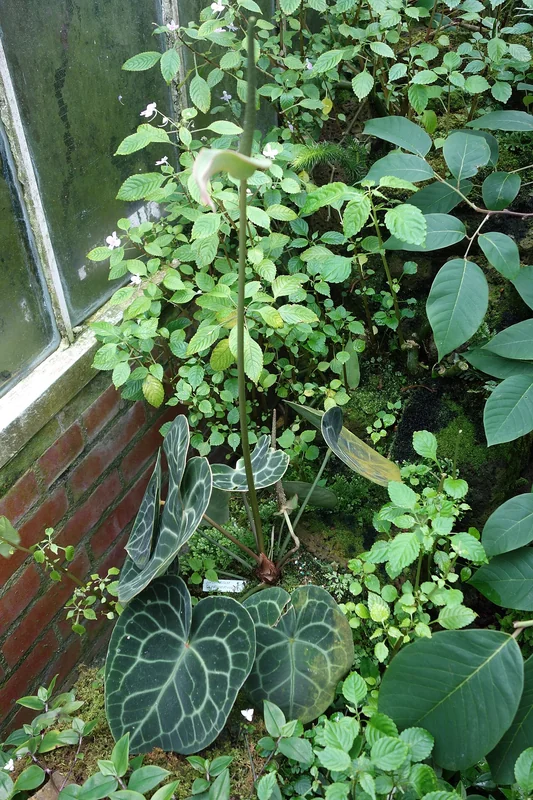
Anthurium clarinervium is a foliage species with thick, heart-shaped, dark-green leaves marked by bold silver-white veins. It is a slow grower from Mexican limestone forests that wants warmth, very airy mix, and steady moisture without ever sitting wet. Indoors the leaves can reach 25 cm long and last for years if pests are kept off.
Care facts at a glance
- Light
- Bright indirect
- Water
- Water when the top 2 cm of mix dries; the rest of the root zone should stay just barely moist.
- Humidity
- 60–80 %
- Temperature
- 18–27 °C
- Soil
- Very chunky mix: orchid bark and perlite dominant, with a small fraction of coir or sphagnum for moisture.
- Origin
- Limestone forests of Chiapas, southern Mexico.
- Mature size
- 40 to 60 cm tall, leaves up to 25 cm long.
Overview
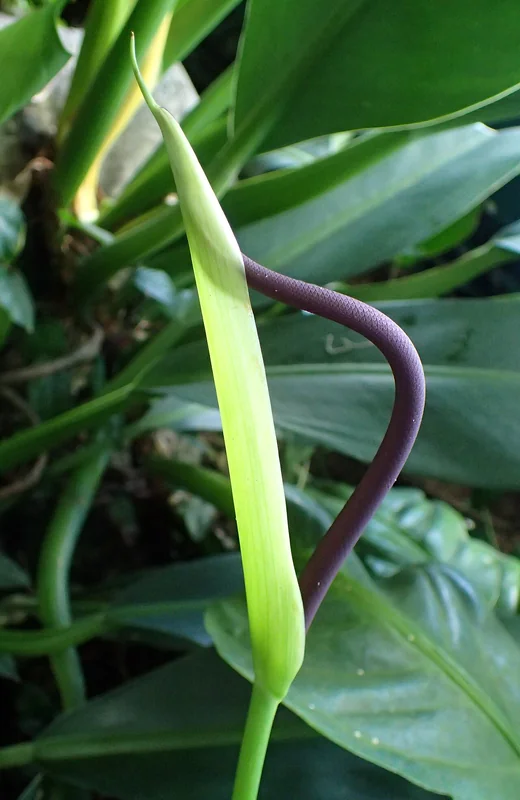
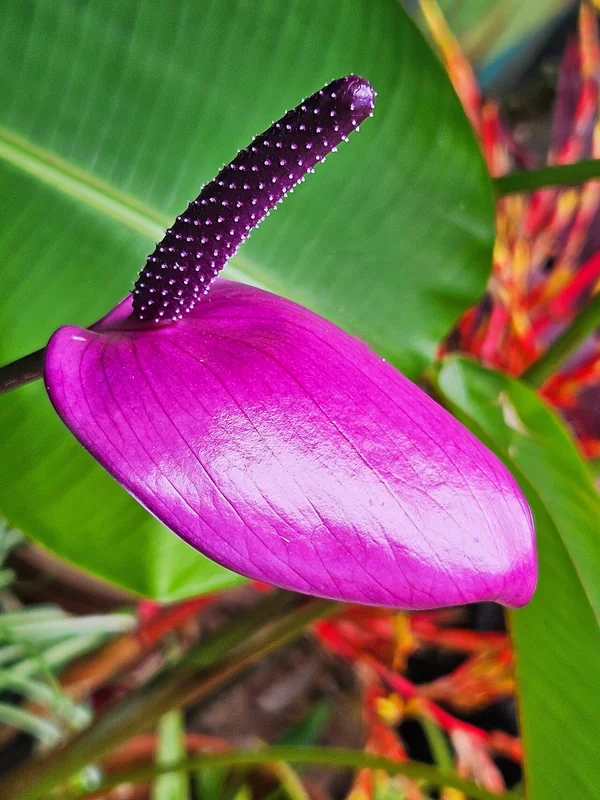
Anthurium clarinervium is endemic to Chiapas, Mexico, where it grows on limestone outcrops in deep shade. The thick, velvety leaves with white-silver veins are the entire reason to grow it; the spathes are small and inconspicuous.
Care Priorities
- Use a chunky bark mix — soggy mix is the fastest way to kill this species.
- Bright but filtered light keeps venation contrast strong.
- Steady warmth above 18 °C; it sulks below 16 °C.
- A humidifier or grouped plant arrangement keeps leaf edges from crisping.
Common Problems
Yellowing lower leaves usually mean overwatering or compacted mix. Black leaf tips and crisp margins are dry air, especially in winter heating. Pale, washed-out venation points to too much direct sun bleaching the chlorophyll.
Sources & further reading (2)
- botanical-garden — accessed 2026-04-28
- encyclopedia — accessed 2026-04-28
Frequently asked questions
Is Anthurium clarinervium hard to grow?
It is more demanding than A. andraeanum because it wants chunky mix, steady humidity, and clean water. With a good aroid mix and a tray of pebbles, most rooms will work.
Why are my new leaves smaller than the old ones?
Smaller new leaves suggest the plant is short on light, root space, or feed. Check the pot first — circling roots restrict leaf size.
Can it be grown in semi-hydroponics?
Yes, it adapts well to LECA in self-watering setups, which suits its preference for air around the roots and steady moisture.