Canis lupus familiaris
Silky Terrier
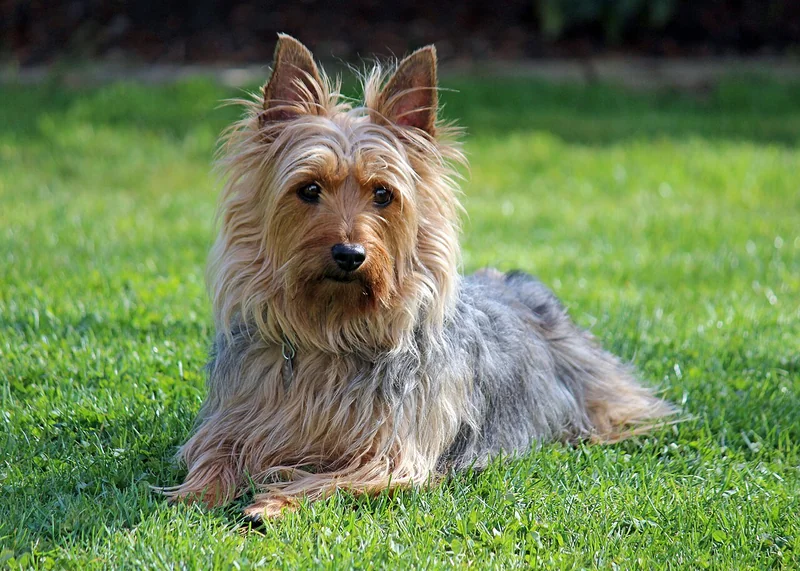 Featured photosilky-terrier.jpg
The Silky Terrier is a late-19th-century Sydney Yorkshire-Terrier × Australian-Terrier cross. The Silky Terrier was developed in late-19th-century Sydney, Australia, by crossing the imported Yorkshire Terrier with the native Australian Terrier to produce a small toy terrier with the Yorkshire's silky coat and the Australian Terrier's hardy working substance.
Quick facts
- AKC group
- Toy
- Origin country
- Australia
- Origin period
- Late 19th century
- Coat type
- Long
- Coat colors
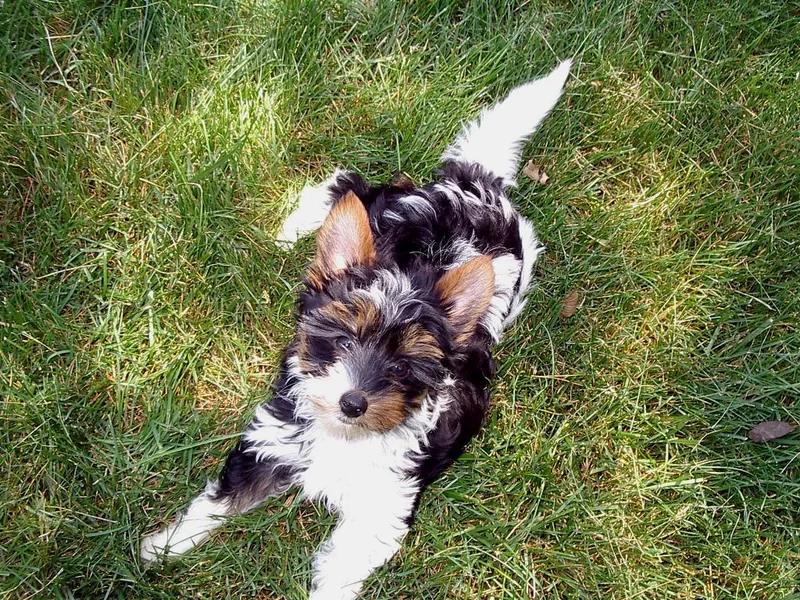
- Blue and Tan, Silver-Blue and Tan, Pigeon-Blue and Tan
- Average lifespan
- 13-15 years
- Recognition
- AKC 1959 · FCI 1962 · UKC 1948 · Group 3 — Terriers (Section 4: Toy Terriers)
Origin
The Silky Terrier was developed in late-19th-century Sydney, Australia, by crossing the imported Yorkshire Terrier (which contributed the silky coat and the blue-and-tan colour pattern) with the native Australian Terrier (which contributed hardy working substance and the smaller, more compact body). The objective was a refined toy terrier suitable for the Australian climate. The breed was originally registered as the Sydney Silky Terrier by the Australian Kennel Club in 1906; the name was changed to Australian Silky Terrier in 1955 and the AKC admitted the breed as the Silky Terrier in 1959.
Recognition
The American Kennel Club admitted the breed in 1959, the United Kennel Club followed in 1948, and the Federation Cynologique Internationale published the international standard (FCI No. 236) in 1962. The FCI assigns the breed to Group 3 — Terriers (Section 4: Toy Terriers).
Standard
The AKC and FCI standards describe a small, lightly-built, moderately-low-set toy dog with refined head and substance, slightly longer than tall. The defining feature is the long, silky, single coat that hangs straight on either side of a centre-parting from the head along the back to the tail; the coat colour is blue (any shade from silver to pigeon-blue) on the body with rich tan on the head, ears, legs, and underside. The breed stands 23-26 cm at the withers and weighs 3.5-5 kg.
Sources & further reading (3)
- kennel-club-registry — accessed 2026-04-30
- encyclopedia — accessed 2026-04-30
- fci-standard — accessed 2026-04-30
Frequently asked questions
What is the Silky Terrier's AKC group?
The American Kennel Club places the Silky Terrier in the Toy Group. The Toy Group gathers small companion breeds historically kept as lap dogs and household companions, including the Pug, Pomeranian, Maltese, and Cavalier King Charles Spaniel. The breed's foundation working role was as a late-19th-century Sydney Yorkshire-Terrier × Australian-Terrier cross.
When was the Silky Terrier officially recognized?
The American Kennel Club admitted the breed in 1959; the United Kennel Club followed in 1948; the Federation Cynologique Internationale published the international standard (FCI No. 236) in 1962.
What is the average lifespan of a Silky Terrier?
Kennel-club longevity surveys place the Silky Terrier's average lifespan in the 13-15 years range. The figure here represents the spread reported by the major parent-club studies and the Kennel Club (UK) purebred-dog health surveys.