Canis lupus familiaris
Shiba Inu
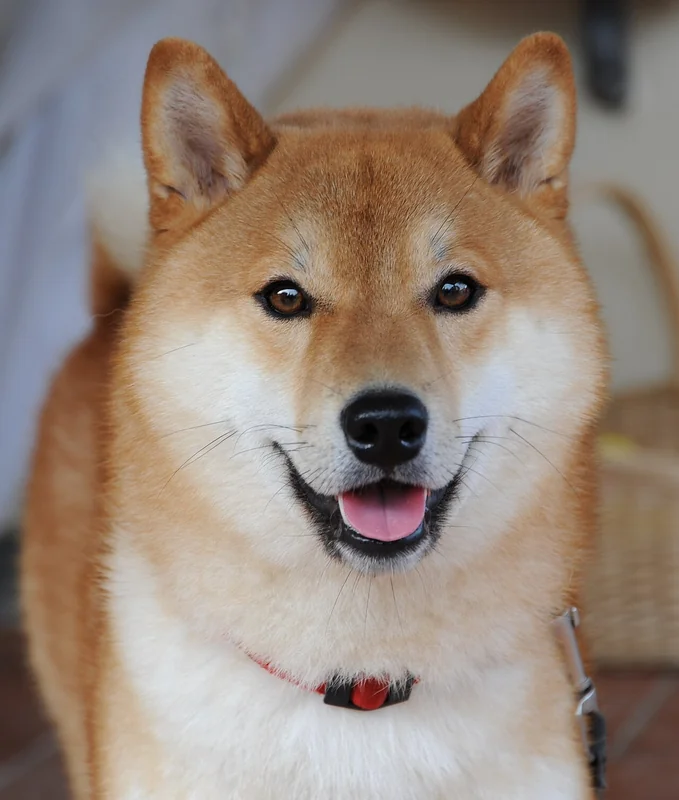 Featured photoshiba-inu.jpg
The Shiba Inu is a smallest of the six native Japanese spitz breeds — Jōmon-era origin. The Shiba Inu (Japanese for 'small dog') is the smallest and oldest of the six native Japanese breeds, with archaeological evidence of Shiba-type dogs in Jōmon-period (10,000 BC - 300 AD) Japan.
Quick facts
- AKC group
- Non-Sporting
- Origin country
- Japan
- Origin period
- Antiquity (modern type formalized 1936)
- Coat type
- Double
- Coat colors
- Red, Sesame, Black and Tan — all with the distinctive urajiro (pale ventral) markings
- Average lifespan
- 13-16 years
- Recognition
- AKC 1992 · FCI 1964 · UKC 1954 · Group 5 — Spitz and Primitive Types (Section 5: Asian Spitz and related breeds)
Origin
The Shiba Inu (柴犬, Japanese for 'small dog' — shiba is also a regional dialect word for 'brushwood') is the smallest and oldest of the six native Japanese breeds (the others being Akita, Hokkaido, Kai, Kishu, and Shikoku). Archaeological evidence — burial sites containing dog skeletons of recognizably Shiba build — places Shiba-type dogs in Jōmon-period (10,000 BC - 300 AD) Japan. By the early 20th century, three regional landrace types survived: the Shinshu Shiba (from Nagano), the Mino Shiba (from Gifu), and the San'in Shiba (from Tottori and Shimane). The breed was nearly lost during the Second World War (food shortages and a post-war distemper epidemic) and the modern unified standard, formalized in 1936 by the Nihon Ken Hozonkai (NIPPO) and declared a Japanese natural monument the same year, was rebuilt principally from the surviving Shinshu line. The first Shibas arrived in the United States in 1954 and the AKC admitted the breed in 1992.
Recognition
The American Kennel Club admitted the breed in 1992, the United Kennel Club followed in 1954, and the Federation Cynologique Internationale published the international standard (FCI No. 257) in 1964. The FCI assigns the breed to Group 5 — Spitz and Primitive Types (Section 5: Asian Spitz and related breeds).
Standard
The AKC and FCI standards describe a small, compact, well-balanced spitz-type dog of ancient Japanese lineage, with a confident, good-natured, faithful character. The defining features are the small triangular pricked ears, the curled tail carried over the back, and the urajiro (the distinctive pale ventral markings on the underside of the muzzle, throat, chest, belly, inner legs, and underside of the tail). The double coat consists of a soft, dense undercoat under a stiff, straight outer coat. Recognized colours are red, sesame (red-fawn with black tipping), and black-and-tan. Males stand 38-43 cm at the withers, females 33-38 cm.
Sources & further reading (3)
- kennel-club-registry — accessed 2026-05-04
- encyclopedia — accessed 2026-05-04
- fci-standard — accessed 2026-05-04
Frequently asked questions
What is the Shiba Inu's AKC group?
The American Kennel Club places the Shiba Inu in the Non-Sporting Group. The Non-Sporting Group is the AKC's residual category for breeds whose modern role does not fit the older Sporting / Hound / Working / Terrier / Toy / Herding rubrics; the Bulldog, Dalmatian, and Poodle sit here. The breed's foundation working role was as a smallest of the six native Japanese spitz breeds — Jōmon-era origin.
When was the Shiba Inu officially recognized?
The American Kennel Club admitted the breed in 1992; the United Kennel Club followed in 1954; the Federation Cynologique Internationale published the international standard (FCI No. 257) in 1964.
What is the average lifespan of a Shiba Inu?
Kennel-club longevity surveys place the Shiba Inu's average lifespan in the 13-16 years range. The figure here represents the spread reported by the major parent-club studies and the Kennel Club (UK) purebred-dog health surveys.