Canis lupus familiaris
Korean Jindo
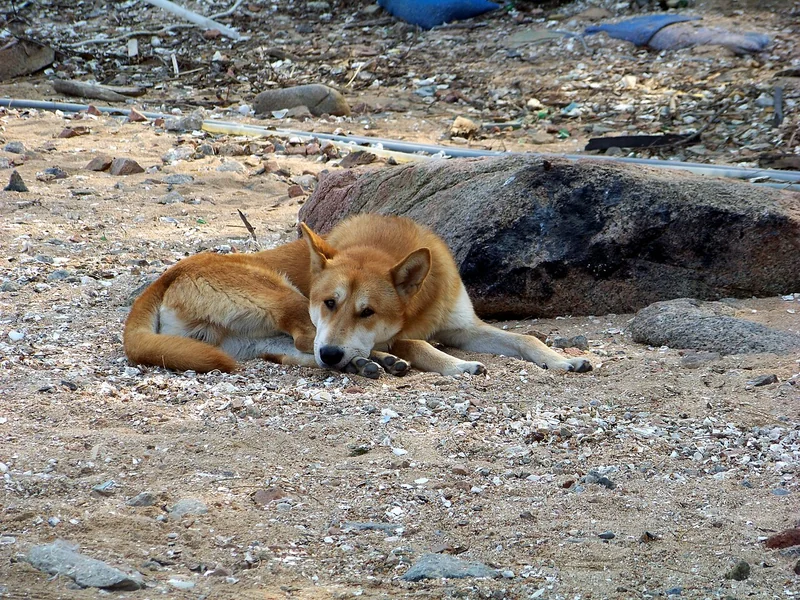 Featured photokorean-jindo.jpg
The Korean Jindo is a South Korean Jindo Island spitz hunter — designated Korean Natural Treasure No. 53. The Korean Jindo is a medium-sized spitz-type breed native to Jindo Island in southwestern South Korea, where the breed has been kept as a hunter and guard dog by the local population since pre-modern times.
Quick facts
- AKC group
- Non-Sporting
- Origin country
- South Korea (Jindo Island)
- Origin period
- Pre-modern (declared National Treasure 1962)
- Coat type
- Double
- Coat colors
- White (Baekgu), Red Fawn (Hwanggu), Wolf Grey (Jaegu), Black (Heukgu), Black and Tan (Neoreongi), Brindle (Hodu / 'Tiger')
- Average lifespan
- 12-15 years
- Recognition
- FCI 2005 · UKC 1998 · Group 5 — Spitz and Primitive Types (Section 5: Asian Spitz and related breeds)
Origin
The Korean Jindo is a medium-sized spitz-type breed native to Jindo Island, an island of approximately 350 km² off the southwestern coast of South Korea. The breed has been kept as a hunting dog (for badger, deer, and wild boar) and as a guard dog by the population of Jindo Island since at least the pre-modern period; the geographic isolation of the island preserved the breed's purity. The South Korean government designated the Jindo Korean Natural Treasure No. 53 in 1962 (the only dog breed afforded that protection); export of pure-bred dogs from Jindo Island is restricted by South Korean law. The United Kennel Club admitted the breed in 1998 and the FCI followed in 2005. The AKC has not yet granted full recognition; the breed is currently in the AKC Foundation Stock Service.
Recognition
the United Kennel Club followed in 1998, and the Federation Cynologique Internationale published the international standard (FCI No. 334) in 2005. The FCI assigns the breed to Group 5 — Spitz and Primitive Types (Section 5: Asian Spitz and related breeds).
Standard
The FCI and UKC standards describe a medium-sized, strongly-built dog of well-balanced proportion, a typical northern-type spitz with pricked ears and a curled or sickle tail. The double coat consists of a soft, dense, light-coloured undercoat under a stiff, straight outer coat that stands off from the body. Recognized colours are white (baekgu), red-fawn (hwanggu), wolf-grey (jaegu), black (heukgu), black-and-tan (neoreongi), and brindle (hodu, 'tiger'). Males stand 50-55 cm at the withers, females 45-50 cm.
Sources & further reading (2)
- encyclopedia — accessed 2026-05-04
- fci-standard — accessed 2026-05-04
Frequently asked questions
What is the Korean Jindo's AKC group?
The American Kennel Club places the Korean Jindo in the Non-Sporting Group. The Non-Sporting Group is the AKC's residual category for breeds whose modern role does not fit the older Sporting / Hound / Working / Terrier / Toy / Herding rubrics; the Bulldog, Dalmatian, and Poodle sit here. The breed's foundation working role was as a South Korean Jindo Island spitz hunter — designated Korean Natural Treasure No. 53.
When was the Korean Jindo officially recognized?
The United Kennel Club followed in 1998; the Federation Cynologique Internationale published the international standard (FCI No. 334) in 2005.
What is the average lifespan of a Korean Jindo?
Kennel-club longevity surveys place the Korean Jindo's average lifespan in the 12-15 years range. The figure here represents the spread reported by the major parent-club studies and the Kennel Club (UK) purebred-dog health surveys.