Canis lupus familiaris
Havanese
 Featured photohavanese.jpg
The Havanese is a Cuban national lap-dog descended from 16th-century Spanish Bichon imports — rebuilt from 1960s refugee dogs. The Havanese is the national dog of Cuba and descends from the Bichon-type lap-dogs brought to the Spanish colonial Caribbean by Spanish settlers in the 16th century.
Quick facts
- AKC group
- Toy
- Origin country
- Cuba
- Origin period
- 16th century (modern type formalized 1979)
- Coat type
- Long
- Coat colors
- Any colour or combination — white, black, gold, silver, blue, chocolate, sable, parti-colour
- Average lifespan
- 14-16 years
- Recognition
- AKC 1996 · FCI 1979 · UKC 1991 · Group 9 — Companion and Toy Dogs (Section 1: Bichons and related breeds)
Origin
The Havanese is the national dog of Cuba and descends from the Bichon-type lap-dogs brought to the Spanish colonial Caribbean by Spanish settlers in the 16th century. Foundation crosses involved the Bichon Tenerife (now extinct) and possibly other small Mediterranean lap-dogs; the breed was developed in colonial Havana and was the preferred lap-dog of the Cuban aristocracy and wealthy planter class until the 1959 Cuban Revolution. The mass exodus of Cuban aristocrats after the revolution effectively wiped out the breed in Cuba (the Cuban government banned dog ownership and most surviving Havanese were lost), and the modern Western breed was rebuilt from a handful of dogs brought to the United States by Cuban refugees in the 1960s and 1970s. The FCI recognized the breed in 1979 and the AKC followed in 1996.
Recognition
The American Kennel Club admitted the breed in 1996, the United Kennel Club followed in 1991, and the Federation Cynologique Internationale published the international standard (FCI No. 250) in 1979. The FCI assigns the breed to Group 9 — Companion and Toy Dogs (Section 1: Bichons and related breeds).
Standard
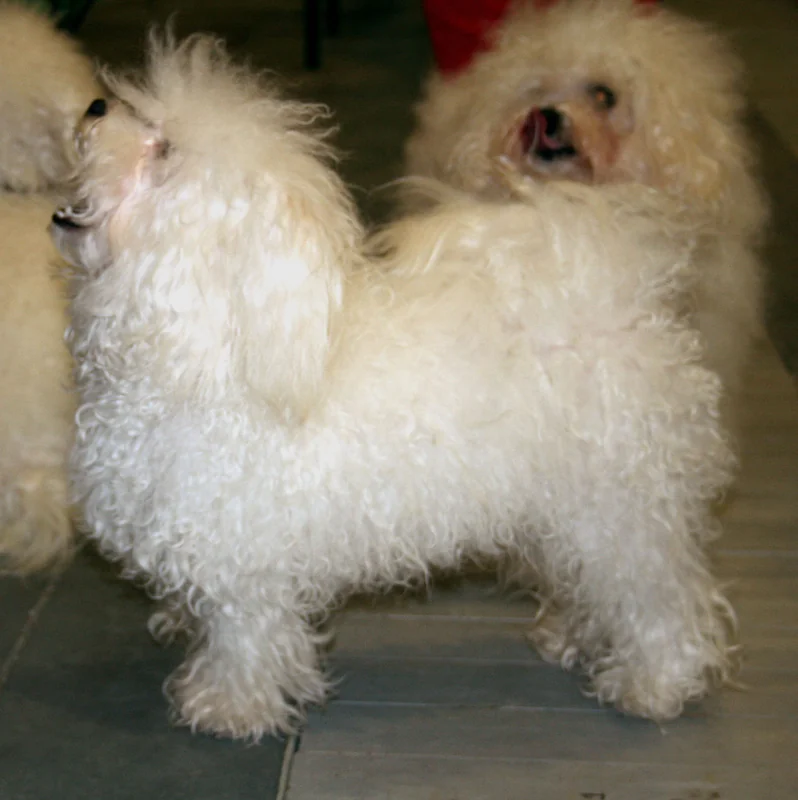
The AKC and FCI standards describe a small, sturdy dog of immense charm, with a long, untrimmed, full silky coat, a springy gait, and a friendly, alert, bright expression. The defining feature is the abundant, soft, silky double coat that should be undocked, untrimmed, and parted naturally to fall on either side of the body. Any colour and any combination of colours is acceptable, with white, black, gold, silver, blue, chocolate, sable, and parti-colour patterns common.
Sources & further reading (3)
- kennel-club-registry — accessed 2026-04-30
- encyclopedia — accessed 2026-04-30
- fci-standard — accessed 2026-04-30
Frequently asked questions
What is the Havanese's AKC group?
The American Kennel Club places the Havanese in the Toy Group. The Toy Group gathers small companion breeds historically kept as lap dogs and household companions, including the Pug, Pomeranian, Maltese, and Cavalier King Charles Spaniel. The breed's foundation working role was as a Cuban national lap-dog descended from 16th-century Spanish Bichon imports — rebuilt from 1960s refugee dogs.
When was the Havanese officially recognized?
The American Kennel Club admitted the breed in 1996; the United Kennel Club followed in 1991; the Federation Cynologique Internationale published the international standard (FCI No. 250) in 1979.
What is the average lifespan of a Havanese?
Kennel-club longevity surveys place the Havanese's average lifespan in the 14-16 years range. The figure here represents the spread reported by the major parent-club studies and the Kennel Club (UK) purebred-dog health surveys.