Yunnan Coffee
Arabica grown in China's Yunnan province at altitude — a relatively recent origin with balanced body and mild fruit.
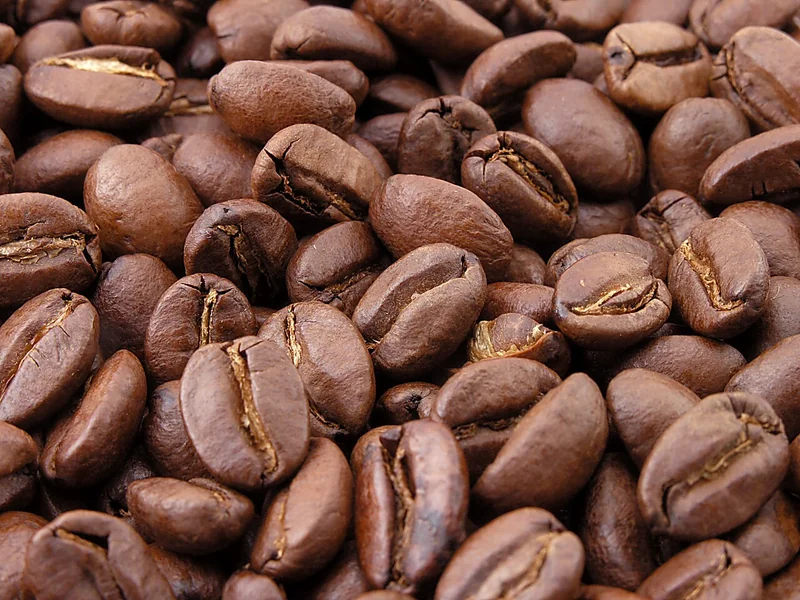
Yunnan coffee refers to Arabica produced in the Pu'er, Baoshan, Dehong, and Lincang prefectures of Yunnan province in southwestern China at altitudes of 1,000–1,600 metres. Commercial cultivation began in the 1980s under government programs, expanding significantly through Nestle's farmer training initiatives in the 1990s. Yunnan Arabica is primarily the Catimor variety — a hybrid with disease resistance but known for some rubbery or fermented off-notes at lower altitudes.
Quick facts
- Type
- Single-Origin Bean
- Origin
- Pu'er, Baoshan, and Lincang, Yunnan, China
- Roast level
- Medium
- Acidity
- Mild to moderate
- Body
- Light to medium
- Finish
- Clean, mild fruit
- Tasting notes
- mild citrus, brown sugar, light fruit, clean
Development of Yunnan Coffee
Coffee cultivation in Yunnan dates to French missionaries who planted Arabica near Zhu Si Xiang in the late 19th century, but commercial-scale production began only in the 1980s. The Yunnan provincial government promoted coffee as an export crop in the Pu'er region. Nestle established a buyer-farmer programme in the 1990s, providing Catimor seedlings, training, and guaranteed purchase prices. By the 2010s, Yunnan was producing over 90 percent of China's domestic coffee supply and was exporting significant volumes to European and Japanese markets.
Catimor Variety and Specialty Challenges
The dominant variety grown in Yunnan is Catimor — a hybrid of Timor Hybrid (a disease-resistant Robusta-Arabica hybrid) and Caturra. Catimor is extremely productive and resistant to coffee leaf rust, but it can produce rubbery, astringent, or herbal notes — especially at lower altitudes or when harvested under-ripe. Higher-altitude specialty farmers in Baoshan and Lincang are selecting better-flavoured clones and using improved processing to reduce off-notes. Heirloom Typica and Bourbon plants also exist on older farms.
Domestic Market Growth
China's domestic coffee consumption has grown rapidly since 2010, driven by urbanisation, cafe culture in Tier 1–2 cities, and the expansion of international chains. Yunnan specialty coffee brands are now sold directly to Chinese consumers through platforms such as Tmall and JD.com, bypassing traditional export channels. The Pu'er Coffee Exchange and regional brand campaigns have raised awareness of Yunnan as a local origin. China's domestic market now absorbs a significant portion of Yunnan production that previously was exported.
Sources & further reading (2)
- encyclopedia — accessed 2026-05-06
- variety-research — accessed 2026-05-06
Frequently asked questions
Is Yunnan coffee specialty grade?
Some Yunnan lots achieve specialty-grade scores (84+) on the SCA scale, particularly from higher-altitude farms in Lincang and Baoshan using improved Catimor clones and washed processing. The majority of Yunnan production is commercial grade, used in blends and instant coffee. The specialty segment is growing but still small relative to total production.
How does Yunnan coffee compare to Ethiopian or Colombian?
Specialty-grade Yunnan typically shows lighter body, milder acidity, and simpler fruit notes compared to Ethiopian or Colombian single-origins at equivalent roast. The Catimor variety and lower average altitudes limit cup complexity. High-altitude Yunnan Typica or Bourbon lots can show more nuanced character.
Where can I buy single-origin Yunnan coffee?
Single-origin Yunnan coffee is available from Chinese specialty roasters, some specialty importers in Japan and Europe, and specialty e-commerce platforms. Look for lots that specify altitude (above 1,400 m), variety (Typica or Bourbon rather than Catimor), and processing method (washed) for the highest cup quality.