Vietnamese Robusta
Coffea canephora from Vietnam's Central Highlands — the world's largest Robusta source for commercial blends.
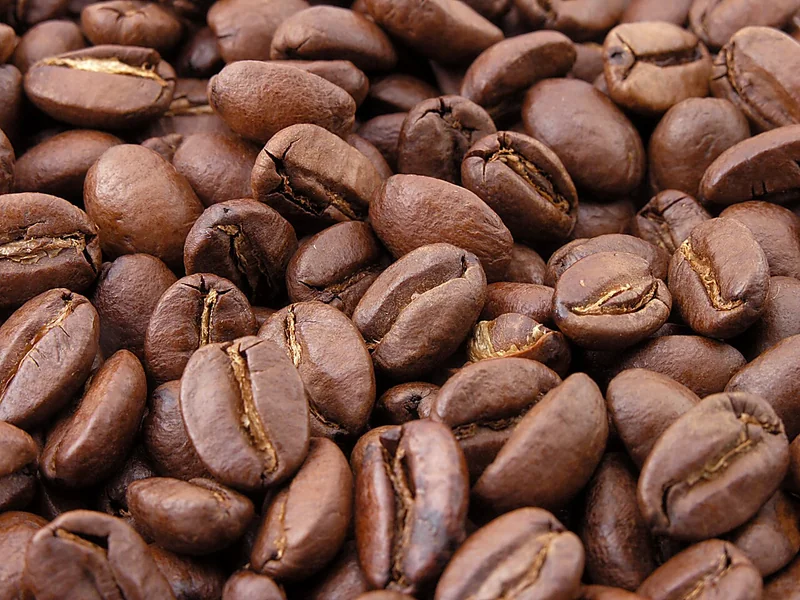
Vietnamese Robusta (Coffea canephora) is grown primarily in the Central Highlands provinces of Dak Lak, Dak Nong, and Lam Dong at altitudes of 400–900 metres. Vietnam is the world's second-largest coffee producer overall and the largest producer of Robusta, accounting for roughly 40 percent of global Robusta supply. Robusta produces approximately twice the yield of Arabica, tolerates lower altitudes and higher temperatures, and contains roughly twice the caffeine content of Arabica.
Quick facts
- Type
- Single-Origin Bean
- Origin
- Central Highlands, Vietnam
- Roast level
- Medium-dark
- Acidity
- Very low
- Body
- Very full, bold
- Finish
- Bitter, rubbery
- Tasting notes
- dark chocolate, rubber, grain, earthy
Robusta vs Arabica
Coffea canephora (Robusta) is the second major commercial coffee species. It grows at lower altitudes (sea level to 800 m), tolerates higher temperatures and higher rainfall, resists coffee leaf rust and many pests, and yields approximately twice the cherries per hectare of Arabica. Robusta beans contain roughly double the caffeine content (2–4 percent compared to Arabica's 0.8–1.4 percent) and substantially more chlorogenic acids, contributing to the higher bitterness and astringency. These properties make Robusta a critical ingredient in espresso blends and a primary source for instant coffee production.
Vietnam's Coffee Industry
Coffee production in Vietnam expanded dramatically after Doi Moi economic reforms in the late 1980s allowed private enterprise. The government promoted coffee cultivation in the Central Highlands, and planted area grew from around 100,000 ha in 1990 to over 600,000 ha by 2020. Vietnam's Central Highlands — particularly Dak Lak province around Buon Ma Thuot — now account for 90 percent of national production. The Nestlé and Jacobs Douwe Egberts supply chains are major buyers, using Vietnamese Robusta in commercial blends and instant products.
Specialty Robusta Development
While most Vietnamese Robusta is commodity-grade, there is a growing specialty Robusta movement. Some producers in Dak Lak and Lam Dong are applying washed or honey processing to Robusta, achieving scores above 80 on the SCA scale. Specialty Vietnamese Robusta can show dark chocolate, black pepper, and dried fruit notes with reduced bitterness compared to commodity grades. The SCA and World Coffee Research have developed formal cupping protocols for Robusta that are gradually gaining adoption.
Sources & further reading (2)
- encyclopedia — accessed 2026-05-06
- industry-standard — accessed 2026-05-06
Frequently asked questions
Is Robusta lower quality than Arabica?
Commodity-grade Robusta used in commercial blends and instant coffee typically scores lower on specialty cup quality assessments than high-quality Arabica. However, specialty Robusta — particularly washed or honey-process Robusta from skilled producers — can achieve high scores and show complex flavour. The quality difference is partly species biology and partly processing and farming standards.
Why is Robusta used in espresso blends?
Robusta's high caffeine and chlorogenic acid content contributes body, crema thickness, and bitterness to espresso blends. A typical Italian commercial espresso blend contains 20–30 percent Robusta for crema and intensity, balanced by 70–80 percent Arabica for aroma and sweetness.
Does Vietnamese coffee have a distinctive preparation method?
Yes. The traditional Vietnamese preparation uses a Phin — a small metal drip filter — and typically combines strong, dark-roasted Robusta with sweetened condensed milk. The resulting ca phe sua da (iced coffee with condensed milk) is one of Vietnam's most iconic beverages.