Tanzania Peaberry
A small oval bean from Tanzania produced when only one seed develops inside the coffee cherry.
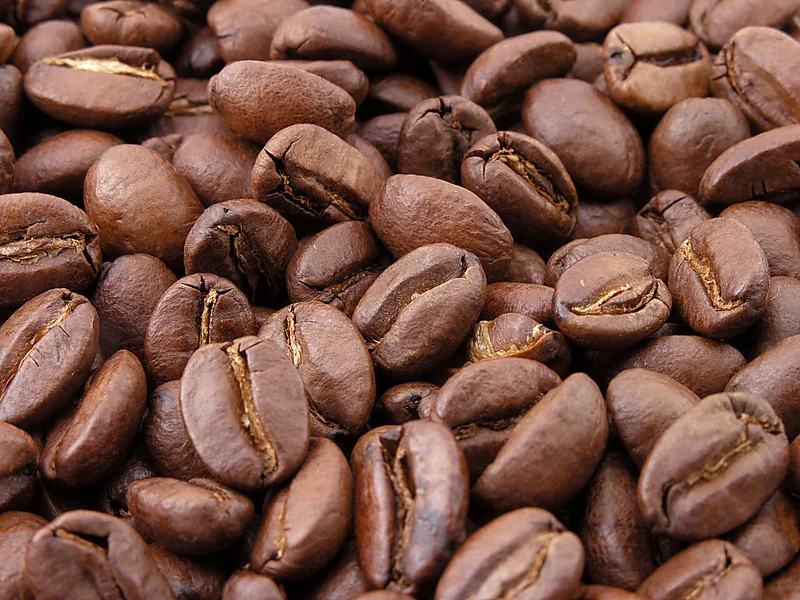
Tanzania Peaberry refers to a specific bean formation that occurs in roughly 5–10 percent of any coffee harvest, including those from Tanzania's Mount Kilimanjaro, Mount Meru, and the southern highlands around Mbeya. A peaberry forms when only one seed develops inside the coffee cherry — rather than the usual two flat-faced seeds — resulting in a small, oval, dense bean. Peaberries are sorted out and sold as a distinct product. Tanzanian peaberries typically show moderate acidity, a medium body, and notes of dark fruit and dark chocolate.
Quick facts
- Type
- Single-Origin Bean
- Origin
- Kilimanjaro, Mbeya, and Northern Tanzania
- Roast level
- Medium
- Acidity
- Moderate, grape-like
- Body
- Medium to full
- Finish
- Smooth, slightly winey
- Tasting notes
- dark fruit, dark chocolate, black tea, mild citrus
What Is a Peaberry?
In a typical coffee cherry, two seeds develop facing each other, each with a flat face. A peaberry occurs when only one seed is fertilised, resulting in a single, rounded oval bean that fills the entire cherry. Peaberries are denser than flat beans and are often thought to roast more evenly because of their round shape — though the evidence for this is anecdotal. They are hand-sorted on raised drying beds or by flotation, then sold as a premium subset of the main crop.
Growing Regions in Tanzania
Tanzania's main coffee-producing areas are the slopes of Mount Kilimanjaro and Mount Meru in the north (Kilimanjaro and Arusha regions), the southern highlands around Mbeya and Mbinga, and the Kigoma region near Lake Tanganyika. The Kilimanjaro region, grown by Chagga smallholders using traditional home-garden agroforestry, is historically the most associated with the Tanzania Peaberry label. Altitudes of 1,400–1,900 metres produce beans with moderate acidity and good complexity.
Processing and Quality
Most Tanzania Peaberry is washed-processed: de-pulped, fermented for 24–36 hours, washed, and dried on raised beds. After drying, the rounded peaberry shape is screened out at the milling stage and segregated. Specialty grades from northern Tanzania show fruit and mild acidity; lots from Mbeya and Mbinga tend toward chocolate and nuttiness. Quality varies by lot, and buyers looking for high-scoring cups should seek sub-region and estate details.
Sources & further reading (2)
- encyclopedia — accessed 2026-05-06
- industry-research — accessed 2026-05-06
Frequently asked questions
Is peaberry coffee better than regular coffee?
Peaberry is a different bean shape, not an inherently higher quality. Some roasters and cupping records show peaberry lots scoring similarly or slightly differently from the same farm's flat-bean lots. The premium price reflects the extra sorting labour more than a guaranteed flavour advantage.
How rare are peaberries in a coffee crop?
Peaberries occur naturally in approximately 5–10 percent of a coffee harvest across all Arabica and Robusta varieties. The exact rate varies by plant genetics, altitude, nutrition, and climate.
Does Tanzania Peaberry need a different roasting approach?
Some roasters apply slightly slower drum charges for peaberries because the rounded shape can roll differently in a drum roaster. In practice, most profiling adjustments are minor and batch-size dependent rather than fundamental changes in approach.