Jamaican Blue Mountain
A Protected Designation of Origin coffee from Jamaica's Blue Mountains — mild, sweet, very low bitterness.
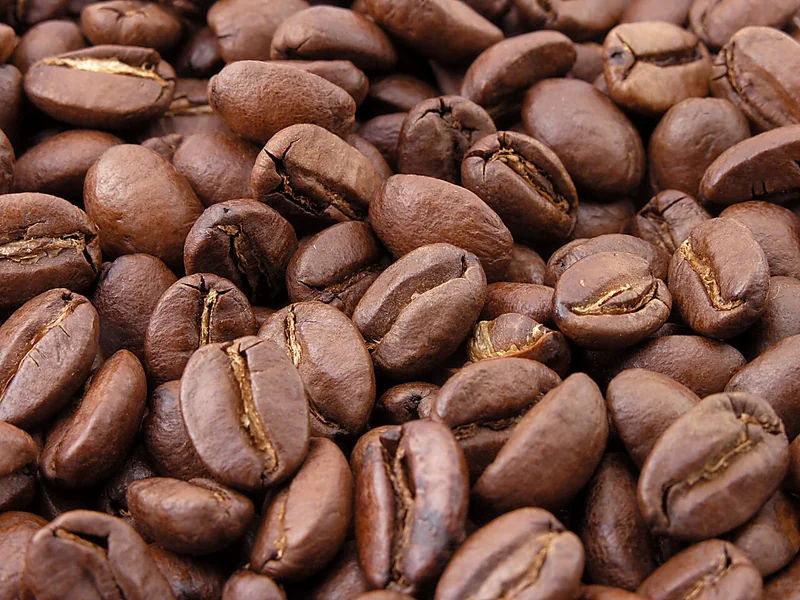
Jamaican Blue Mountain Coffee is a protected designation for Arabica grown between 910 and 1,700 metres in the Blue Mountains of Jamaica's St. Andrew, St. Thomas, Portland, and St. Mary parishes. The high-altitude tropical climate, frequent mist, cool temperatures, and well-drained volcanic soils create slow cherry maturation. The resulting cup profile is mild, with low bitterness, gentle acidity, and a clean sweetness.
Quick facts
- Type
- Single-Origin Bean
- Origin
- Blue Mountains, Jamaica
- Roast level
- Medium-light
- Acidity
- Very mild, balanced
- Body
- Medium
- Finish
- Clean, sweet, very low bitterness
- Tasting notes
- mild vanilla, honey, floral, very clean
Protected Designation and Regulation
The Blue Mountain Coffee designation is strictly regulated by the Coffee Industry Board of Jamaica. Coffee must be grown in the registered Blue Mountain zone (above 910 m in specific parishes), processed at registered pulping stations, and exported in certified wooden barrels. Counterfeit and mislabelled 'Blue Mountain blend' products exist in commercial markets — only the CIB-certified designation guarantees authenticity. The unique barrel packaging is a visual identifier.
Growing Conditions
The Blue Mountains receive some of the highest rainfall in the Caribbean — up to 5,000 mm annually at higher elevations — which, combined with the well-drained volcanic soils, prevents waterlogging while providing consistent moisture. Daily cloud cover reduces direct sun exposure and moderates temperature, slowing ripening to 10–11 months from flower to harvest (longer than most origins). Most farms are small-scale, often under 5 acres, using Typica and later Bourbon varieties.
Market and Pricing
Jamaican Blue Mountain is among the world's most expensive coffees, driven by limited supply (approximately 4,000 acres total), high demand in Japan and the United States, and the premium associated with the certified designation. Japan imports over 70 percent of the annual authenticated harvest. In Japan, Blue Mountain is culturally associated with premium gift-giving and has maintained that status since the 1960s–70s. The high price makes it less common in specialty third-wave coffee culture, which typically seeks value-to-quality traceability.
Sources & further reading (2)
- encyclopedia — accessed 2026-05-06
- specialty-review — accessed 2026-05-06
Frequently asked questions
Why is Jamaican Blue Mountain coffee so expensive?
High price reflects limited production area (strict geographic designation, roughly 4,000 acres), small farm sizes, high labour costs on steep mountain terrain, barrel packaging, CIB certification overhead, and intense demand particularly from Japan, which purchases over 70 percent of the certified harvest.
Does Blue Mountain coffee really taste different from other high-altitude Arabicas?
Authentic Blue Mountain is characterised by extremely mild acidity, very low bitterness, and a clean sweetness. However, many specialty coffee professionals note that African or Central American lots of comparable price-per-cup show similar or higher complexity. The flavour is genuinely mild and pleasant, but the premium partly reflects rarity and prestige rather than outperformance on SCA cupping scores.
How can I tell if Blue Mountain coffee is authentic?
Authentic Jamaican Blue Mountain is exported in traditional wooden barrels with CIB certification. Whole-bean buyers should look for the CIB certification number. Products labelled 'Blue Mountain blend' are not certified Blue Mountain and typically contain only a fraction of genuine Blue Mountain beans.