India Monsooned Malabar
Indian Arabica exposed to monsoon winds — a low-acid, full-bodied coffee with musty, aged character.
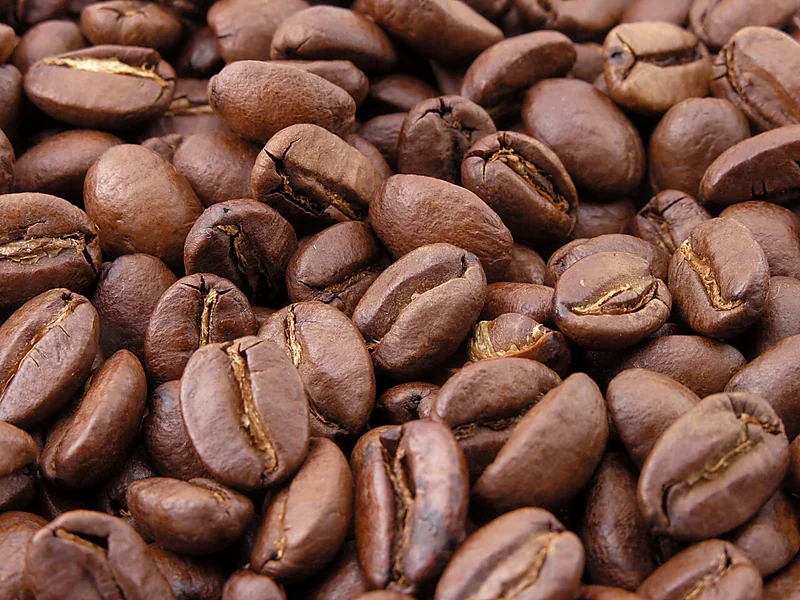
India Monsooned Malabar is a unique Arabica produced from the Malabar Coast (primarily Coorg and Chikmagalur districts of Karnataka) using an intentional post-harvest aging process. Green coffee is spread in open-sided warehouses and exposed to southwest monsoon winds for 3–4 months (June–September), absorbing moisture, swelling, and turning pale yellow. The process was originally an accidental result of long sea voyages on sailing ships during the colonial era.
Quick facts
- Type
- Single-Origin Bean
- Origin
- Coorg and Chikmagalur, Karnataka, India
- Roast level
- Medium-dark
- Acidity
- Very low, almost absent
- Body
- Very full, syrupy
- Finish
- Long, musty, spiced
- Tasting notes
- dark chocolate, nut, spice, musty, dried wood
Origin of the Monsooning Process
The monsooning process has its origins in the colonial-era sea trade. Green coffee shipped from India's Malabar Coast to European ports in wooden sailing vessels spent 3–6 months in the hold. During the long voyage through monsoon seas, the beans absorbed moisture, swelled, and underwent a natural fermentation that changed their colour from green to pale yellow and reduced their acidity dramatically. Europeans, particularly in Scandinavia, became accustomed to this aged flavour profile. When steamships shortened sea voyages and eliminated the aging effect, some Indian producers deliberately replicated the process on land.
The Monsooning Process
The monsooning process is conducted in large, open-sided warehouses called godowns near Mangalore and Calicut on the Malabar Coast. Green beans (typically washed Arabica) are spread in 4–6 inch layers on the warehouse floor during the southwest monsoon season (June–September). Workers periodically rake and turn the beans to ensure even exposure. Moisture content rises from 11 percent to 16–17 percent, then drops as the monsoon recedes. The beans swell significantly and turn pale golden-yellow. The entire cycle takes 12–16 weeks.
Brewing and Blending
Monsooned Malabar is one of the few coffees specifically suited to very dark roast — medium-dark to dark roasts integrate the musty and woody notes while adding sweetness. The very low acidity makes it an ideal blend component for espresso where brightness is undesired. Many European espresso blends (particularly Scandinavian and Italian 'old school' recipes) include a percentage of Monsooned Malabar for body and muted earthiness. It can also be brewed alone in a French press or AeroPress for a full-bodied, unusual single-origin experience.
Sources & further reading (2)
- encyclopedia — accessed 2026-05-06
- industry-standard — accessed 2026-05-06
Frequently asked questions
What makes Monsooned Malabar unique among coffees?
It is one of very few coffees deliberately processed to lose acidity and gain aged, musty character through intentional moisture exposure. Most coffee processing aims to preserve intrinsic acidity; Monsooned Malabar is specifically made to eliminate it. The resulting cup profile is unlike any other single-origin coffee.
Is the pale yellow colour of Monsooned Malabar beans normal?
Yes. The pale golden-yellow colour is a result of the moisture absorption and chemical changes during the monsooning process. Standard green Arabica beans are blue-green; the colour change to pale yellow is a direct indicator of successful monsooning.
Can Monsooned Malabar be brewed as pour-over?
It can, but the profile is unusual in a pour-over context. The very low acidity and musty earthiness read less clearly in a clean pour-over than in an immersion or espresso context. French press or Moka pot better showcase the body and spiced character.