Coffee Scale
A precision kitchen scale used to weigh coffee doses and water for reproducible brewing ratios.
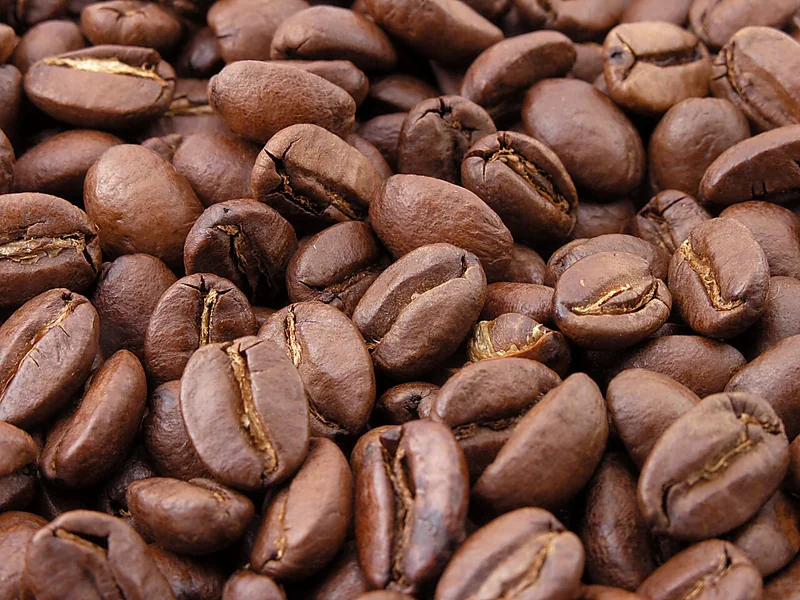
A coffee scale is a precision kitchen scale used in specialty coffee brewing to measure coffee dose (ground coffee weight in grams) and water weight in grams, enabling reproducible brew ratios. Unlike measuring by volume (tablespoons or millilitres), weighing coffee and water accounts for density differences between grind sizes and roast levels. Most specialty coffee recipes are expressed as a ratio by weight (e.g., 1:15 meaning 1 g coffee per 15 g water).
Quick facts
- Type
- Equipment
- Gear type
- Scale
Brew Ratios and Why Weight Matters
Coffee brewing ratios are expressed as coffee weight to water weight. The SCA Golden Cup Standard recommends 55 g of coffee per 1 L of water (1:18.2 ratio) for drip coffee. Specialty recipes typically use 1:14–1:17 for pour-over and 1:2 for espresso (dose in to yield out). Volume measurement (tablespoons, cups) is inaccurate for coffee because ground coffee density varies significantly between grind sizes and roast levels — a tablespoon of dark-roast coarse grind contains a different amount of coffee than the same volume of light-roast fine grind. A 0.5 g error in coffee dose causes a measurable difference in extraction percentage. Consistent recipes require weight.
Response Time and Espresso Tracking
Response time — how quickly the scale updates its reading after weight changes — is critical for espresso workflow. During espresso extraction, the yield (liquid espresso weight in the cup) increases at approximately 2–5 grams per second. A scale with slow response (3–5 seconds) lags behind the actual weight, making it difficult to stop extraction at an exact target yield. Scales designed for espresso (Acaia Lunar, Hiroia Jimmy, Timemore Black Mirror) update at 10–20 Hz (0.05–0.1 second response) to track the shot in near-real-time. For pour-over, a 0.5–1 second response is acceptable.
Bluetooth and App Integration
Some precision coffee scales (Acaia Pearl, Lunar, Bookoo Kilo) connect to smartphone apps via Bluetooth, logging brew data, displaying real-time brew rate (grams per second), and storing recipe histories. The Acaia ecosystem became the de facto specialty espresso scale standard in professional environments in the 2010s. Data-logging scales allow brewers to graph flow rate over time, identify channelling events (sudden flow rate spikes), and compare sessions across days. For home use, a non-connected 0.1 g resolution scale with integrated timer covers most needs.
Sources & further reading (2)
- industry-standard — accessed 2026-05-06
- encyclopedia — accessed 2026-05-06
Frequently asked questions
What resolution does a coffee scale need?
For pour-over and drip coffee (doses typically 15–30 g), a 0.1 g resolution scale is standard. For espresso (doses 18–22 g, yields 36–44 g), 0.1 g resolution is the minimum; some professionals use 0.01 g scales for dose measurement. For cold brew concentrates and large batch brewing (doses over 100 g), 1 g resolution is acceptable. A 0.1 g kitchen scale not designed for coffee can work if it has fast response time.
Do I need a scale for French press?
A scale improves consistency in French press brewing by ensuring the same dose and water weight each session. The SCA recipe of 55 g per litre (1:18 ratio) produces a standard result. For casual brewing, a tablespoon measure and volume markings on the press are acceptable approximations. For dialling in a specific flavour profile or comparing coffees, weight-based brewing is the only way to isolate the coffee variable from the recipe variable.
What is tare function on a coffee scale?
The tare function zeros the scale reading with a container or dripper on the platform. For pour-over, the brewer places the dripper and server on the scale, tares to zero, then measures water weight as it is added. For espresso, the tare removes the portafilter weight before measuring dose. Without tare, the brewer would need to subtract the container weight from each reading manually. Tare is a standard function on all kitchen scales.