Burr Grinder
A coffee grinder using two abrasive surfaces to crush beans uniformly — the standard for specialty coffee.
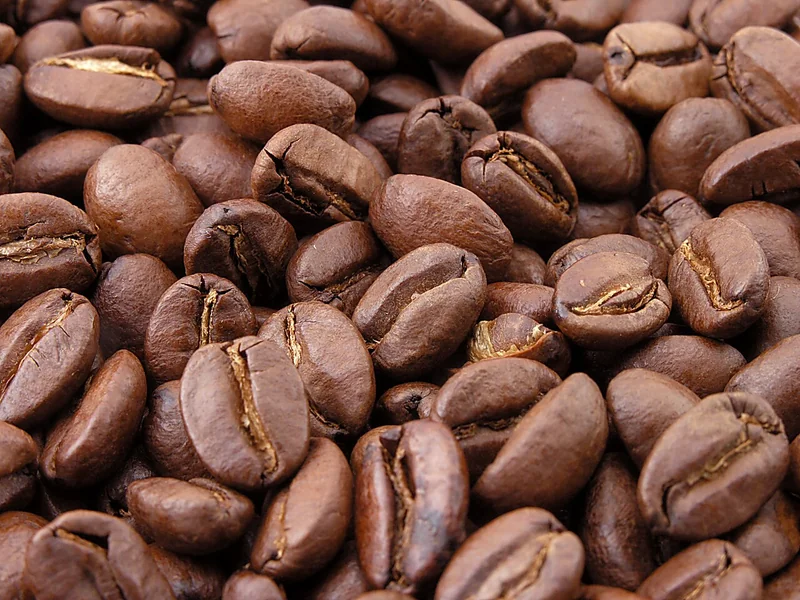
A burr grinder crushes coffee beans between two abrasive surfaces (burrs) — one stationary and one rotating — to produce a uniform particle size distribution. The gap between the burrs determines the grind size. Burr grinders are the standard for specialty coffee preparation because they produce a consistent particle distribution with low fines generation compared to blade grinders. Two burr geometries are common: flat burrs (two parallel circular discs) and conical burrs (a cone-shaped inner burr inside a ring).
Quick facts
- Type
- Equipment
- Gear type
- Grinder
Flat Burr vs Conical Burr
Flat burrs use two horizontal parallel discs; coffee falls through the gap at the outer edge after being crushed. Conical burrs use a cone-shaped inner burr that rotates inside a ring-shaped outer burr; coffee feeds down through the gap. Flat burrs run at higher RPM and generate more heat, but produce a more bimodal particle distribution and a cleaner, more consistent grind that many specialists prefer for espresso. Conical burrs run at lower RPM, generate less heat, retain less coffee between sessions (important for single-dosing), and are preferred by many pour-over brewers for the slightly more varied grind distribution they produce. Neither geometry is universally superior — choice depends on brew method and workflow.
Grind Uniformity and Extraction
Grind uniformity — the consistency of particle size — directly affects extraction evenness. When coffee grounds are uniform, water contacts all particles at approximately the same rate, producing even extraction. Mixed particle sizes result in simultaneous over-extraction (from fine particles) and under-extraction (from coarse particles), producing a muddled cup. Burr grinders produce a tighter distribution of particle sizes than blade grinders. The standard measurement is particle size distribution (PSD), measured with sieves or optical particle counters. Specialty grinder reviewers publish PSD data for consumer grinders as a quality benchmark.
RPM and Heat
Burr grinder RPM affects grind temperature. High-RPM electric grinders (600–2000 RPM in home models) generate heat through friction, which can volatilise aromatic compounds from the grounds. Professional espresso grinders run at lower RPM (300–600 RPM) with large burr diameters to reduce heat per unit of coffee ground. Single-dose grinders (designed to grind one dose per session) minimise retention and associated staling. Hand grinders produce essentially no heat but require physical effort. The relationship between RPM, burr size, and heat per gram of coffee is a common specification in specialty grinder reviews.
Sources & further reading (2)
- encyclopedia — accessed 2026-05-06
- industry-standard — accessed 2026-05-06
Frequently asked questions
Why are burr grinders better than blade grinders for coffee?
Burr grinders produce a consistent particle size by crushing beans between two abrasive surfaces at a set gap. Blade grinders chop beans randomly with a spinning blade, producing a wide distribution of particle sizes from powder to chunks. Inconsistent grind size causes simultaneous over-extraction (bitter) and under-extraction (sour) in the same brew. For espresso, which requires a very narrow grind window, blade grinders are impractical. For pour-over and other brew methods, burr grinders produce noticeably cleaner, more balanced results.
What is grinder retention?
Retention is the amount of ground coffee that remains inside the grinder after grinding, stuck in the burr chamber or chute. High-retention grinders (1–3 g or more) are problematic for single-dosing or switching between coffees, as old grounds contaminate fresh doses. Zero-retention or low-retention grinder designs (under 0.5 g) have become a major marketing and engineering focus in the specialty market since approximately 2018. Retention also causes staling — grounds left in a hot grinder continue losing aromatics between uses.
What burr grinder is suitable for home espresso?
Home espresso requires a grinder with fine grind range, fine adjustment (step or stepless), and reasonable particle consistency at espresso settings. Entry-level options include the Baratza Encore ESP and the DF64 variants. Mid-range options include the Niche Zero (conical, low retention, popular for single-dosing) and the DF83 (flat burr). Professional-grade home options include the Weber HG-1 and the Lagom P100. Turkish coffee requires an even finer grind than espresso; not all espresso burr grinders reach that fine setting.