Felis catus
Dwelf
 Featured photodwelf.jpg
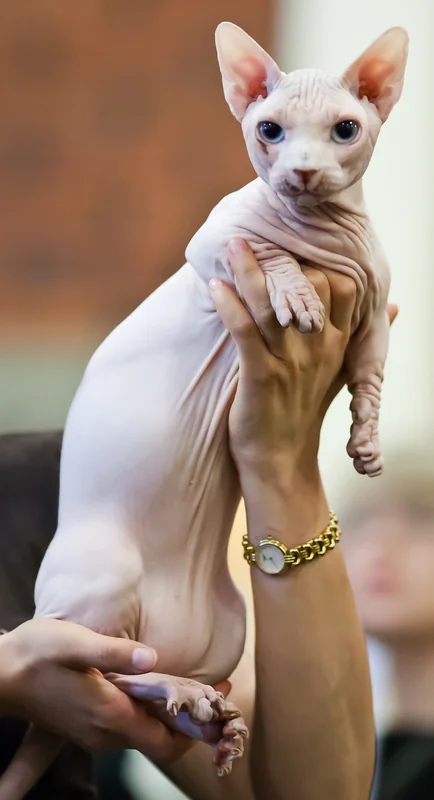
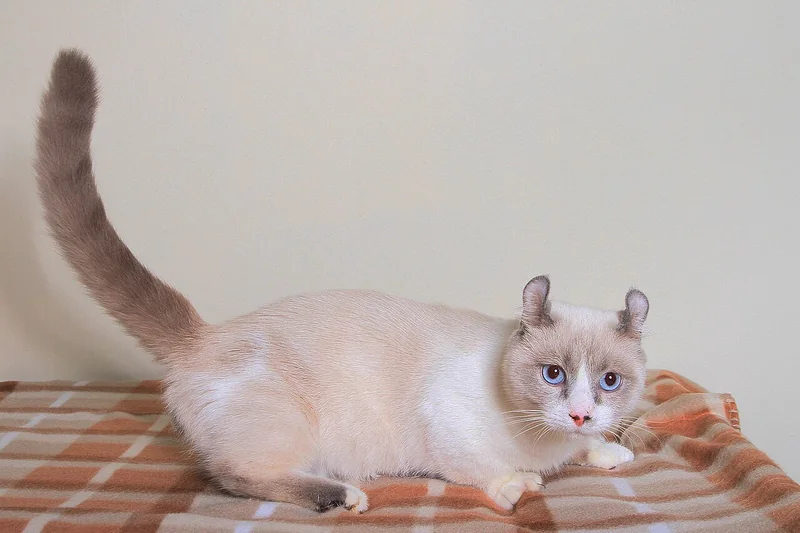
The Dwelf is an experimental three-way hybrid breed combining the Munchkin's short legs, the American Curl's curled-back ears, and the Sphynx's hairless body. The breed was developed in the United States from approximately 2008 by Stephanie and Pat Osborne (the same breeders behind the Bambino). The breed name combines 'dwarf' and 'elf' — referencing the small stature, curled ears, and hairless skin reminiscent of fantasy elves. TICA accepts the Dwelf for experimental registration. CFA, GCCF, and FIFe do not recognize the breed.
Quick facts
- Origin country
- United States
- Origin period
- Munchkin x American Curl x Sphynx three-way cross from 2008; TICA experimental
- Coat type
- Hairless
- Coat colors
- All colours and patterns recognized (visible in skin pigmentation)
- Size category
- Small
- Average lifespan
- 12-15 years
- Recognition
- —
Origin
The Dwelf was developed in the United States from approximately 2008 by Stephanie and Pat Osborne — the Arkansas breeders who also developed the Bambino. The Dwelf adds a third mutation to the Bambino's two: the American Curl's dominant curled-ear gene (Cu). The breed combines three genes: the Munchkin's short-leg gene (Mk, dominant), the Sphynx's hairless gene (hr, recessive), and the American Curl's curled-ear gene (Cu, dominant). The breed name combines 'dwarf' and 'elf' — referencing the small stature, curled ears, and hairless skin reminiscent of fantasy elves.
Recognition
TICA accepts the Dwelf for experimental registration. CFA, GCCF, and FIFe have not published Dwelf standards. The breed is shown primarily through TICA-affiliated experimental classes in North America. Outcrosses to Sphynx, Munchkin, and American Curl are permitted to maintain genetic diversity. The combination of three named-breed mutations is unusual; international concern about cumulative welfare risks has limited registry adoption.
Standard
The draft TICA experimental standard describes a small, well-balanced cat with the Munchkin's short legs, the Sphynx's hairless skin, and the American Curl's curled-back ears. The body is moderate in length, well-proportioned despite the short legs. The head is moderate in shape with prominent cheekbones. Ears curl back smoothly in the American Curl style. The skin is warm and chamois-like. All colours are recognized, visible in skin pigmentation.
Sources & further reading (3)
- tica-standard — accessed 2026-04-30
- encyclopedia — accessed 2026-04-30
- encyclopedia — accessed 2026-04-30
Frequently asked questions
What three breeds are crossed to produce the Dwelf?
The Dwelf is a three-way cross between the Munchkin, the Sphynx, and the American Curl. It combines the Munchkin's dominant short-leg gene (Mk), the Sphynx's recessive hairless gene (hr), and the American Curl's dominant curled-ear gene (Cu). The combination produces a small dwarf cat with hairless body and curled-back ears.
Is the Dwelf recognized as a championship breed?
No. TICA accepts the Dwelf for experimental registration. CFA, GCCF, and FIFe have not published Dwelf standards. The breed has not advanced to championship.
What does Dwelf mean?
Dwelf combines 'dwarf' and 'elf' — referencing the small stature inherited from the Munchkin parent (dwarf) and the curled ears, hairless skin, and pointed-elf-like appearance evoked by the Sphynx and American Curl parents (elf). The name was chosen by breed founders Stephanie and Pat Osborne.