Sansevieria trifasciata 'Hahnii'
Sansevieria trifasciata 'Hahnii' (Bird's Nest Snake Plant) Care Guide
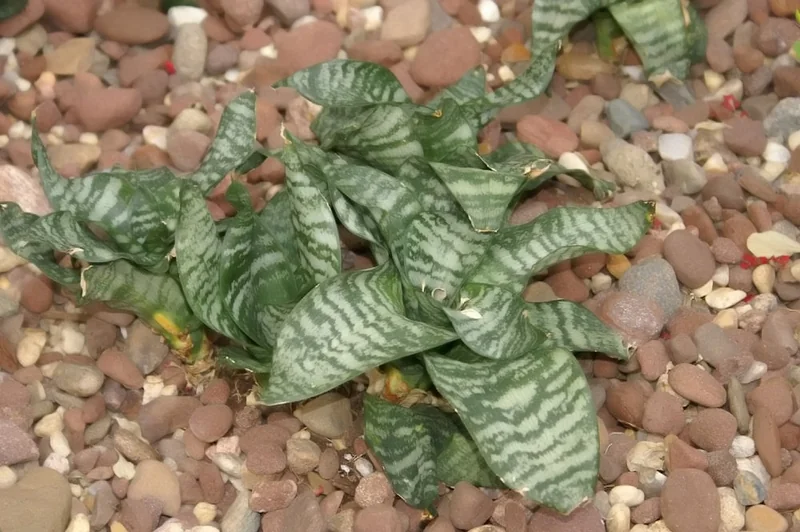 Featured photosansevieria-hahnii.jpg
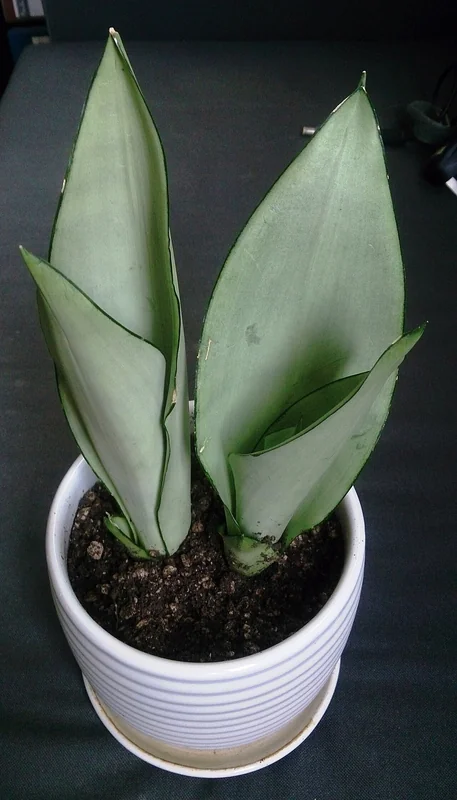
Sansevieria trifasciata 'Hahnii', sold as Bird's Nest Snake Plant, is a slow-growing succulent-leaved Asparagaceae member, reclassified into Dracaena in 2017 but still widely sold under the older Sansevieria name. A dwarf cultivar of Sansevieria trifasciata that forms a low rosette of broad short leaves like a small bird's nest, perfect for desks and windowsills. It tolerates very low light, infrequent watering, and dry indoor air — the most forgiving foliage plant in cultivation.
Care facts at a glance
- Light
- Low light
- Water
- Water when the soil is fully dry — typically every 2 to 3 weeks in summer, every 4 to 6 weeks in winter.
- Humidity
- 30–60 %
- Temperature
- 13–29 °C
- Soil
- Free-draining cactus or succulent mix with extra perlite or pumice.
- Origin
- Tropical Africa, Madagascar, and southern Asia.
- Mature size
- 30 cm to 1.5 m tall depending on species, slowly clumping spread.
Overview
Sansevieria trifasciata 'Hahnii' was reclassified in 2017 from Sansevieria into Dracaena on the basis of DNA evidence, though most retail still uses the older Sansevieria name. A dwarf cultivar of Sansevieria trifasciata that forms a low rosette of broad short leaves like a small bird's nest, perfect for desks and windowsills. The thick succulent leaves store water efficiently, which is why neglect rarely kills these plants.
Care Priorities
- Tolerates everything from low to bright indirect light.
- Water only when soil is fully dry — about every 2 to 4 weeks.
- Use a free-draining cactus or succulent mix.
- Avoid temperatures below 10 °C; cold + damp = rapid rot.
- Repot only when the pot cracks from rhizome pressure — every 3 to 5 years.
Common Problems
Soft yellow leaves at the base mean root rot from overwatering or compacted soil. Wrinkled leaves are extreme thirst — water sparingly and recovery takes a few weeks. Brown leaf tips are usually cosmetic and trace back to inconsistent watering or cold drafts.
Sources & further reading (2)
- encyclopedia — accessed 2026-04-28
- botanical-garden — accessed 2026-04-28
Frequently asked questions
Will my 'Hahnii' grow tall like a regular Snake Plant?
No — 'Hahnii' is a stable dwarf mutation that maxes out around 15 to 20 cm tall. It will produce more rosettes by offsetting from the rhizome but never grows tall sword-leaves.
How often should I water my Snake Plant?
Less often than you think — typically every 2 to 4 weeks in summer and every 4 to 8 weeks in winter. The soil should be fully dry between waterings. Overwatering kills more Snake Plants than any other cause.
Why are my Sansevieria leaves wrinkled?
Wrinkled or shrivelled Sansevieria leaves usually mean the plant has gone too long without water. A deep soak followed by full drainage typically plumps the leaves back within a week.