Polyscias fruticosa
Polyscias fruticosa (Ming Aralia) Care Guide
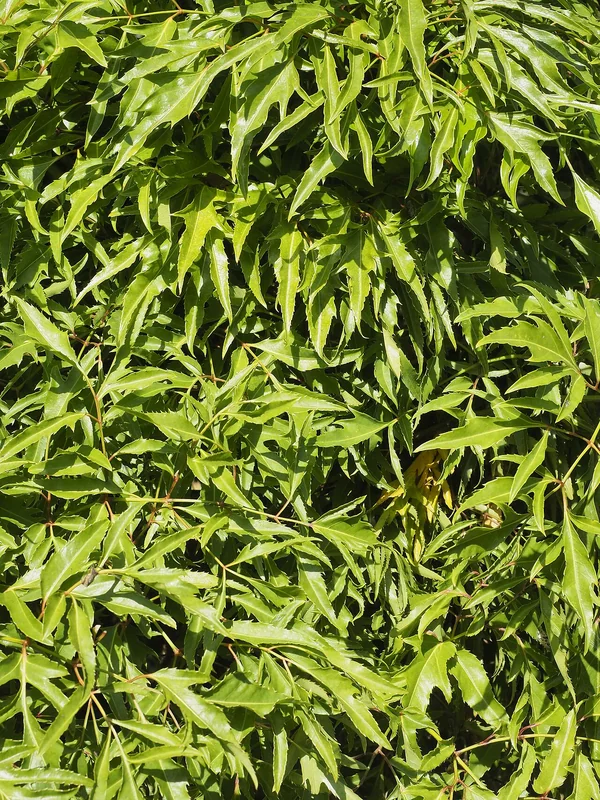 Featured photopolyscias-fruticosa.jpg
Polyscias fruticosa, sold as the ming aralia, is a south-east Asian shrub in Araliaceae with intricately divided fern-like green leaves on slender woody stems. Mature plants reach 2 m tall and develop graceful branching architecture suited to indoor bonsai-style training.
Care facts at a glance
- Light
- Bright indirect
- Water
- Water when the top 2 to 3 cm of mix has dried.
- Humidity
- 50–70 %
- Temperature
- 18–27 °C
- Soil
- Free-draining loamy mix with extra perlite and a small fraction of bark.
- Origin
- Tropical rainforests of south-east Asia, including Vietnam and the Philippines.
- Mature size
- 1 to 2 m tall in cultivation.
Overview
Polyscias fruticosa belongs to Araliaceae, the same family as Schefflera and Fatsia. The species is grown both as a houseplant and as an indoor bonsai subject, with mature plants developing gnarled woody trunks that suit traditional bonsai training. The finely divided foliage gives the plant a delicate, almost fern-like silhouette unusual among broadleaved shrubs.
Care Priorities
- Bright filtered light, never direct midday sun.
- Steady warm temperatures above 18 °C.
- Free-draining mix; let the top 2 to 3 cm dry between waterings.
- Avoid sudden changes in light or temperature, which trigger leaf drop.
Common Problems
Sudden leaf drop after a move or temperature swing is the species' classic stress response. Yellow leaves are usually overwatering. Spider mites cluster on the finely divided foliage in dry indoor air.
Sources & further reading (2)
- encyclopedia — accessed 2026-04-29
- botanical-garden — accessed 2026-04-29
Frequently asked questions
Why is it called 'ming' aralia?
The 'ming' name references the resemblance of mature trained P. fruticosa specimens to traditional Chinese ink paintings of gnarled aged trees. The species has been used as an indoor bonsai subject in tropical Asia for centuries.
Why did mine drop all its leaves?
P. fruticosa is famously sensitive to changes in conditions — moving the pot, a temperature swing, a shift in watering schedule, or a draft can all trigger sudden leaf drop. New leaves usually emerge within a few weeks once conditions stabilise.
Can I grow it as a bonsai?
Yes — P. fruticosa is one of the classic indoor bonsai subjects. The naturally gnarled woody trunks, finely divided foliage, and tolerance of pruning all suit bonsai training. Repot in shallow bonsai trays only when slightly root-bound.