Maranta leuconeura 'Erythroneura'
Red Vein Prayer Plant Care Guide: Maranta leuconeura 'Erythroneura'
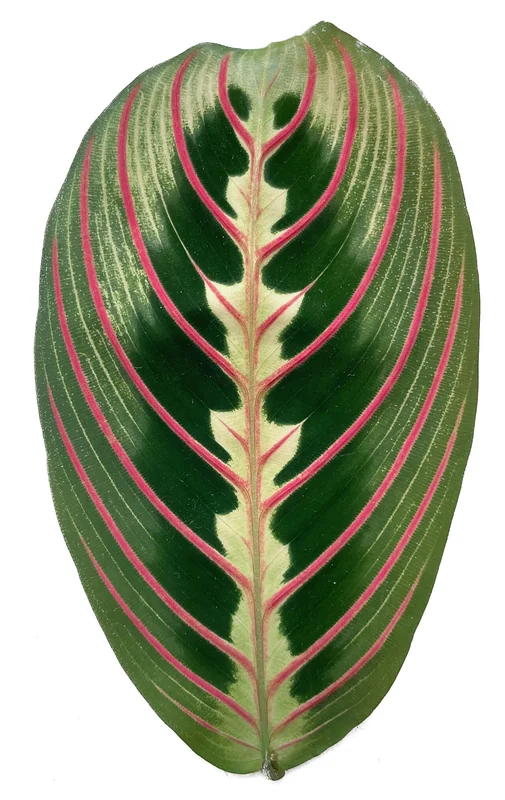 Featured photomaranta-leuconeura-erythroneura.jpg
The Red Vein Prayer Plant (Maranta leuconeura 'Erythroneura') is a popular houseplant known for its striking red-veined leaves and unique habit of folding its leaves upwards at night, like hands in prayer. This tropical beauty thrives in warm, humid environments and bright, indirect light. With proper care, it adds a vibrant, dynamic touch to any indoor space. Understanding its needs for consistent moisture and high humidity is key to its success.
Care facts at a glance
- Light
- Bright indirect
- Water
- Water when the top inch of soil feels dry to the touch, ensuring the soil remains consistently moist but never soggy.
- Humidity
- 60–80 %
- Temperature
- 18–27 °C
- Soil
- Use a well-draining, peat-based potting mix that retains some moisture. A good blend might include peat moss, perlite, and a bit of coarse sand or bark for aeration.
- Origin
- Tropical rainforests of Brazil.
- Mature size
- Indoors, it typically reaches 6-12 inches (15-30 cm) in height and spread.
Overview
The Maranta leuconeura 'Erythroneura', commonly known as the Red Vein Prayer Plant, is cherished for its vibrant foliage. Its oval leaves feature striking red veins that stand out against a green background, with a lighter green or yellow-green pattern along the midrib. A fascinating characteristic is its nyctinastic movement, where leaves fold up at night and flatten during the day, giving it its 'prayer' name. This plant thrives in conditions mimicking its native rainforest habitat.
Care Priorities
To ensure your Red Vein Prayer Plant flourishes, focus on these key areas:
- High Humidity: This is crucial. Use a humidifier, pebble tray, or group plants together.
- Consistent Moisture: Keep the soil moist, but never waterlogged, to prevent root rot.
- Bright, Indirect Light: Direct sun can scorch its delicate leaves, while too little light can dull its vibrant colors and slow growth.
- Warm Temperatures: Avoid cold drafts and sudden temperature changes.
Common Problems
Browning or crispy leaf edges often indicate low humidity or underwatering. Yellowing leaves can be a sign of overwatering (leading to root rot) or underwatering. If leaves are dull and growth is stunted, it might need more indirect light. Keep an eye out for common pests like spider mites and mealybugs, especially in dry conditions; treat promptly with insecticidal soap.
Sources & further reading (3)
- dataset — accessed 2026-04-24
- botanical-garden — accessed 2024-07-29
- botanical-garden — accessed 2024-07-29
Frequently asked questions
Why do my Prayer Plant's leaves curl up at night?
This is a natural process called nyctinasty. Prayer Plants fold their leaves upwards at night and flatten them during the day, which is why they are called 'Prayer Plants'.
Why are the leaves on my Prayer Plant turning brown and crispy?
Brown, crispy leaf edges are usually a sign of low humidity or inconsistent watering. Increase humidity around the plant and ensure the soil stays consistently moist, but not soggy.
What kind of water should I use for my Prayer Plant?
Prayer Plants are sensitive to chemicals like chlorine and fluoride found in tap water. It's best to use filtered, distilled, or rainwater to avoid leaf tip burn and other issues.
How often should I repot my Prayer Plant?
Repot your Prayer Plant every 1-2 years, or when it becomes root-bound. Choose a pot that is only slightly larger than the current one to avoid overwatering issues.