Ficus pumila
Ficus pumila (Creeping Fig) Care Guide
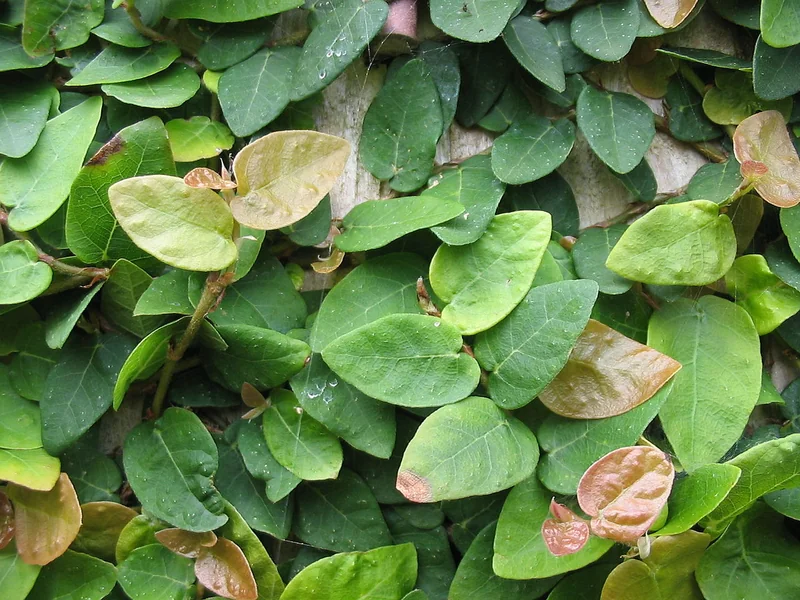 Featured photoficus-pumila.jpg
Ficus pumila is a small climbing fig from East Asia that flattens itself against walls, tree trunks, or any porous surface using aerial roots. As a houseplant it is grown as a wall-climber, terrarium plant, or topiary cover. The juvenile leaves are small, leathery, and heart-shaped; mature plants on tall surfaces produce much larger oval adult leaves.
Care facts at a glance
- Light
- Bright indirect
- Water
- Water when the top 2 cm of mix has dried.
- Humidity
- 50–70 %
- Temperature
- 15–27 °C
- Soil
- Well-draining houseplant mix with extra perlite.
- Origin
- Forests of East Asia, including China, Japan, Korea, and Vietnam.
- Mature size
- Climbing stems to 3 metres or more, leaves under 3 cm in juvenile form.
Overview
Ficus pumila is widely planted on outdoor walls in subtropical regions, where it flattens small leaves against bricks or stucco. As a houseplant it is grown for terrariums, small wall covers, and topiary frames where the small leaves drape attractively.
Care Priorities
- Bright filtered light; tolerates a few hours of direct morning sun.
- Higher humidity than most figs — terraria and bathrooms suit it well.
- Provide a porous climbing surface (cork, wood, moss).
- Pinch back regularly to keep the plant in juvenile leaf form.
Common Problems
Yellow patches are overwatering. Crispy edges are dry air. Sudden leaf drop is a stress reaction; new growth usually returns once conditions stabilise.
Sources & further reading (2)
- encyclopedia — accessed 2026-04-28
- botanical-garden — accessed 2026-04-28
Frequently asked questions
Why are some of my creeping fig leaves much larger?
Mature climbing stems eventually transition to adult leaf form with much larger oval leaves. Pinch back to keep the small juvenile leaves.
Indoor wall climber?
Yes, but only on porous surfaces (cork, untreated wood, stone) — the aerial roots cannot grip glass or sealed paint.
Best for terraria?
Yes — the small leaves and trailing-and-climbing habit suit closed glass spaces. Pinch back regularly so it does not overgrow.