Ceropegia linearis
Ceropegia linearis (Fountain Vine) Care Guide
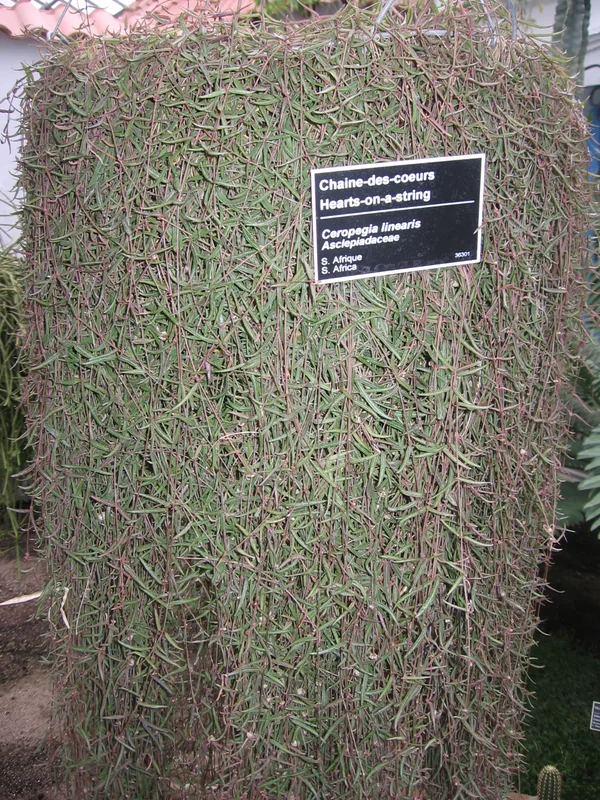 Featured photoceropegia-linearis.jpg
Ceropegia linearis, sold as Fountain Vine, sits in Asclepiadoideae (formerly Asclepiadaceae), a subfamily of Apocynaceae that contains the classic milkweeds and a large radiation of epiphytic succulents. A South African and East African epiphyte with very narrow linear green leaves on slender stems, the inflated lantern-shaped flowers carried in the leaf axils. Looks similar to a thin-leaved C. woodii. Most species grow as forest epiphytes draping from tree branches, which is why they suit hanging-pot cultivation indoors.
Care facts at a glance
- Light
- Bright indirect
- Water
- Water when the top 2 to 3 cm of mix has dried.
- Humidity
- 50–80 %
- Temperature
- 18–27 °C
- Soil
- Free-draining epiphyte mix of orchid bark, coco coir, and perlite for excellent aeration.
- Origin
- Tropical and subtropical Asia and Africa, mostly epiphytic in forest canopies.
- Mature size
- Trailing stems to 1 m or more in mature plants.
Overview
Ceropegia linearis belongs to a tropical-Asian and African epiphyte clade closely related to the more familiar Hoyas. A South African and East African epiphyte with very narrow linear green leaves on slender stems, the inflated lantern-shaped flowers carried in the leaf axils. Looks similar to a thin-leaved C. woodii. Many species form intricate flower structures with five-pointed coronas, a hallmark of the milkweed family that puts them among the most distinctive cultivated tropicals.
Care Priorities
- Bright filtered light, never direct midday sun.
- Free-draining epiphytic mix with orchid bark.
- Water when the top of the mix has dried.
- Steady humidity above 50 percent supports tight new growth and flowering.
Common Problems
Yellowing leaves are usually overwatering. Brown crispy edges signal dry air. Failure to flower is most often insufficient light or too-frequent repotting — the plants set buds best when slightly root-bound.
Sources & further reading (2)
- encyclopedia — accessed 2026-04-29
- botanical-garden — accessed 2026-04-29
Frequently asked questions
Is this related to string of hearts?
Yes — C. linearis is closely related to C. woodii, and the two were treated as the same species (with C. woodii as a subspecies of C. linearis) in older taxonomies. C. linearis has narrower linear leaves and a slightly more upright habit.
Are these related to Hoya?
Yes — Dischidia, Ceropegia, and Hoya all sit in subfamily Asclepiadoideae of Apocynaceae. They share the milkweed-style flower structure with a five-pointed corona, the white milky sap, and the epiphytic growth habit, though leaf shapes differ widely between genera.
Can I root cuttings in water?
Yes — most species in this group root readily in water once the cut end has callused for a day or two. Pot up into free-draining epiphytic mix once roots reach 2 cm long.